
Review

By The Completionist
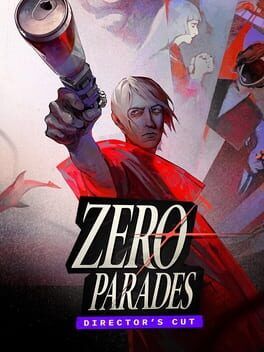
Image: IGDB
Store links: Zero Parades: Director's Cut on Steam
A second launch for ZA/UM’s strangest case
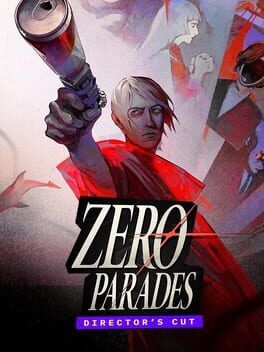
ZERO PARADES: For Dead Spies Director’s Cut is now available on PS5, Xbox Series X/S, and Nintendo Switch 2, according to GamingBolt’s November 3 report on ZA/UM’s console launch. That is the concrete change that makes this review worth revisiting: a dense, dialogue-led PC RPG that originally arrived on Windows in May 2026 has been repackaged for the living room and, on Switch 2, for portable play.
The tension is whether access fixes the recommendation problem. Zero Parades has always sounded easier to admire than to casually suggest. It is a bizarre spy RPG about Hershel Wilk, alias CASCADE, a damaged operative pulled back into service by the Superbloc and sent into Portofiro after a partner has been “zeroed out,” as GamingBolt summarizes the premise. The game trades combat spectacle for dialogue trees, ideological pressure, strange inner logic, and skill checks tied to a fractured psyche. That is catnip for a certain RPG player and a hard stop for anyone who measures role-playing primarily by loot, party composition, and combat rotations.
The Director’s Cut release improves the pitch without changing the nature of the thing. GamingBolt reports that PC owners already received the Director’s Cut content as a free update on October 1, while the console versions launched with that expanded material included. The result is not a sequel or a soft reboot. It is the fullest version of Zero Parades, arriving on platforms that missed the original.
The Director’s Cut additions make the package feel less sealed-off
The strongest argument for the console release is that new players are not getting the original game in isolation. GamingBolt says the Director’s Cut adds an entirely new Dramatic Encounter called the Quisach Roundabout, in which Hershel Wilk and Ramses are intoxicated in a hijacked tuk-tuk, trapped in a late-night roundabout, and trying to take the correct exit before the situation turns existential or fatal. That description captures the game’s appeal better than a genre label can: espionage in Zero Parades is procedural, political, pathetic, and absurd all at once.
TheXboxHub’s launch coverage also describes the Director’s Cut as adding nearly 40,000 words of new content and improved voice-over, while GamingBolt highlights the Backstage feature, a set of behind-the-scenes additions that lets players inspect earlier versions of the game world and listen to commentary about ZA/UM’s technical and creative process. GamingBolt specifically notes that commentary is accessed through interactive orbs placed throughout the world and includes development staff such as art director Kaspar Tamsalu.
For returning PC players, the upgrade path is unusually generous because the Director’s Cut arrived as a free update, according to GamingBolt and the timeline repeated in the public Wikipedia listing. For new console players, the value is simpler: the PS5, Xbox Series X/S, and Switch 2 editions start at the expanded edition. That matters for a narrative RPG because added scenes and commentary sit naturally beside the main draw, which is the act of reading, probing, misunderstanding, and reinterpreting a city.
The systems are built around pressure, not power fantasy
As a Zero Parade RPG review, the useful question is not whether the game has enough systems. It has plenty. The question is whether those systems create satisfying role-play for players who are used to progression meaning higher damage numbers and cleaner builds.
Nintendo Life’s Switch 2 review describes Zero Parades as closer to an investigative tabletop adventure than a traditional mainstream RPG. You navigate dialogue trees, and passive or active skill checks determine which information becomes available. The public Wikipedia gameplay summary adds that conflicts are resolved through checks against facets of Hershel’s psyche or against other characters rather than combat. It also notes a key wrinkle: players can exert additional effort for an extra die on checks, but that choice affects stress levels such as anxiety.
That risk economy is the best part of the game’s structure. Nintendo Life identifies three status meters, fatigue, delirium, and anxiety, and reports that actions or poor conversation choices can raise those levels. Maxing them out forces a downgrade of a corresponding color of skills. The same review breaks the skill identity into yellow for personable and empathetic traits, pink for physical spycraft, and purple for technical aptitudes. Conditioning adds another layer, letting CASCADE develop thought patterns that buff clusters of abilities.
This is where Zero Parades earns its RPG credentials. It is not about optimizing a damage build. It is about deciding what kind of unreliable operative Hershel becomes under duress, then living with the knowledge that even curiosity has a cost. The exertion mechanic gives dialogue checks a texture that many narrative RPGs lack. A failed roll is rarely a simple locked door. It is a change in Hershel’s stress profile, her future options, and the tone of her self-interrogation.
Portofiro is rich, hostile, and intentionally hard to parse
The setting is the other half of the recommendation. GamingBolt frames Portofiro as a city where Wilk meets citizens with their own outlooks and makes decisions that could carry ramifications for the cold war between the communist Superbloc and the technofascist state of La Luz. Nintendo Life expands that picture, describing Portofiro as an ideological morass struggling under multiple factions, with propaganda and conversation around La Luz permeating daily life.
ZA/UM’s approach here is deliberately ungentle. Nintendo Life says the game does not hold the player’s hand in a narrative sense, leaving both player and protagonist to glean the plot from colorful NPCs around the city. That design can feel electrifying if you like RPGs that trust implication, context, contradiction, and misdirection. It can also feel exhausting if you need clean quest logs to explain every institution before you start making choices.
The obvious comparison remains Disco Elysium, and several sources lean into it. Nintendo Life calls Zero Parades atmospheric and cerebral but overly familiar, noting that ZA/UM follows its prior era-defining RPG by emulating much of the experience. Wikipedia likewise describes Zero Parades as the studio’s second game after Disco Elysium and notes similarities in isometric presentation, dialogue, and the protagonist’s split psyche. TheXboxHub’s review frames the game as following in Disco Elysium’s footsteps and awards it 4.5 out of 5 while warning of a slow opening.
That familiarity cuts both ways. If Disco Elysium is your benchmark for writing-forward RPG design, Zero Parades has the density, melancholy, and systemic strangeness to hold your attention. If you wanted ZA/UM’s next game to escape that shadow mechanically, the Director’s Cut does not appear to be that escape. It refines and expands the same house style rather than replacing it.
Console and Switch 2 availability help, but platform questions remain
The console release makes Zero Parades easier to recommend because the audience no longer has to be PC-first. GamingBolt confirms PS5, Xbox Series X/S, and Nintendo Switch 2 availability from November 3, 2026. Metacritic’s listing also identifies those three console platforms, with critic review counts split across PlayStation 5, Xbox Series X, and Nintendo Switch 2 at the time captured in the source material.
The Switch 2 version is the most interesting fit on paper. Nintendo Life’s review includes captures from both handheld and docked Switch 2 play, and a text-heavy RPG can benefit from being available in shorter sessions away from a desk. The caveat is that the supplied sources do not provide resolution targets, frame-rate data, load-time comparisons, or controller-interface analysis across PS5, Xbox Series X/S, and Switch 2. For a Zero Parade Switch 2 review angle, that absence matters. The platform sounds conceptually suited to a dialogue-heavy RPG, but buyers who are sensitive to font size, handheld readability, or performance consistency should look for version-specific impressions before choosing Switch 2 over a TV-first console.
Pricing is also unevenly documented in the supplied material. Tech Insider reports that Steam lists the game at €39.99 on the EU storefront, but the provided sources do not establish console pricing. The Steam page supplied here confirms the game’s store presence but the captured text does not include a price. Because of that, the safest practical guidance is simple: PC owners should check whether they already received the free Director’s Cut update, while console players should compare current storefront prices rather than assume parity with Steam.
Recommendation: easier to buy, still impossible to universalize
The Director’s Cut console release does make Zero Parades easier to recommend to players who missed the original, but only if we keep the recommendation narrow. This is a story-rich, systems-heavy, combat-light espionage RPG built around speech, psyche, politics, and failure. Its console launch lowers the access barrier. Its added encounter, development commentary, expanded writing, and improved voice-over, as reported by GamingBolt and TheXboxHub, make the package feel fuller. Its core rhythm remains slow, cerebral, and deliberately strange.
That is a strength, not a defect, for the right player. The skill colors, stress meters, exertion system, and Conditioning layer give Hershel Wilk a progression model that feels personal rather than merely statistical. You are building a spy by choosing which pressures she absorbs, which instincts she trusts, and which forms of competence she sacrifices. Portofiro, meanwhile, gives those choices political friction.
The weaknesses are inseparable from the design. The opening is slow, as TheXboxHub notes. Nintendo Life’s criticism that the game feels familiar after Disco Elysium is fair based on the described structure and presentation. The reliance on dialogue checks and randomness, also flagged in Metacritic’s quoted PSX Brasil review summary, will not appeal to players who want deterministic quest solving. And because platform-specific technical details are thin in the supplied sources, the safest console recommendation is strongest on PS5 and Xbox Series X/S for TV play, with Switch 2 best suited to players willing to verify handheld readability and performance before purchase.
For readers searching for a Zero Parade console release verdict, this is the version to start with. For readers searching for a conventional spy adventure, it may still be too oblique. Zero Parades Director’s Cut is most recommendable as an RPG about interpretation under pressure, and on that front the expanded console release gives latecomers the best entry point available.
Final Verdict
A solid gaming experience that delivers on its promises and provides hours of entertainment.