
Review

By Night Owl
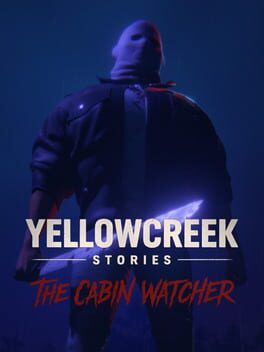
Image: IGDB
Store links: Yellowcreek Stories: The Cabin Watcher on Steam
A $10.49 Cabin Horror Game With a One-Hour Problem
Yellowcreek Stories: The Cabin Watcher launched on August 6, 2026 for Steam, Steam Deck, PlayStation 5, and Xbox Series according to publisher JanduSoft’s official page, with a listed price of US$10.49 or 10.49€. That matters immediately because the strongest criticism across available review coverage is not that the premise is unclear. It is that the premise is over quickly.
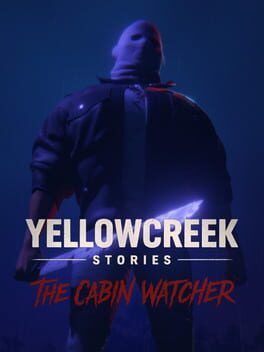
JanduSoft sells The Cabin Watcher as a first-person stealth slasher inspired by 1980s VHS horror, built around a masked killer, a remote mountain cabin, a stormy night, and survival through noise, light, movement, hiding, and pressure. HorrorFuel’s review describes the setup as Terry, a writer staying alone in a forest cabin to work on a novel, whose night is interrupted by an escaped killer. MKAU Gaming gives a similar outline, adding that the writer is trying to escape by finding car keys while a masked escapee with a machete hunts him.
That is a clean horror hook: one cabin, one intruder, no combat, and the old slasher promise that every creak of the floor could betray you. The tension in this Yellowcreek Stories: The Cabin Watcher review is whether that stripped-down idea has enough teeth to justify itself as a short paid horror release. Based on the available source material, it delivers some mood and a readable slasher fantasy, but the game’s brevity and predictable threat undercut the fear it is built to create.
The Premise Understands Slasher Grammar
The Cabin Watcher knows the shape of the movie it wants to be. JanduSoft’s own description leans heavily into 80s VHS horror, promising a masked killer who reacts to sound, light, and movement, with no combat and no second chances. The official feature list also mentions a minimal HUD with real-time noise and visibility feedback, reactive enemy behavior and search patterns, and interactive cinematic moments.
That framework is a strong fit for a short-form horror game. A cabin concentrates space. A storm reduces safety. A killer outside the window turns mundane actions into risks. For players searching for The Cabin Watcher game because they want an hour of slasher-season panic rather than a sprawling survival horror campaign, the concept is exactly where it should be.
The better reports on the game’s atmosphere support that. MKAU says the visual presentation successfully resembles an old VHS-style 80s slasher and credits it with creating a classic horror feeling. TheXboxHub’s listed review teaser says players will probably like the 80s references and filmic nods to the genre, while also calling attention to the game’s short length. HorrorFuel similarly notes that the soundtrack fits the story with an 80s synth feel.
As a cabin-bound mood piece, then, The Cabin Watcher has an identity. The trouble is that identity and tension are not the same thing. Slasher horror needs the killer to feel volatile, perceptive, and close. If the hunter becomes a route to memorize, the cabin stops being a trap and becomes a small puzzle box.
Stealth Without Enough Survival Pressure
The official pitch describes survival as a matter of staying unseen, keeping calm, and making correct decisions under pressure. That is the version of The Cabin Watcher that sounds most dangerous: a first-person stealth horror game where sprinting, crouching, lighting, and hiding all feed into the enemy’s search behavior.
The review evidence is harsher. HorrorFuel says the game is supposed to be stealth horror, but argues that it lacks urgency or danger because the killer follows a predictable patrol pattern that is easy to exploit. MKAU reaches a similar conclusion, calling the killer’s loop very predictable and recommending a less predictable villain to increase fear. That agreement is important because it points to the central weakness rather than a matter of taste.
For a horror and survival player, predictable enemy design is expensive. Once you understand a patrol route, every mechanic around it loses pressure. Running is no longer a desperate calculation if the killer’s hearing can be safely gamed. Crouching is no longer an anxious crawl if the line of sight feels too forgiving. Hiding loses its thrill if you are waiting for a routine instead of reacting to a hunt.
That does not mean the game is mechanically unreadable. MKAU describes the controls as basic, with running making more noise and crouching helping the player stay hidden. HorrorFuel also says the controls are minimal. Simplicity can be useful in horror because it keeps attention on the room, the soundscape, and the threat. Here, though, the reported issue is not input complexity. It is that the threat does not seem to push those tools hard enough.
Audio Carries More Fear Than the Killer
The Cabin Watcher’s audio appears to be one of its steadier strengths. HorrorFuel praises the soundtrack’s 80s synth tone and says the lack of voice-over works because subtitles are concise rather than buried in long text. MKAU says the horror audio avoids relying on excessive screaming or loud noises, instead using timed sounds and a chilling slasher mood.
That is the right restraint for this kind of game. Cabin horror often works best when silence becomes suspicious, when the player listens for footsteps, rain, door movement, or the absence of sound. A synth-heavy slasher score also fits the VHS inspiration without needing to explain itself.
The problem is that sound design can set the table, but enemy behavior has to serve the meal. If the killer is as exploitable as HorrorFuel and MKAU report, the audio becomes atmosphere rather than threat communication. The difference is crucial. Great stealth horror teaches you to listen because listening keeps you alive. Weaker stealth horror asks you to listen because it sounds creepy while you solve a simple route.
For players who mainly want an 80s horror vibe, that may be enough for a brief evening play. For players who want sustained survival pressure, the audio seems better than the systems supporting it.
Story, Length, and the Feeling of a First Chapter
The story is simple by design: a writer, a cabin, a killer, an escape. MKAU calls the story interesting, while HorrorFuel criticizes it as overused and overly reliant on horror movie and game tropes. Those reactions can both be true for this genre. Slasher setups are often familiar on purpose, and a short game can use that familiarity to move quickly. But familiarity demands payoff. If the plot is conventional and the killer is predictable, the finale has to land hard enough to make the ride feel complete.
The available reviews suggest that completion comes fast. HorrorFuel says it was beaten in under an hour, excluding pauses for notes and deliberate deaths. MKAU also reports less than an hour’s worth of content. TheXboxHub’s review listing labels it a 3/5 and its shared description calls it fairly short, even while noting the 80s references and genre nods.
At US$10.49, that short runtime becomes a buyer’s question rather than a trivia point. Some excellent horror games last under two hours because they escalate cleanly, surprise the player, and leave no slack. The Cabin Watcher appears to struggle because the limited length is paired with limited challenge. HorrorFuel goes as far as saying it feels more like a demo than a full game and argues the price is too high for the amount offered.
There is also a small transparency wrinkle around authorship. HorrorFuel names Carlos Azuaga and Jandusoft in connection with the game, while MKAU refers to the development team as Carlos Axuaga. JanduSoft’s own fact sheet in the provided source lists platforms, release date, genre, subtitle languages, player count, and price, but the developer field is blank. That does not affect the moment-to-moment scare value, but for a new horror label called Yellowcreek Stories, clearer public credits would help players understand who is building the series and whether more entries are planned.
Xbox, Steam Deck, and Practical Buying Advice
JanduSoft lists Yellowcreek Stories: The Cabin Watcher for Steam, Steam Deck, PlayStation 5, and Xbox Series. Steam also has a public store listing for Yellowcreek Stories - The Cabin Watcher under app ID 4411840. TheXboxHub covered it as an Xbox Series X review, so players searching for The Cabin Watcher Xbox review should treat it as an available current-generation Xbox horror release rather than a PC-only curiosity.
The sources provided do not report major technical problems, crashes, or performance concerns. The criticism instead clusters around content volume, enemy predictability, and a lack of scares. That makes the buying advice fairly direct. If your priority is performance risk, there is no sourced red flag here. If your priority is value and fear density, there is reason to wait for a discount unless the 80s slasher setup alone is enough to sell you.
The best audience is a horror fan who enjoys small, linear, mood-first indies and does not mind a familiar premise. The weakest audience is a stealth horror player looking for adaptive enemy AI, replayable routing tension, or the kind of escalating dread where every mistake feels costly. The official pitch promises a killer who reacts to behavior, but the review consensus available here says the killer’s patterns are too easy to read.
That gap between pitch and play is the heart of the verdict. The Cabin Watcher has the cabin, the storm, the synth, the mask, and the VHS grime. It does not appear to have the predator needed to make those pieces hurt.
Verdict
Yellowcreek Stories: The Cabin Watcher is a compact slasher horror game with a clear aesthetic and some effective audio texture, but its short runtime and predictable killer weaken the central fantasy. The cabin should feel like a pressure cooker. Based on the reported experience from HorrorFuel, MKAU, TheXboxHub, and JanduSoft’s own feature pitch, it instead sounds like a stylish but slight first entry that gestures toward a stronger horror anthology.
For a cheap seasonal scare, it may satisfy players who want 80s slasher atmosphere and do not require much challenge. For players looking for a tense stealth horror payoff, the safer call is to wait for a sale or for a future Yellowcreek Stories entry with sharper enemy behavior and more substantial escalation.
Final Verdict
A solid gaming experience that delivers on its promises and provides hours of entertainment.