
Review
By Story Mode
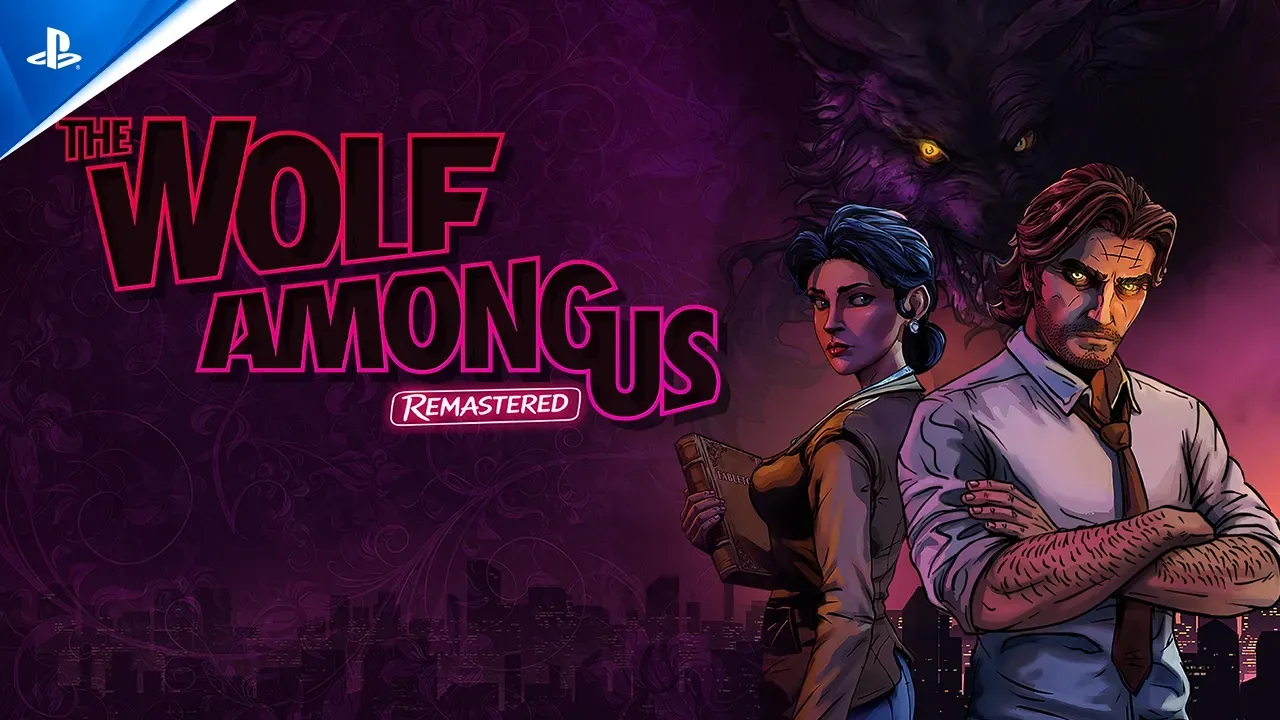
Image: playstation.com
A remaster that keeps its knife close
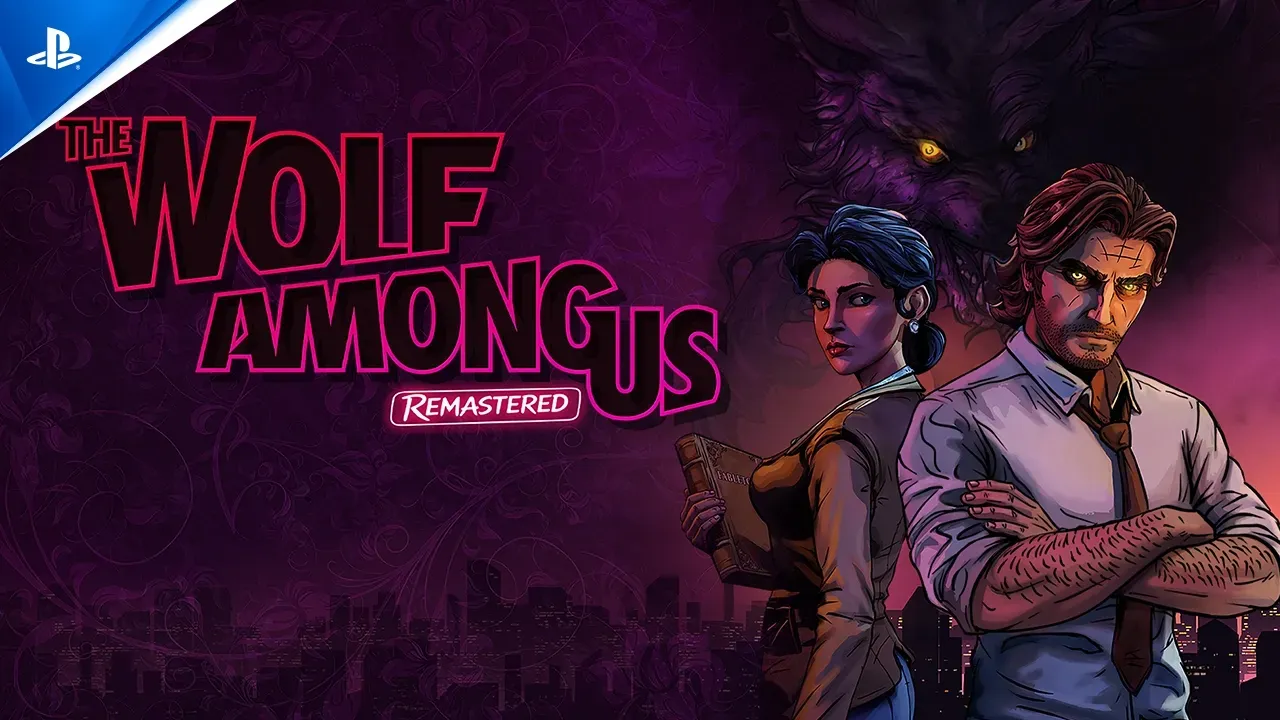
The strongest argument for The Wolf Among Us Remastered is also its biggest test for returning players: this PS5 release adds substantial archival material, including five playable deleted scenes and an alternate ending, while leaving Telltale’s original choice-driven noir largely intact. PlayStation LifeStyle reports that the package also includes five making-of videos and an image gallery filled with concept art and character drawings, which gives this version a preservation angle that goes beyond a resolution bump.
That matters because The Wolf Among Us has always lived or died on tone. Telltale’s 2013 and 2014 episodic mystery is built around Bigby Wolf, the sheriff of Fabletown, working through a murder investigation in a community where fairy-tale figures hide inside a grimy New York reality. Console Creatures notes that the remaster updates characters and environments, improves the UI and accessibility, and includes technical enhancements to animation, audio, resolution, and framerate. GameSpot’s assessment is bluntly reassuring: the remaster does not change much, and for this particular game, that restraint is a strength.
As a The Wolf Among Us Remastered review, the question is not whether the story still works in the abstract. The better question is whether the new edition sharpens the original without sanding off the unease, pauses, and hard-edged comic-book staging that made it one of Telltale’s defining works. On PS5, the answer is mostly yes, though the old Telltale machinery can still creak in places.
Fabletown’s murder mystery still sets the hook
The Wolf Among Us remains one of Telltale’s best uses of episodic pacing because its first case does not waste time. A murder pulls Bigby into Fabletown’s underclass, where glamour, poverty, corruption, addiction, and organized crime sit under the same neon light. Console Creatures identifies the game as a prequel to Bill Willingham’s Fables comics, set in 1986, with Bigby working alongside figures like Snow White across five episodes: Faith, Smoke and Mirrors, A Crooked Mile, In Sheep’s Clothing, and Cry Wolf.
The remaster benefits from how cleanly the original structures escalation. Each episode pushes Bigby deeper into a city that feels exhausted by survival. The detective rhythm alternates between talking to suspects, reading rooms, searching for clues, and making choices that determine how much force Bigby brings into a conversation. PlayStation LifeStyle points out that The Wolf Among Us was less streamlined than some later Telltale games, leaving room for detective work and a few puzzles alongside the studio’s familiar dialogue decisions and quick-time events.
That older shape is important. Some Telltale releases could feel like cutscenes with occasional prompts. The Wolf Among Us gives the player enough investigative texture to make Bigby’s role feel tactile. You are still being pulled along a authored crime story, but the moments of inspection, interrogation, and controlled violence help the noir breathe. The murder mystery is not mechanically complex by modern adventure standards, yet it keeps pressure on the player by tying procedure to temperament. Bigby can be patient, threatening, exhausted, sympathetic, or monstrous, and the game is at its best when those options feel like different ways of surviving the same room.
Choices preserve the noir fantasy, even when the formula shows its age
The Telltale formula is now easier to see than it was in 2013. Timed dialogue wheels, binary moral pressure, and quick-time scuffles became widely imitated, then widely parodied. PlayStation LifeStyle describes that formula as quaint now, but still effective when the story is told well. The Wolf Among Us Remastered proves the point because its choices are less compelling as branching technology than as performance.
Bigby’s decisions do not need to rebuild the entire plot to matter. They matter because they define the temperature of a scene. A threat delivered too early can poison a lead. A withheld punch can make Bigby look disciplined, or weak, depending on who is watching. The best choices in Fabletown are not clean moral statements. They are compromises made in doorways, offices, cheap apartments, and bars where everyone knows something and nobody wants to be the next body.
That said, anyone coming to The Wolf Among Us PS5 review coverage expecting a modern systemic detective game should calibrate expectations. This is still a Telltale adventure built around authored narrative flow. The remaster does not appear, based on the available reviews, to reinvent encounter design or add new branching systems to the main campaign. GameSpot characterizes the package as simple and faithful, and that matches the broader picture from the sources. The choice design remains powerful because of writing, performance, and staging, rather than because the remaster expands the old decision tree.
The visual upgrade respects the comic-book grime
The original game’s cel-shaded look has aged better than many technically flashier releases from the same console era. Console Creatures highlights the neon signs, rain-soaked streets, smoky bars, and New York mood that give The Wolf Among Us its interactive comic-book identity. The remaster’s job is to clean that up without making Fabletown look too polished for its own misery.
On that front, the reported improvements sound well judged. Console Creatures says the remaster updates visuals across characters and environments while improving resolution, framerate, animation, audio, UI, and accessibility. It also adds a noir mode that lets players experience the game in black and white, a fitting option for a story already built around private-eye fatalism and fairy-tale decay.
The key is that the art direction still carries the atmosphere. Fabletown needs sharp colors and deep shadows, not photorealism. Bigby’s world works because it feels like a panel you could cut yourself on, all hard silhouettes and sickly light. The remaster’s apparent restraint keeps the focus where it belongs: on faces, pauses, cigarette smoke, and the moment before a conversation turns into a fight.
There is a caveat. PlayStation LifeStyle’s PS5 review, conducted on version 1.001.000 according to its disclosure, mentions some lingering Telltale jank, including instances where textures did not load properly. That does not sound like a dealbreaker from the reported review, but it is a reminder that this is a restoration of an older Telltale game, not a ground-up remake with every seam replaced.
Combat and set-pieces still work because they are brief and nasty
The Wolf Among Us is not an action game in the traditional sense, but its violent bursts remain crucial to its pacing. Bigby is a detective, a public servant, a former monster, and a walking threat. The game uses quick-time events to turn that contradiction into physical rhythm. Fights are short, messy, and reactive. They often feel like a conversation finally ran out of words.
That approach still suits the material. The quick-time design can feel old-fashioned, especially for players accustomed to broader combat systems or more expressive cinematic action games. Yet the limited inputs keep the emphasis on impact rather than mastery. When Bigby slams through a scene, the point is not mechanical depth. It is loss of control, intimidation, and the question of whether the sheriff is solving Fabletown’s problems or becoming one of them.
The remaster’s reported animation and framerate enhancements should help those moments land more cleanly on PS5, though the source material does not provide a full technical breakdown with exact performance targets. Without confirmed resolution or frame-rate numbers from the provided sources, the safest guidance is this: expect a smoother, sharper presentation than the original release, but not a reimagined combat system. The old cadence remains, for better and for worse.
The bonus material gives returning players a real reason to come back
For returning players, the remaster’s value depends heavily on extras. Better image quality alone would have been a harder sell for a narrative game many fans already know scene by scene. The added material is where The Wolf Among Us Remastered earns its strongest case.
PlayStation LifeStyle reports that the remaster includes five well-produced making-of videos covering the original game’s art, characters, and the remaster itself, plus an image gallery with concept art and character drawings. Those additions help frame The Wolf Among Us as a piece of game history from the height of Telltale’s episodic influence.
The playable deleted scenes are the bigger draw. According to PlayStation LifeStyle, there are five of them, including an alternate ending. The same review notes that some are visibly unfinished, with missing dialogue or visual elements, but argues that their inclusion is exactly the kind of archival content a remaster should offer. That is the right read. Deleted scenes do not need to be polished into canon to be valuable. In a choice-driven game, seeing abandoned paths and alternate construction gives fans a clearer sense of how the final noir was shaped.
New players should probably treat those extras as post-credits material. The main mystery relies on atmosphere, escalation, and uncertainty. Returning players, however, get the rare chance to revisit Fabletown while also peeking behind the curtain at roads Telltale did not take.
Verdict: the best PS5 route into one of Telltale’s strongest stories
The Wolf Among Us Remastered succeeds because it understands the assignment: preserve the murder mystery, sharpen the presentation, and give longtime fans material worth opening after the credits. It does not appear to radically revise the original’s structure, and it still carries some Telltale-era roughness. PlayStation LifeStyle’s note about texture-loading issues is enough to keep this from feeling pristine. The familiar quick-time and dialogue framework will also land differently for players who have spent the last decade with more reactive adventure games.
Still, the heart of the game remains unusually strong. The writing gives Bigby’s choices weight through mood and consequence. The setting turns familiar fables into damaged people with debts, secrets, and survival instincts. The visual style still cuts through the years, and the remaster’s reported upgrades and noir mode help it sit more comfortably on modern hardware.
For first-time players, this is the version to choose if PS5 is your platform. For returning fans, the five deleted scenes, alternate ending, making-of videos, and gallery make the revisit easier to justify than a standard visual pass. The Wolf Among Us Remastered does not need to disguise its age. It wears it like a bruised knuckle, then pulls you back into the rain.
Final Verdict
A solid gaming experience that delivers on its promises and provides hours of entertainment.