
Review

By The Completionist
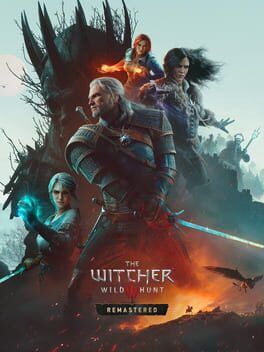
Image: IGDB
Store links: The Witcher 3: Wild Hunt Remastered on Steam
A sharper Continent, with one important caveat
The most concrete change in The Witcher III: Wild Hunt Remastered on Switch 2 is also the one that reframes the whole purchase decision: CD Projekt Red’s once-compromised handheld version now runs at 720p in handheld mode and 1080p docked, with CD Projekt Red having confirmed a 30 to 40fps target according to Nintendo Life’s reporting. That puts this release in a very different category from the original Switch port, which was impressive as an engineering feat but visibly stripped back in foliage, texture clarity, and image quality.
That creates the central tension of this The Witcher 3 Remastered Switch 2 review. This is easily the strongest Nintendo portable version of Geralt’s long hunt, and for many RPG players it is the version that finally makes the Switch ecosystem feel like a natural home for The Witcher 3 rather than a place where the game survived by compromise. It is also still a portable console version of an enormous open-world RPG. It does not chase 60fps, it has some interface lag, it shows DLSS-related image quirks, and early post-launch update talk from CD Projekt Red is already focused on performance issues elsewhere.
For players who bounced off the 2019 Switch release because Velen looked smeared and Skellige lost too much atmosphere, Remastered is a persuasive correction. For players hoping Switch 2 would turn The Witcher 3 into a high-frame-rate showcase, expectations need to be reset. Its strength is portability with dignity, not technical parity with the highest-end console or PC versions.
Visual upgrades change the feel of exploration
The original Switch port had the right quests, the right choices, and the right expansions, but it often looked as if the Continent had been viewed through a dirty spyglass. Nintendo Life specifically called out murky character models and drastically reduced foliage on the first Switch. In Remastered, those losses are largely addressed. Forests are no longer thinned into suggestion, landscape density gives White Orchard and Velen back much of their mood, and cutscenes benefit from the increase in fidelity.
That matters in an RPG this dependent on place. The Witcher 3’s best questing often begins with reading a village before reading a notice board: a collapsed fence, a nervous peasant, a battlefield left to rot, a monster trail through wet grass. On Switch 2, the world communicates that texture more clearly. Nintendo Life’s review, captured on Switch 2 in handheld and docked modes, describes the environments as much more lifelike than the first Switch version. Loot Level Chill similarly found the Switch 2 version substantially cleaner than the original port, while still noting concessions in texture quality and frame rate.
The upgrade does not erase every visual blemish. Nintendo Life reported fuzzy, aliased hair caused by DLSS, visible in handheld mode and still present while docked. Loot Level Chill also noted an unnatural smoothness to some faces. These are the kinds of issues you notice most in dialogue-heavy scenes, where Geralt’s world leans on scarred expressions, tired eyes, and courtly menace. They rarely damage quest comprehension or exploration, but they do remind you this is a scaled version of a larger remaster.
The right comparison is important. Against premium PC and current console versions, Switch 2 still gives ground. Against Switch 1, it is a generational rescue job. For players asking whether this belongs among the best Switch 2 RPGs, the answer on visual presentation is yes, because the remaster restores enough environmental density and clarity to let the game’s art direction carry the portable experience.
Witcher 3 Switch 2 performance is stable, not luxurious
The Witcher 3 Switch 2 performance story is refreshingly specific because CD Projekt Red’s target has been reported clearly. Nintendo Life says CD Projekt Red confirmed a 30 to 40fps range, and multiple sources line up with that experience. NintendoSmash describes performance as stable at 30 to 40fps, a clear improvement over the Switch 1 port’s struggles around 30fps. Retcon Magazine also lists the same 720p handheld, 1080p docked, 30 to 40fps profile.
In play, that target suits The Witcher 3 better than it would a character-action game. Geralt’s combat rewards preparation, spacing, sign choice, oils, bombs, and knowledge of enemy patterns. A locked 60fps would make swordplay feel more immediate, but the game’s decision loop is still readable at this frame-rate range. The important part is consistency, and the sourced impressions broadly agree that Switch 2 handles the remaster much better than the original Switch.
The weaknesses are concentrated in friction rather than constant instability. Nintendo Life reported roughly a one-second delay when opening the map or save menu. That sounds minor until you remember how often The Witcher 3 asks you to route between contracts, vendors, fast travel posts, question marks, monster nests, and quest stages. Map-checking is part of the game’s rhythm, and that pause can become irritating across a hundred-hour file.
Loading also remains a tradeoff. Nintendo Life says load times can be long, especially in handheld mode, while still being leagues better than Switch 1. For an RPG player, that places Remastered in a comfortable but imperfect zone. It is good enough for bed, train, and couch play without feeling like a novelty port. It is not frictionless enough to make performance disappear from the conversation.
My practical advice is simple: if 60fps is your threshold for revisiting The Witcher 3, this is not the version to buy. If your priority is a native Nintendo handheld version that no longer looks heavily compromised and usually holds its intended range, Switch 2 delivers.
Progression and combat improvements help an old RPG age better
The Remastered label is doing more work here than a resolution bump. GameWatcher characterizes the release as a traditional remaster with deep-cutting gameplay changes alongside substantial visual upgrades, while NintendoSmash points to a redesigned skill tree, improved quest visibility on the map, smoother traversal, transmog through Reforge, combat adjustments, new finishers, and smarter enemy AI.
The progression changes are the most important for long-term RPG play. The Witcher 3 has always been strongest when Geralt feels like a professional adapting to a contract rather than a generic sword-swinger gaining bigger numbers. A clearer branching skill tree, as described by NintendoSmash, better supports that fantasy because it gives players a more legible route toward alchemy-heavy preparation, sign-focused control, or sword-centric aggression. Loot Level Chill also argues that the adjusted skill tree gets players to meaningful abilities sooner, improving build diversity compared with the original system’s slower gates.
Transmog is another small system with outsized value. Loot Level Chill notes that Remastered lets players preserve stats while changing appearance, addressing a long-running RPG problem in which the best gear for a build can undercut the look you want for Geralt. NintendoSmash says this is handled through Reforge and can be paired with DLC dyes. That matters because Witcher gear sets often define both mechanical identity and role-playing identity. Being able to keep the School fantasy you prefer without losing efficiency makes late-game build expression cleaner.
Combat is improved, though not transformed into a different game. Nintendo Life found Geralt’s movement less jittery and the controls more responsive, while also saying some combat overhauls had less impact than hoped. Loot Level Chill similarly found combat tighter and smoother, while still describing Geralt as occasionally floaty. Retcon Magazine says precision is better, but the fundamentals remain recognizable.
That matches the best way to approach this remaster. If you disliked The Witcher 3 because you wanted Soulslike weight or character-action precision, Remastered will not convert you through swordplay alone. If you loved the questing but felt the old control layer was fighting you, the combined improvements to movement, Roach, animation, and progression make this a more graceful way to play an aging masterpiece.
Switch 2 features are useful when they serve the hunt
CD Projekt Red appears to have treated Switch 2 input as a real feature set rather than a checkbox. RPG Site reports that the game presents four input options on boot: gyroscope mode, motion patterns, mouse sensor, and touch screen. Nintendo Life also reports that the right Joy-Con can be used for gyroscopic aiming and mouse-style control, with gestures available for signs and other battle actions. Retcon Magazine highlights touchscreen support, gyro controls, Joy-Con mouse mode, and gestures for actions such as casting signs and summoning Roach.
The best of these features is gyro aiming. Retcon Magazine calls gyro the biggest improvement among the Switch 2-specific additions, particularly for camera movement and aiming during combat. For a game with crossbows, bombs, witcher senses, and constant camera correction during monster fights, that extra layer of adjustment is genuinely helpful in handheld play. It does not replace analog control, but it reduces the sense of wrestling with a large console RPG on a compact device.
The more experimental options are less essential. Retcon found the gesture controls gimmicky, and that lines up with how I would recommend configuring the game for a long RPG run. The Witcher 3 is a marathon of menus, contracts, crafting, travel, and dialogue. Novel inputs are welcome when they reduce friction, but any control method that adds performance theater to sign casting risks becoming tiring after the novelty fades.
Touch support, meanwhile, is quietly valuable if you play primarily handheld. The source material does not provide a full breakdown of every touch function, so it is best not to overstate it, but RPG Site and Retcon both confirm its presence. In a game where map, inventory, bestiary, and quest logs are constant companions, any smart touch integration has obvious value.
There is also a broader ecosystem point. RPG Site notes cross progression in the context of years of play across versions, and mentions seeing two mods available pre-release on Switch 2 while cautioning that post-launch mod support could not yet be judged. That leaves an unanswered question for power users. Cross progression helps make Switch 2 a continuation device for returning players. Mod support could become another pillar, but the source material does not yet establish how open or restricted it will be.
Update concerns and the buyer’s guide verdict
The Witcher 3 Remastered update situation is worth watching, but the confirmed concern is not primarily Switch 2-specific in the available reporting. DualShockers reports that CD Projekt Red posted on X that it is working on further performance improvements, particularly on PS5, after complaints including frame-rate drops, lag, crashes, and other technical issues among PlayStation players. That is a meaningful early signal that Remastered is still being tuned, but it should not be read as confirmation of an imminent Switch 2 fix for the map delay, handheld loading, or DLSS hair artifacts unless CD Projekt Red says so directly.
For Switch 2 buyers, that makes the wait-or-buy question depend on tolerance for small annoyances rather than fear of a broken port. The sourced Switch 2 reviews are broadly positive on performance relative to the original Switch version. The unresolved problems are visible and sometimes irritating, but not described as game-breaking in the material provided. The one-second map and save delay matters because Witcher 3 players live in those menus. Long loads matter because the game is vast. Hair aliasing matters because CD Projekt Red’s character work deserves better. None of those erase the larger achievement.
Value is also unusually strong if you already own the game. NintendoSmash states that owners of the original game receive a free upgrade to Remastered, and RPG Site also highlights the free upgrade path for existing owners, including DLC. If that applies to your copy, the recommendation becomes easy: claim the upgrade and see whether the new visuals, traversal, and progression changes pull you back in.
If you are buying fresh, this is the best Nintendo portable version of The Witcher 3 by a wide margin. It is also the version I would recommend to RPG players who prize quest density, build planning, and the ability to play a sprawling campaign away from a television. Handheld PC owners have a more complicated decision, since RPG Site separately frames the Steam Deck version as fantastic but more demanding to run. Based on the supplied Switch 2 material, Nintendo’s new hardware offers the cleaner console-handheld proposition.
The Witcher III Wild Hunt Remastered review score reflects that balance. The game underneath remains one of the great RPGs, with choices that still cut deeper than most open-world quest logs. The Switch 2 remaster restores enough visual atmosphere, improves enough control friction, and adds enough progression clarity to make portable play feel like a first-class way to experience the Continent. Its ceiling is capped by 30 to 40fps performance, loading, menu lag, and image reconstruction quirks, but those are tradeoffs rather than dealbreakers.
Final Verdict
A solid gaming experience that delivers on its promises and provides hours of entertainment.