
Review

By Headshot
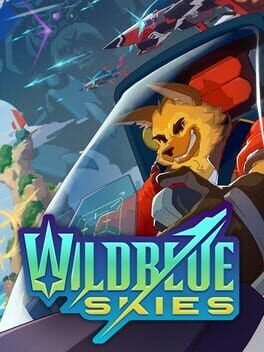
Image: IGDB
Store links: Wild Blue Skies on Steam
A sharp rail shooter caught between tribute and imitation
Wild Blue Skies arrives with the clearest possible promise: Chuhai Labs and Balor Games are offering a modern on-rails arcade shooter built in the shadow of Star Fox 64. That is the strongest fact and the central tension of this Wild Blue Skies review. The supplied critical record says the game understands the speed, scoring, squad chatter, branching routes, boss fights, and animal-pilot setup that made Nintendo’s 1997 template stick. It also says Wild Blue Skies often flies so close to that template that its best ideas have to fight for airspace.
The confirmed basics are straightforward. Metacritic lists Chuhai Labs as developer and Balor Games as publisher, with Wild Blue Skies described as a nostalgic on-rail adventure starring Bowie Stray and the Blue Bombers. Checkpoint lists platforms as PC, PlayStation 5, and Xbox Series X|S. CGMagazine reviewed the PS5 version, lists the genre as Adventure, Shooter, and Indie, gives the ESRB rating as E10, and cites a $14.99 MSRP. The release-date picture is less clean: CGMagazine lists August 11, 2026, Metacritic lists August 13, 2026, and Checkpoint lists August 14, 2026. That conflict is worth noting for buyers checking platform storefront timing, because the provided sources do not resolve whether the discrepancy reflects regional timing, listing differences, or publication data.
As a shooter, Wild Blue Skies is at its best when it treats expertise as route knowledge and execution rather than raw punishment. Console Creatures calls its mechanics familiar and tight, and says it ramps up the difficulty while understanding why this style worked decades ago. GameSpot frames it as a Star Fox-style game for experts, pointing to alternate paths, all-range stages, a rival squad, and a world map structure that mirrors the easy, medium, and hard path logic of Star Fox 64. Metacritic’s collected excerpts are more cautious, with the overall critical label sitting at “Mixed or Average” from the listed review set, and several outlets praising the flying while criticizing the story, familiarity, or difficulty spikes.
GameLoop’s verdict lands in the same pressure zone. Wild Blue Skies delivers the expert-level Star Fox energy players are being sold when the game is on rails, asking you to prioritize targets, route cleanly, rescue squadmates, learn boss patterns, and chase scores. It is less convincing when it leans on direct imitation or drops into full-movement encounters that some sources describe as slower and less exciting.
Controls reward clean inputs, but the weapon layout will split players
The best case for Wild Blue Skies starts with control. Across the source material, the on-rails handling is the most consistently praised part of the game. Gamer Heroes calls the controls tight and responsive, highlighting lock-ons, braking, boosting, dodge rolls that deflect fire, and Free Flight sections. Console Creatures says the ship largely handles the way genre players expect and even says some of Chuhai’s control variations are preferable to Star Fox 64. CGMagazine says the on-rails sections have “silky-smooth controls” and feel phenomenal to play.
The most important change is the weapon mapping. GameSpot notes that regular fire and charged shot are mapped to separate buttons rather than sharing one button as in Star Fox. Its reviewer found that adjustment worked well after acclimation because it created a cleaner split between rapid fire and deliberate charged shots. GameSpot also mentions enabling auto-fire in the settings so regular fire became a continuous stream, leaving the charged shot as the intentional decision. Gamer Social Club also points to the separate laser and charge-shot inputs as a meaningful scoring layer, saying some enemies are better cut down with lasers while others are better handled with a charge shot.
That control scheme is demanding in a good shooter sense. You are managing damage output, target priority, movement correction, defensive rolls, bombs, and score optimization at once. It pushes the Wild Blue Skies gameplay loop away from casual nostalgia and toward execution. When a rail shooter asks for mastery, the input map has to make success feel earned instead of fiddly. The supplied sources suggest Wild Blue Skies usually clears that bar.
There is a caveat. Metacritic’s excerpt from Checkpoint says awkward weapon controls hold the game back from greatness, even while praising its tight gameplay. That is not a hard contradiction so much as a player-skill and preference split. If you want a one-button classic rhythm, separate fire modes may feel busy. If you want a cleaner competitive distinction between spray, charge, bomb, roll, brake, and boost, the layout gives you room to optimize. For an arcade shooter audience, that tradeoff favors depth, but it raises the entry tax.
Mission design hits hardest when routes and hazards demand mastery
Wild Blue Skies is structured around compact missions that often end in boss fights, according to Console Creatures. The same source describes branching paths based on what you accomplish inside missions, with levels moving through bright, colorful areas including waterfalls, oceans, deserts, ice and crystal caves, and large space structures. Gamer Heroes adds Arctic Shelters, Canyons, Temples, and Hurricanes to the level variety, while Gamer Social Club singles out an archipelago setting with canyons, a hurricane, and an ancient Mayan-style pyramid.
The best mission ideas use movement as the test. GameSpot describes a canyon stage where the fighter pulls up hard and climbs vertically along a waterfall while dodging boulders. Gamer Social Club names that canyon and waterfall sequence as a personal highlight. That kind of set piece is where Wild Blue Skies earns its own identity despite the obvious Wild Blue Skies Star Fox comparison. The game’s world is not a galaxy, according to GameSpot and Console Creatures, and its jets are styled less like spacecraft and more like fighters. Functionally, an ice region still reads like an ice planet in a rail-shooter map, but the one-world setup gives the route a more cohesive travel logic.
The mission flow also understands old arcade pressure. Gamer Heroes says repeat runs are encouraged by learning lock-on targets, boss patterns, and environmental secrets such as specific waterfalls. Gamer Social Club says harder-path levels are among the game’s best and that branching routes are unlocked by completing specific objectives inside stages. GamingTrend says each playthrough begins with the same opening mission, but your in-mission actions determine progression options.
Where the design stumbles is precision tolerance and mission length. Console Creatures says some levels feel shorter than desired. Gamer Social Club criticizes some narrow sections, specifically noting that a waterfall-based route objective can feel too tight, making a challenge that should be skillful risk feeling cramped. That matters in a demanding rail shooter. Tight lanes are great when they sharpen focus. They are frustrating when collision spacing turns route discovery into repeated punishment.
Free-flight and bosses create the biggest swing in quality
Wild Blue Skies includes both on-rails stages and full-range or free-movement encounters. That is where the review record becomes more uneven. CGMagazine praises the on-rails sections but says the pace does not fully translate to full-movement levels, which include giant boss fights and engagements against a rival squad called the Predators. The outlet describes those sections as surprisingly sluggish compared with the fast, frenetic rail stages.
That complaint cuts against the “expert Star Fox” pitch because all-range combat should be a showcase for spatial awareness, target tracking, and boost-brake control. In a shooter, speed perception is part of the feedback loop. If enemies feel like they are drifting instead of pressuring you, the fight loses urgency even if the mechanics are technically present. CGMagazine’s issue is not that the mode exists, but that its tempo appears lower than the rest of the game.
The boss record is stronger. Gamer Social Club calls boss battles a highlight and says many bosses have distinct themes, fun patterns, and multiple phases. Gamer Heroes says learning boss patterns is central to the mastery loop. GamingTrend says each stage ends with a boss encounter and that Grimclaw’s crew has different personalities, attack patterns, and weaknesses, with most readable after a handful of attempts. Console Creatures also frames missions as building toward big boss fights.
That makes bosses a net positive for replay value, with the caution that full-movement pacing may not match the rail stages. The best Wild Blue Skies arcade shooter moments appear to be the classic ones: memorize entry lanes, tag targets, dodge or roll through fire, save resources, then cash in your learning against a boss pattern. When it becomes an open dogfight, the supplied sources suggest the skill expression is less consistent.
Replay value is real, but it depends on loving score runs
Wild Blue Skies is built for repeat play rather than a long first clear. GamingTrend says a full playthrough can be finished in about half an hour, but also says players are pushed back into the cockpit to find every mission and complete trophies. That short-run structure is not a weakness by default. For this genre, it is the arcade contract: one clean run is the beginning, not the end.
The replay hooks are specific. Gamer Heroes reports alternate paths, collectible Ribbons for high scores, and four hidden W-I-L-D letters in each mission. Gamer Social Club says bonuses come from destroying enemies, avoiding damage, beating bosses quickly, finding WILD letters, and keeping your team alive. That same source says squadmates can affect scoring and survival, while CGMagazine says squadmates sit out for a level if they take too much damage. Those details give Wild Blue Skies more to optimize than simply reaching the credits.
This is where the game most earns its expert label. Good arcade shooters create a loop where the first run teaches survival, the second run teaches routing, and later runs become score discipline. The provided sources consistently describe Wild Blue Skies as a game about learning objectives, finding branches, optimizing weapons, keeping momentum, and improving outcomes. For players searching “Wild Blue Skies score” because they want to know whether it has staying power, the answer is yes if you enjoy score chasing and path hunting.
The limitation is audience fit. Finger Guns, quoted in Metacritic’s listing, criticizes the game for difficulty issues, repetitive arcade structure, and limited narrative pull, reducing it to a score chaser. That is a harsh read, but the underlying point is useful. If score chasing sounds like a downgrade to you, Wild Blue Skies will probably feel thin after the first few loops. If you grew up measuring success by route unlocks, boss speed, hit count, and clean survival, the replay value is the product.
Presentation has charm, while the story stays thin and familiar
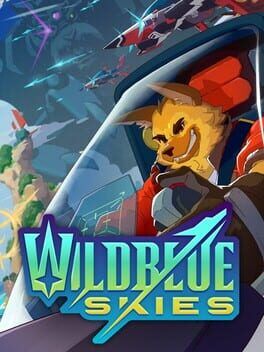
The story premise is familiar by design. GameSpot describes hotshot anthropomorphic animal pilots facing a reemerged megalomaniacal scientist, with Bowie leading the Blue Bombers alongside Roe, Chuck, and Thorne against Grimclaw. Gamer Social Club gives a similar setup: Grimclaw, once a renowned engineer, attacks with a robotic army after years of exile, and the new Blue Bombers are called in to stop him. CGMagazine says you play as Bowie Stray, leader of the mercenary Blue Bombers, after Grimclaw launches an invasion to take over the world.
The criticism is that there is not much story beyond the setup. Console Creatures says there is not much world-building and that players who know Star Fox 64 have “been there, done that,” while still liking the voiced crew. CGMagazine calls the story lacklustre and says the game sticks too close to Star Fox’s structure. Metacritic’s excerpts from CGMagazine, COGconnected, Gamer Social Club, and Finger Guns all point in the same direction: the homage is clear, but the game struggles to escape the shadow of the series that inspired it.
Presentation lands better. Gamer Social Club praises the visual style as a mix of older anime and 1990s cartoons, citing shows such as Robotech, SWAT Kats, and Road Rovers as reference points. Checkpoint says the animated squad-up intro evokes weekend morning cartoons and praises the voice cast for selling the exaggerated personalities. Console Creatures says the characters are fully voiced and have distinct personalities, though it wanted more context and backstory. Metacritic’s Checkpoint excerpt also calls the presentation gorgeous.
For a buyer, that means the crew banter and cartoon art style are assets, while the plot should not be treated as a selling point. Wild Blue Skies has enough personality to make missions feel lively, but the supplied sources do not support calling it a strong narrative shooter. Its fiction exists to keep targets moving and radio chatter flowing.
GameLoop score and buying advice
Wild Blue Skies gets an 8.0 from GameLoop because its core arcade flight combat is strong, its route design supports repeat play, and its controls add a meaningful layer of execution without losing the pick-up-and-play appeal of the genre. The score is held back by a thin story, very direct Star Fox imitation, source-reported roughness in full-movement sections, and some criticism around difficulty, repetition, and narrow challenge spaces.
The best reason to buy is the on-rails action. If your ideal Wild Blue Skies gameplay session is a 30-minute run where you chase a better score, keep the squad alive, route into harder missions, learn boss patterns, and hunt collectibles, this is aimed directly at you. At the $14.99 MSRP listed by CGMagazine, the value case is strongest for players who replay arcade shooters instead of clearing them once.
The best reason to wait is if you need originality or campaign heft. Multiple supplied reviews praise the game while also stressing how closely it follows Star Fox 64. Metacritic’s page labels the critical response “Mixed or Average,” even though several individual excerpts are positive about the flying. That split makes sense. Wild Blue Skies is a sharper recommendation for genre veterans than for players expecting a broad modern shooter campaign.
Performance evidence in the provided sources is limited. CGMagazine and Checkpoint reviewed on PS5, and the available excerpts do not identify major technical problems. CGMagazine’s praise for smooth on-rails controls is encouraging, but there is no supplied frame-rate analysis, PC requirements discussion, Xbox technical breakdown, or patch history. Treat the performance score here as a confidence rating based on the available review record, not a lab-tested verdict across all platforms.
The final call is simple: Wild Blue Skies does deliver the expert-level Star Fox energy in its best missions. It is fast, readable, score-focused, and willing to demand cleaner play. It does not fully solve the problem of being a spiritual successor that sometimes feels like a direct echo. For arcade shooter fans, that is a good trade. For everyone else, it is a focused throwback with limited range.
Final Verdict
A solid gaming experience that delivers on its promises and provides hours of entertainment.