
Review

By Headshot
Overview
Hexi arrives as Where Winds Meet’s first truly massive free expansion, a sprawling western frontier that stretches from Jade Gate’s sand-scoured passes to the snows of Liangzhou and the rolling grasslands of Qichuan. It is positioned very clearly as a comeback pitch: a no-cost content drop that promises fresh story, new combat styles, large new regions, and a meaningful boost to endgame.
In practice, Hexi is a strong step forward in some key areas and a painful reminder of unresolved flaws in others. It is absolutely the most cohesive, atmospheric chunk of content the game has seen yet, but it still wrestles with pacing, progression bloat, and performance that wobbles right when the spectacle should impress.
For lapsed players, the answer to “should I come back for Hexi?” is a conditional yes. If you bounced off the game’s structure and grind, Hexi will not magically fix that. If you loved the wuxia fantasy but ran out of reasons to log in, this is the expansion that finally gives the endgame some teeth.
The Hexi Region As An Integrated Experience
Hexi is technically three regions, but it has been built to feel like a single frontier corridor. You push out from the core map through the western pass and the tone immediately shifts. Sandstorms blow along caravan roads, fortress silhouettes hang on the horizon, and the skybox does far more heavy lifting than before. The sense of crossing into a dangerous, liminal space is palpable.
Transitioning between Jade Gate, Qichuan, and Liangzhou is almost entirely seamless. Load transitions are well hidden behind mountain paths, narrow ravines, or long desert roads. Hexi never feels like three disconnected biomes stitched together, but rather like a lived-in route that merchants, soldiers, and exiles have been using for centuries.
Traversal benefits from that cohesive design. Hexi doubles down on verticality and long sightlines. High ridges above Jade Gate give you sweeping views of caravans and patrol routes. Qichuan’s open grasslands invite horseback sprinting and aerial movement, while Liangzhou’s ridges and frozen rivers offer slower, more methodical routes. There is a welcome rhythm in how these spaces ask you to move, fight, and plan your approach.
Jade Gate: Flying Sands and Fortress Stories
Jade Gate is the showpiece introduction to Hexi and easily the expansion’s strongest area. It combines the original game’s love of grand architecture with a new focus on frontier tension. The main fortress itself is a maze of battlements, half-finished repairs, and makeshift encampments, and it sells the idea of a garrison stretched thin.
Quest design here is notably sharper than at launch. Rather than endless errands scattered without context, Jade Gate favors tightly linked quest chains that revolve around specific pressure points. You pick apart supply shortages, spy networks, and low morale inside the garrison. The writing leans into surveillance, paranoia, and the fear of being abandoned by the capital, and NPCs actually reference events from other quest lines in subtle ways.
Environmental storytelling carries a lot of the weight. A collapsed watchtower becomes a side story about corruption when you find falsified repair reports. A mass grave near the walls ties into a later quest where you investigate a failed relief convoy. None of this is revolutionary RPG design, but compared to the busywork that dragged down the base game, Jade Gate feels almost surgical.
Combat encounters in Jade Gate emphasize tight spaces and vertical engagement. You are constantly fighting on stairs, narrow bastions, and broken walls. New enemy types, including agile raiders and shield-bearing frontier soldiers, are tuned to punish careless dodging or spammed combos. With the right build these fights are exhilarating. With a sloppy one they expose just how clumsy some of the older martial styles now feel.
Qichuan: Timeless Trails, Uneven Content
Qichuan is the most visually soothing of the three regions. Rolling hills, weathered trails, and solitary shrines create a melancholy tone that recalls the best vistas from the eastern parts of the base game. On foot or horseback, trekking through Qichuan at dusk is exactly the kind of wistful, painterly experience Where Winds Meet’s early trailers promised.
That makes it all the more frustrating that Qichuan’s quest design regresses. The main story beats that run through the region are solid, focusing on displaced families, migrating caravans, and a border village caught between loyalty and survival. However, the side content is bloated with the same distractions that once clogged Kaifeng: collectible hunts that barely acknowledge the setting, generic bandit camps, and a string of small tasks that feel like padding rather than meaningful worldbuilding.
There are highlights. One questline involving a caravan haunted by its own bad decisions does a nice job of blending environmental clues with moral choices. Another uses the region’s famous trails to stage a multi-part investigation across shrines and crossroads. Those moments hint at what Qichuan could have been if the filler had been cut.
Combat here is more open and dynamic. Ambushes, cavalry skirmishes, and long-range archery all play naturally in the broad valleys. This is where the expansion’s new mounted combat adjustments shine, making horseback engagements more responsive and giving ranged builds a real home. Unfortunately, AI pathfinding still struggles when too many enemies and allies collide in open terrain, which leads to immersion-breaking clumps of foes stuck on rocks and fences.
Liangzhou: Pale Snows and High Stakes
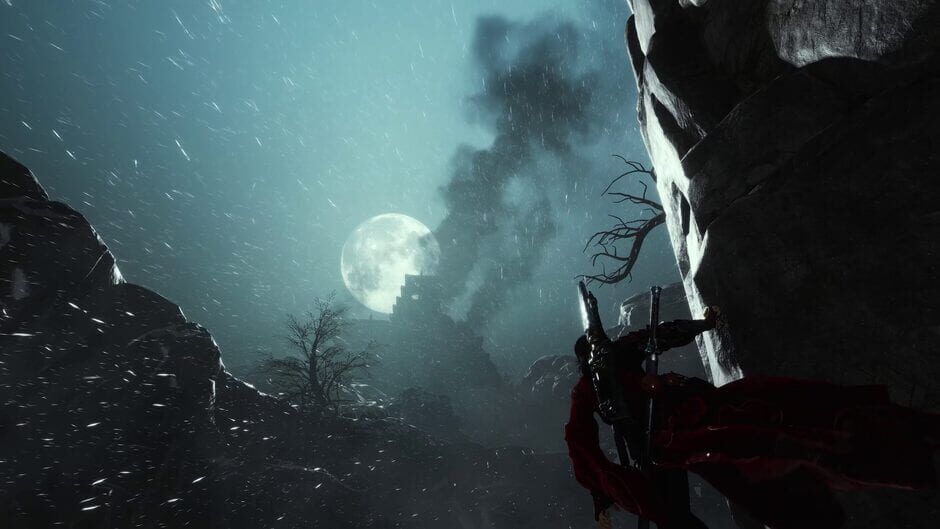
Liangzhou is Hexi’s late-game playground. A stark palette of snow, wind, and exposed rock gives it a striking identity, and the region is structured largely around staging points for larger battles and high-level instanced content. It is here that the expansion’s promises about a better endgame either live or die.
The good news is that Liangzhou’s core activities are far more intentional than the base game’s endgame. You are drawn into a series of escalating conflicts against cursed lands and elite enemy forces tied directly to the frontier story. High-level hunts, mini-raids, and difficult solo trials are all slotted into a clear progression path that respects your time more than the old grind.
Environmental storytelling supports this higher difficulty tier. Abandoned border temples hint at rituals gone wrong. Frozen supply lines tell you where the empire overreached. Even small details like half-buried banners or shattered siege equipment make the region feel like an active war front rather than a generic snowy biome.
Still, Liangzhou is also where performance hitches hit hardest. Snow effects, swirling embers, and large numbers of enemies combine to push the game beyond its comfort zone. On a capable PC you can mostly brute-force through this, but even then frame pacing stutters at the worst moments, lending marquee encounters a slightly unstable feel.
New Combat Styles and Systems
Hexi introduces new weapon styles and martial arts that lean into frontier warfare. Fast-cut blades, brutal fist techniques, and long-reaching spears give you more expressive options during both duels and group encounters. More importantly, their skill trees are better thought out than some of the launch offerings.
The new blade style thrives on proactive counters and gap closers, giving you reliable ways to punish telegraphed enemy attacks. Fist techniques are built around short, explosive strings that reward close spacing and enemy knowledge. Spear options expand your control in larger fights, with line attacks and sweeps that make crowd management feel far less chaotic.
Across all of these styles, Hexi does a better job of tying mechanics to setting. Moves reference frontier legends, local martial schools, and historical fighting methods from the Hexi Corridor, and the associated quests and training duels give context to why these styles matter.
Balance, however, is not perfect. Certain new skills clearly outperform older ones, particularly in group content where powerful area attacks and stagger potential trivialize older builds. The gap is not game-breaking, but if you were fond of a niche style from launch, you may feel pushed into respecing just to remain viable in high-end Hexi activities.
Performance and Technical State
Technically, Hexi is a mixed package. The underlying art direction is terrific: lighting in the desert at dawn, snowstorms rolling over Liangzhou, and the subtle color shifts in Qichuan all speak to a team that understands how to paint a world.
On the ground, though, the expansion frequently overreaches. On PC, the new regions tax both CPU and GPU far more aggressively than the eastern map. Large battles around Jade Gate and Liangzhou in particular exhibit frame drops and micro-stutters, even on hardware that previously handled the base game without significant issue. Texture streaming sometimes lags behind rapid traversal, creating a brief but noticeable pop-in of rocks, foliage, and even NPCs as you sprint or glide across zones.
On console, the frame rate tends to be more stable but at the cost of distant detail and physics intensity. Environmental clutter thins out at range, and the most impressive weather effects are scaled back. It still looks good, but you can feel the compromises.
Bugs are present but not catastrophic. A few quest triggers fail to fire correctly in Qichuan, requiring reloads. Enemy spawns occasionally bug out in larger set-piece fights, leaving one crucial target stuck in geometry and forcing a reset. None of this ruins the experience, yet the rough edges undermine what should be Hexi’s most triumphant battles.
Does Hexi Fix The Endgame?
The biggest structural win for Hexi is how it reframes endgame. Instead of a loose collection of time sinks and recycled bosses, the expansion folds high-level activities into a frontier campaign that actually feels like it is moving forward.
Progression in Hexi is built around a clear continuum of difficulty. You start with smaller skirmishes, build up to multi-phase encounters and tough world bosses, then graduate into repeatable trials and co-op activities that scale well. Rewards, while still tied to familiar currencies and systems, now tend to come with more meaningful stat bumps and clearer upgrade paths.
There is also a stronger narrative spine to the grind. Conquering or purifying specific areas in Liangzhou and Jade Gate changes local conditions, unlocks new vendors, and even shifts some ambient dialogue. It is not a living world in the truest sense, but it is far less static than before, and it makes logging in for another round of frontier cleanup feel less like punching a clock.
That said, Hexi cannot entirely escape the game’s systemic baggage. Daily and weekly tasks still encourage a scattershot loop that pulls you away from the expansion’s strongest content. Drop rates on top-tier gear remain tuned to stretch engagement, and some of the best rewards are predictably parked behind lengthy grinds and group-only content. Players who quit precisely because of that treadmill will eventually rediscover the same frustrations.
Verdict: Is Hexi Enough To Bring You Back?
Hexi is the version of Where Winds Meet that many players probably wanted at launch. Its regions are more cohesive, its quest design sharper, its combat styles more thematically rooted, and its endgame more directed and rewarding. As a free expansion, it is generous in both scope and ambition.
It is not, however, a total reinvention. Performance issues persist at the high end. Qichuan’s bloat shows that the developers still cannot resist old habits. Progression remains grind-heavy, and balance tilts toward the new toys in a way that subtly devalues some legacy builds.
If you enjoyed the core fantasy of Where Winds Meet but felt the world ran out of interesting things to show you, Hexi is absolutely worth reinstalling for. Its best hours in Jade Gate and Liangzhou stand shoulder to shoulder with the finest moments in the game so far, and the new endgame loop finally feels like it has a point.
If you bounced hard off the game’s structural grind, however, Hexi is more of a refined iteration than a radical fix. You will find better storytelling, better vistas, and better fights on the frontier, but you will also find the same systems patiently waiting underneath.
Hexi proves that Where Winds Meet is moving in the right direction. Whether that is enough to win you back depends on how forgiving you are willing to be with a game that is still learning from its own mistakes.
Final Verdict
A solid gaming experience that delivers on its promises and provides hours of entertainment.