
Review
By Pixel Perfect
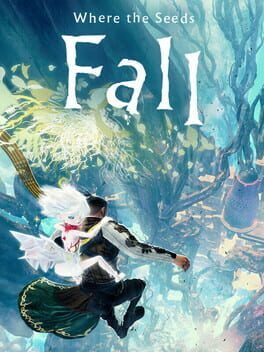
Image: IGDB
Store links: Where the Seeds Fall on Steam
A $10 descent with one strong hook and one big question
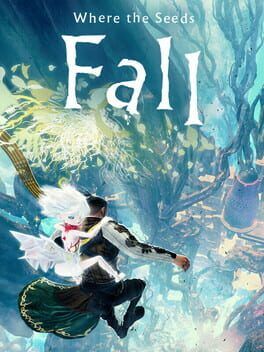
Where the Seeds Fall launched digitally on November 5, 2026 for PC via Steam, Nintendo Switch 2, and PS5, according to AUTOMATON WEST and Stadion Gaming. Press Play Media lists Cygames as publisher, with development credited to CygamesEdge and ZEREO Inc., while Stadion calls it the first game from CygamesEdge, Cygames’ small-to-mid-scale label. That context matters because this is a deliberately compact release, priced at USD $9.99 by Stadion and described by GamingBolt as a roughly two-to-three-hour experience depending on whether Challenge Stages are included.
The tension in this Where the Seeds Fall review is simple: the game has a clean, memorable design pitch, but it has very little runway to turn that pitch into lasting emotional force. Instead of climbing upward through a punishing platforming gauntlet, you descend through the unstable branches of a colossal World Tree while escorting a Fell Child, a child treated by the surviving population as an omen of disaster. The strongest parts of the game come from that downward motion, where each jump has the nervous finality of a decision you cannot easily take back. The weaker parts come from the story surrounding it, which several reviews describe as sincere but thinly developed.
For indie adventure fans, that makes Where the Seeds Fall an easy game to admire and a slightly harder game to love. It understands the physical drama of falling. It is less sure about the emotional weight of why the fall should hurt.
The premise has mythic shape, but the bond needs more time
The confirmed setup is direct and bleak. Press Play Media describes a world where humanity has fled the Blight-contaminated surface and now lives high in the branches of an enormous World Tree. GamingBolt’s review adds that the Blight emerged after humanity destroyed the tree, corroding those caught within it. Into that world comes a soldier pursuing a Fell Child, only to hesitate because the child resembles his deceased daughter. Rather than obeying orders, he protects her and begins the journey downward.
That is a sturdy frame for a compact adventure: a broken adult, a hunted child, a poisoned world below, and a society that has turned fear into doctrine. Press Play Media notes that the game leans on visual moments and character interactions rather than heavy dialogue, including small gestures meant to build warmth between the soldier and child. Stadion Gaming found the story quiet and sincere, saying it does more with less dialogue than expected.
The problem is that the emotional arc appears to land closer to suggestion than transformation. GamingBolt says the nameless soldier’s turn is mostly carried through flashbacks and that neither lead receives much character development. Press Play Media similarly argues that the central relationship remains underdeveloped, with the short duration leaving some developments feeling rushed. For a game about protection, prejudice, and grief, Where the Seeds Fall has the right ingredients, but it often plates them before they have fully cooked.
That does not make the story ineffective. It gives the descent purpose, and the Fell Child’s role in both narrative and movement ties the game’s heart to its hands. Still, players coming to the Where the Seeds Fall game primarily for a devastating escort tale may find the emotional beats familiar and lightly sketched.
Where the Seeds Fall gameplay is at its best when gravity is the enemy
The core idea is the reason to play. Where the Seeds Fall inverts the familiar climb-up platformer by making descent the goal. Press Play Media describes its challenge as finding safe routes downward through unstable branches while accounting for landing spots, distance, and environmental hazards such as strong winds. Stadion frames the same design as a reversal of climb-to-the-top rage games, where the enemy is gravity and every jump carries risk.
That reversal gives the Where the Seeds Fall gameplay its personality. A jump downward feels different from a jump upward because failure is spatially dramatic. You are not simply missing a ledge; you are committing to empty space and hoping your read of the terrain was right. AUTOMATON WEST’s demo impressions from Osaka Indie Games Summit 2026 emphasized the weight in the character’s movement, noting that careless directional changes could send the player tumbling and that midair corrections were difficult. The same preview also reported that many players struggled with the controls at first, including the writer.
That heavier movement is both craft choice and sticking point. GamingBolt’s review says CygamesEdge makes falling feel intriguing, but that the core movement leaves something to be desired. AUTOMATON, from an earlier demo, came away more positive on the friction, arguing that mastering the character’s restricted movement made fast descents satisfying. Those views are not contradictory so much as they point to the game’s central tradeoff. Where the Seeds Fall wants commitment. It wants your jump to feel like a choice. When the level design gives you a clear read and the controls obey your intent, that tension sings. When the movement’s weight fights your adjustment window, the danger can feel less like precision and more like negotiation.
The Fell Child turns escorting into a movement tool
The best mechanical decision is that the Fell Child is not treated only as narrative cargo. AUTOMATON WEST reported that the child riding on the soldier’s back enables abilities such as brief levitation or a double-jump-like move, limited by a gauge. GamingBolt describes additional utility: while the Fell Child is onboard, the player can glide as long as the child’s energy remains, and the child can create leaf platforms that appear as the player jumps farther down, with earlier branches rotting away and forcing quick movement.
That matters because it keeps the escort concept from becoming passive. The child is the reason the soldier breaks from his orders, but she is also the reason the descent opens up mechanically. In practice, that means the game’s emotional premise and platforming verbs are at least pointed in the same direction. You protect the child, and the child lets you survive impossible routes.
The limitation gauge is important too. According to AUTOMATON, these abilities cannot be spammed, which keeps them from flattening the level design. A well-timed levitation, glide, or conjured platform becomes a correction tool, a shortcut enabler, or a last-second save rather than a permanent safety net. That is where Where the Seeds Fall feels most like a smart small game: it takes one companion idea and asks it to do mechanical, narrative, and pacing work at once.
The catch is variety. Source reviews describe a compact campaign with extra harder maps, Challenge Stages, and time-trial-style replay hooks, but the available material does not point to a broad move set or major late-game reinvention. If you are satisfied by refining a focused descent mechanic, there is enough here to chew on. If you need exploration to keep unveiling new systems, the game’s small scale is visible.
Approachable by design, but less memorable for challenge seekers
Where the Seeds Fall sits in an interesting difficulty lane. Its premise resembles the kind of precision platforming associated with punishing climb or fall games, yet Press Play Media says frequent checkpoints keep mistakes from becoming too frustrating and encourage experimentation. Stadion Gaming likewise argues that it is less cruel than the rage-game template, with challenge coming from reading space rather than punishing the player for tiny errors.
That accessibility is a strength. A game about irreversible downward decisions could easily become exhausting, especially with weighty movement and limited midair correction. Frequent checkpoints soften the sting and allow players to learn by doing. For a one-evening adventure, that is the right call. It keeps the pace moving and makes the emotional journey less likely to be buried under repetition.
There is a cost, though. Press Play Media notes that players seeking an exceptionally demanding platforming challenge may find the difficulty underwhelming. Stadion makes a similar point, saying the game is approachable but arguably less memorable for players who enjoy masochistic platformers. That positions Where the Seeds Fall as a better fit for exploration-minded platforming fans than for players chasing a new Jump King-style obsession.
The campaign length sharpens that distinction. GamingBolt says the game promises three hours but took a little over two hours including Challenge Stages. Stadion lists the main story at about three hours, with harder maps and a time trial mode afterward. At $9.99, that is not a bad value equation, but it is a specific one. You are paying for a polished, concentrated hook, not a sprawling indie adventure.
Presentation sells the height, even when the story undersells the hurt
The World Tree setting is the game’s strongest atmospheric asset. Press Play Media frames the adventure around the branches of an enormous tree rising above a poisoned surface, while Stadion praises the sense of scale when looking down. AUTOMATON’s demo description of crumbling ruins, broken terrain, narrow platforms, sheer cliffs, and thin pillars suggests an environment built to make every downward glance feel active rather than decorative.
That visual premise does a lot of work for the mood. Where the Seeds Fall does not need constant exposition when its setting already communicates collapse, height, and social desperation. A platform below you is never simply the next step; it is a risk, a possible shortcut, and a reminder that the world has been arranged vertically because the ground itself has become dangerous.
Audio and performance details are harder to assess from the supplied source material. The provided reviews and listings do not offer enough specific information to make strong claims about frame rate, resolution targets, soundtrack quality, or platform comparisons between PS5, Switch 2, and PC. Buyers sensitive to performance should check current storefront notes and user reports, especially on Steam, where the supplied Steam Community page text confirms the review hub exists but does not include usable review sentiment in the provided excerpt.
As an atmospheric indie-style adventure, though, Where the Seeds Fall appears to succeed most through composition and pressure. Its descent gives the world shape. Its ruins and branches give the platforming context. Its story gives you a reason to keep going, even if that reason does not deepen as much as it could.
Verdict: a clever, compact fall that needed deeper roots
Where the Seeds Fall is a promising debut for CygamesEdge because it understands the value of a single strong verb. Go down. Read the gap. Commit to the fall. Use the child’s limited abilities to bend danger without erasing it. In its best moments, that structure makes familiar platforming feel freshly anxious.
As a Where the Seeds Fall indie review, the recommendation comes with a clear caveat. The game’s physical descent is more convincing than its emotional descent. The soldier and Fell Child have a compelling setup, and the prejudice surrounding Fell Children gives the journey thematic weight, but GamingBolt and Press Play Media both identify the relationship as underdeveloped. Stadion found the story effective, though predictable. Taken together, the picture is of a game whose heart is present, but whose short runtime keeps it from fully blooming.
Buy it if you want a focused action-adventure platformer you can finish in one or two sittings, especially if you enjoy tense traversal without the cruelty of harsher rage platformers. Wait for a sale if you measure value mainly by hours, need a demanding endgame, or want a richly developed character drama. Where the Seeds Fall is small, smart, and occasionally striking. It falls with confidence, even when it does not always land with the emotional force it reaches for.
Final Verdict
A solid gaming experience that delivers on its promises and provides hours of entertainment.