
Review

By Pixel Perfect
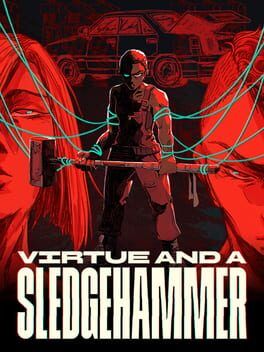
Image: IGDB
Store links: Virtue and a Sledgehammer on Steam
A PC launch built around one heavy question
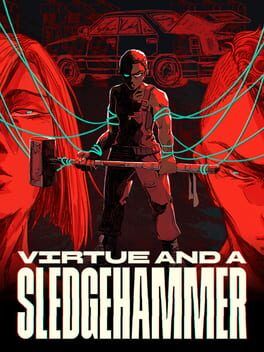
Virtue and a Sledgehammer is available now on PC via Steam for $14.99, according to MonsterVine’s launch report, with Devolver Digital publishing and Deconstructeam and Selkie Harbour credited as developers by both MonsterVine and Metacritic. That concrete launch detail is the easy part. The harder question, and the one this Virtue and a Sledgehammer review keeps returning to, is whether a game sold on the image of a woman demolishing her hometown with a 20-pound sledgehammer has a lasting mechanical identity once the shock of the pitch wears off.
The answer is yes, with an important caveat. This is a narrative exploration game first, an action game only in short, deliberate bursts. Rock Paper Shotgun reports that the developers describe it as “narrative exploration,” and Checkpoint Gaming quotes Deconstructeam developer Jordi de Paco calling it “a walking simulator, but with a sledgehammer.” That description is unusually useful buyer guidance. If you come to Virtue and a Sledgehammer PC expecting combo routes, high-speed brawling, or a demolition sandbox, you will likely feel boxed in. If you want a compact, authored indie game where every swing is both traversal tool and emotional punctuation, the launch version has a much clearer hook than its premise alone suggests.
The premise is blunt by design. Pratelle returns to her childhood hometown, now populated by robotic or digital facsimiles of people who once lived there. MonsterVine describes those figures as metal bodies carrying the people she once knew, while Rock Paper Shotgun and Checkpoint Gaming both frame them as android or robot copies tied to the town’s former inhabitants. Pratelle’s tool, and in many present-day scenes her only form of interaction, is the sledgehammer. The game makes that limitation central rather than incidental.
The swing is slow because the game wants you to feel it
The most important thing to know about Virtue and a Sledgehammer at launch is that it does not make destruction frictionless. Rock Paper Shotgun notes that Pratelle’s swings are slow and deliberate, requiring some charge-up and ending in a lengthy recovery animation. That pacing creates modest timing pressure when more aggressive bots confront her, but it also prevents the violence from becoming disposable scenery cleanup.
This choice gives the game its physical signature. The hammer is not a magic delete button. It has weight, delay, and consequence. You decide to commit, then you watch the result. Rock Paper Shotgun argues that this slowness lends emotional weight by making the player face the crumbling homes and collapsing humanoid bodies rather than gliding past them. In play terms, that means Virtue and a Sledgehammer lives closer to intention than spectacle. You line up, charge, swing, recover, and keep walking.
Checkpoint Gaming adds a sharper structural detail: outside flashbacks, Pratelle does not speak to the robots she encounters. The player can stand and listen, walk away, or press the attack button and destroy a robot mid-sentence. That is a small input set, but it is not a weak one. The absence of dialogue options makes each encounter feel unnervingly clear. You are rarely negotiating. You are choosing whether to hear a voice before silencing it, whether to leave it standing, or whether to turn the town into debris to find another piece of the past.
As action design, it is intentionally basic. Metacritic’s excerpt from SteamDeckHQ calls the gameplay “basic” while praising the emotional story, and several listed critic blurbs emphasize narrative over systems. That tracks with the broader shape of the game. The hammer feels distinct because it is heavy, slow, and morally loaded. It is not deep enough to carry players who need mechanical escalation every ten minutes.
A town that opens through damage, memory, and guilt
Virtue and a Sledgehammer gives its destruction a practical exploration purpose. Rock Paper Shotgun reports that breaking masonry opens new nooks and paths, leading to flashback story scenes that contextualize Pratelle’s rampage. That structure is the key difference between a striking premise and a sustained game. You are not merely reducing a map to rubble for points. You are using damage to expose memory.
The flashbacks are described by Rock Paper Shotgun as non-chronological but coherently written and arranged, moving across warmth, unease, and horror. The outlet highlights scenes involving Pratelle, her sister Nina, and their mother as central to the game’s emotional complexity, including moments of family cruelty and later moments of domestic warmth that change how earlier pain lands. Checkpoint Gaming similarly frames the full release as offering “emotional destruction” around Pratelle’s return, her sister, and the town’s robot inhabitants.
That structure gives the game a meaningful rhythm: present-day walking and smashing, then fragments of family history, then a return to the town with slightly different feelings about what you are breaking. COGconnected describes the game as a walking simulator or “smashing simulator,” with memories and flashbacks uncovered as Pratelle moves through the village. The risk with this design is repetition, and players allergic to slow traversal may feel the seams. But the sources consistently describe a game that understands pacing as pressure rather than filler.
The town itself appears to be doing narrative work beyond serving as a destructible backdrop. Vandal’s Metacritic excerpt notes the depiction of a quintessentially Spanish town, with familiar places and recognizable neighbors, even as those neighbors now occupy mechanical bodies. Checkpoint Gaming describes a chunky low-poly visual design, bright reds cutting through night air, forested edges, Pratelle’s red overalls, and white robot shells. Those visual contrasts matter. They make the town readable as a place with history, not an abstract arena.
Difficulty is emotional first, mechanical second
Players asking about difficulty should separate challenge from discomfort. The mechanical challenge appears moderate. Rock Paper Shotgun points to timing-based encounters with aggressive bots because of the hammer’s charge and recovery, while the broader critical consensus presented by Metacritic leans toward the game being light on complex play. Finger Guns’ Metacritic excerpt says Virtue and a Sledgehammer is “light on gameplay, heavy on story.” SteamDeckHQ’s excerpt also mentions “minor issues and basic gameplay.”
That does not make the game easy in the sense of being weightless. Its harder demand is attention. COGconnected describes situations where some androids attack, while others are peaceful, cowering, or simply existing in everyday spaces. Checkpoint Gaming reports that robot dialogue scenes can be interrupted by destroying the speaker, while Pratelle never gains the option to answer in kind. Those design choices make difficulty less about survival and more about complicity. The game asks whether you are smashing to progress, smashing because the systems reward it, or smashing because you have accepted Pratelle’s anger as the only available language.
For players who enjoy precision platformers, character-action games, or physics toys, Virtue and a Sledgehammer will probably feel restrained. For players who like small games that build pressure through limited verbs, it is far more promising. The closest fit is the narrative adventure reader who still wants tactile interaction, the kind of player who appreciates when a game makes one button carry an uncomfortable amount of meaning.
The subject matter also deserves a clear note. MonsterVine quotes Deconstructeam creative director Jordi de Paco saying the game deals with traumatic experiences, complicated family dynamics, and pent-up rage, while adding that the goal is to make people “think and feel,” even at the risk of upsetting them. This is a launch worth approaching when you have the appetite for family trauma, grief, anger, and AI-inflected body horror, not when you want a breezy evening of object smashing.
The craft is sharper than the feature list
Virtue and a Sledgehammer is a bigger formal leap for its creators than the simple input scheme suggests. Checkpoint Gaming reports that it is Deconstructeam’s first fully 3D experience, developed in collaboration with Selkie Harbour, which helped with Unreal Engine and the creation of a nearly entirely destructible 3D world. Punished Backlog similarly describes the project as a move away from Deconstructeam’s earlier 2D visual-novel style toward a 3D action-adventure format, while noting the studio’s past work on The Red Strings Club and The Cosmic Wheel Sisterhood.
That context helps explain both the appeal and the limits. This is a small-team indie game aiming for mood, metaphor, and authored impact rather than systemic breadth. The visual craft, as described by Checkpoint Gaming and COGconnected, relies on stylized blocky forms rather than realism. That is a smart fit for a game about memory, mechanical bodies, and blunt emotional force. The robots can be readable as people and objects at once, which keeps the act of destroying them uneasy.
The audio picture is less fully documented in the provided sources. Punished Backlog identifies Paula “Fingerspit” Ruiz as audio and level designer, but the available excerpts do not give enough detailed reporting to make sweeping claims about the soundtrack or mix. For a buyer’s guide, the safer conclusion is that Virtue and a Sledgehammer’s reported strengths are writing, visual identity, and the physical feel of its central action. Its weakest likely point is the narrowness of its interaction model, especially for players who judge games by mechanical variety.
Performance information is also limited in the supplied material. The game is reviewed on PC by Checkpoint Gaming, and MonsterVine lists Steam as the PC storefront. Metacritic carries PC critic coverage and a generally favorable rating based on 11 critic reviews, with six positive and four mixed listed in the provided excerpt. SteamDeckHQ’s Metacritic blurb mentions minor issues, but the excerpt does not specify frame rate, bugs, settings, or Steam Deck verification. At launch, cautious PC buyers should check current Steam user impressions for hardware-specific notes before assuming flawless performance.
Who should buy Virtue and a Sledgehammer at launch
At $14.99 on Steam, as reported by MonsterVine, Virtue and a Sledgehammer is priced like a focused indie release rather than a sprawling systems game. That matters for the recommendation. The value here is density: a strong premise, a tactile central action, a destructive town structure, and a story that multiple outlets describe as emotionally forceful. Metacritic’s early critical snapshot is generally favorable, though not unanimous, which fits the game’s design. It is the kind of release some players will carry around in their heads and others will bounce off because the play verbs are intentionally few.
Buy it at launch if you want a new PC indie game with a strong authorial hand, slow-burn exploration, and a willingness to make catharsis feel ugly. It is especially easy to recommend to fans of Deconstructeam’s narrative focus, players interested in experimental walking simulators, and anyone drawn to indie games that treat violence as expression rather than decoration.
Wait, or at least watch more footage, if you need mechanical depth, fast movement, replayable combat, or a full destruction sandbox. The sources describe a game where smashing has purpose, but they do not describe a broad toolset or escalating action systems. Also wait for more PC performance reporting if your hardware is marginal, since the supplied launch coverage does not provide enough technical detail for a confident low-spec recommendation.
Virtue and a Sledgehammer’s distinct hook is not simply that it lets you tear through a hometown with a hammer. Its stronger trick is making that hammer feel like the only language Pratelle can speak, then asking whether you are comfortable being fluent in it. For the right audience, that is a sharp, memorable launch. For everyone else, it may feel too narrow by design.
Final Verdict
A solid gaming experience that delivers on its promises and provides hours of entertainment.