
Review

By Apex
Neon Hyrule By Way Of Vice City
Vice: Magic City Mayhem bills itself as “Zelda meets classic GTA,” and for once that pitch is not marketing hot air. Even in its current pre-release state, this 8-bit crime caper feels like a designer sat down with a notepad labeled “What if the first Zelda cartridge got left in a dingy PS2 running Vice City?” and just went for it.
You play as Dutch, a lowlife enforcer in Magic City on a quest to rescue his kidnapped girlfriend Sophie. The setup screams GTA, but the way you move through the city, poke into side alleys, and gradually expand your toolset is much closer to NES-era Hyrule than to a modern sandbox.
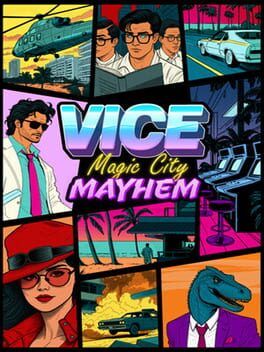
On Switch, the whole thing is wrapped in a crunchy 8-bit presentation, heavy on hot pinks, teals, and thick black outlines. It looks like someone demade Vice City for a lost Famicom cartridge, and that aesthetic choice ends up doing a lot of heavy lifting for both the dungeons and the open world.
Zelda-Style Dungeons In A City Of Sin
The heart of the Zelda half is the dungeons, and Vice leans into them with a confidence most mashups lack. The campaign is structured around eight major dungeons that sit at the end of distinct quest chains. Getting to each one requires working the streets and climbing the criminal food chain, but once you cross a dungeon threshold, the pace and priorities shift into pure top-down adventure mode.
These spaces are tightly designed and deliberately discrete from the freeform city. Rooms are built around single, readable ideas: an arena of patrolling mob goons whose sightlines you have to cut off with moveable crates, a nightclub basement that alternates light and darkness to hide pressure plates, a yacht interior that slowly floods unless you find and blow out valves with C4.
Crucially, they are not just combat gauntlets. The early dungeons rely on classic key-and-lock progression and simple block puzzles, but by the midgame the design starts layering tools in a way that will feel familiar to Zelda veterans. One dungeon centers on a grappling-hook style chain that lets you zip across barbed wire barricades, then asks you to use it to yank shielded enemies off balconies or to pull exploding barrels into position before a firefight. Another turns a basic handgun upgrade into a puzzle item, forcing you to bounce bullets off metal surfaces to hit out-of-the-way switches.
It is not as intricate as the likes of A Link to the Past. Room solutions are usually readable at a glance, and there is rarely more than one way to proceed. But that clarity works in the game’s favor, because it keeps momentum high and it gives each dungeon a clear mechanical identity. The Switch version holds a solid frame rate in these enclosed spaces, and the low-res art makes it immediately obvious which tile can be pushed, smashed, or bombed.
Crime Sandbox With Training Wheels
Between dungeons, Magic City opens up into a surprisingly dense 8-bit sandbox. This is where the GTA half asserts itself. You jack cars, plow through traffic, shove NPCs, and pick up missions from sleazy club owners, cartel goons, and crooked cops. There are drive-bys, escort gigs, timed deliveries, demolition contracts, and the occasional outright massacre.
Mission structure borrows more from 2D GTA than from the cinematic heists of modern entries. Objectives are short, punchy, and often stack into one another. Rob a pawn shop, escape in a stolen sports car, shake the cops, then roll straight into a turf-war brawl outside your hideout. The Switch hardware is never taxed visually, but the game uses that headroom to keep loading effectively invisible. Hopping from street-level chaos into a mission or dungeon entrance is basically seamless.
Where Vice stumbles a bit is variety in the early hours. The first slice of the map leans a little too hard on “go here, kill them” setups, occasionally dressed up as protection gigs or debt collections. It takes a couple of story beats before the designers start playing with the crime side in more interesting ways, like tailing a limo through back alleys to find a hidden dungeon entrance, or rigging a yacht with explosives so you can clear out an entire dock in one chain of detonations.
Side content is closer to old-school open-world busywork than to modern systemic sandboxes. There are rampage-style challenges where you are tasked with reaching a kill count before the timer expires, street races, and collectibles tucked into alleyways and rooftops. They work, but very little side content interacts with the dungeon toolset, which is a shame given how satisfying those items are to use.
Heat, Wanted Levels, And How The Cops Fit In
Vice lifts its heat system straight from GTA’s playbook and strips it down for the 8-bit format. Causing trouble fills a wanted-meter at the top of the screen, and as it ticks up, patrol cars spawn with more aggressive driving patterns and harder-hitting weaponry. At low heat you are chased by out-of-shape beat cops and slow cruisers. Hit higher tiers and you see armored vans, spike strips, and SWAT teams rappelling from choppers.
It is simple, but it works because the consequences are tightly bound to both exploration and dungeons. Some story missions actually require you to hit a certain heat level before leading a convoy of police into an ambush, or using their roadblocks as makeshift cover during a shootout. One clever dungeon entrance is completely inaccessible until you trigger a high-level chase that knocks over a specific barricade, creating a shortcut into a closed-off construction site.
On Switch, the AI does occasionally show its seams. Cops get stuck on corners or pile into each other in narrow streets, creating comedy more often than tension. But the system is tuned such that you are rarely one mistake away from a failed run. Ducking into alleyways, changing cars, or laying low in a safehouse will cool things down fast. It creates a nice ebb and flow: stir up chaos to earn cash and unlock missions, then calm things down when you are ready to tackle a dungeon without sirens on your heels.
What really sells the heat system is how it interacts with traversal. The game’s cars handle with a twitchy, exaggerated drift that feels great on the Switch’s sticks and D-pad. Even at high wanted levels, you always feel like you have a way out, whether that is a narrow gap between two trucks or a hidden alley that dumps you out right in front of a dungeon door.
An 8-Bit Open World That Actually Feels Open On Switch
Magic City’s strongest trick is that, despite being built from chunky 8-bit tiles, it reads like a true open world instead of a glorified overworld map. Neighborhoods have distinct identities that come through in both visuals and encounter design. Nightclub Row is bathed in purple and blue light, with bouncers and limo traffic creating impromptu obstacles. The beachfront is wide and sparse, but dotted with secrets and ambushes. The industrial docks funnel you through crates and shipping containers that double as combat arenas.
The game uses vertical layering within its 2D plane to good effect. Overpasses let you drive under and over traffic. Stairs and rooftop ladders hide shortcuts that smart players can exploit to bypass roadblocks or to flank enemies during missions. In handheld mode, all of this stays legible, and the sharp contrast in the color palette keeps the screen from turning into a noisy mess.
Performance on Switch, at least in the current build, feels locked-in. Loading between districts is masked behind small transitions, but there are no elevators or subway rides to break the fantasy of a single contiguous city. Even with cop cars, explosions, and a half-dozen enemies on screen, the frame rate holds, and input latency is low enough that weaving through traffic or threading a grappling-hook swing into a tight landing spot feels responsive.
The soundtrack does a lot of heavy lifting here. Chiptune synth-lines evoke 80s cop shows without sounding like straight pastiche, and each district layers in unique motifs. The overall effect is that Magic City feels like a real place despite the stylized, low-res presentation.
Does The Fusion Actually Work?
The obvious risk with a pitch like “Zelda fused with GTA” is that you end up with a shallow impression of both. Vice: Magic City Mayhem mostly sidesteps that trap by treating its inspirations as structure rather than checklist.
The dungeons are not as sprawling as Nintendo’s best, but they understand why those games work: clear theming, new toys that reshape how you think about space, and combat that reinforces puzzle-solving. The crime sandbox is not as deep as Rockstar’s, but it captures the fundamental joy of causing controlled chaos in a reactive city, complete with car chases and escalating consequences.
Where the game sometimes fumbles is in the handoff between the two halves. Early on, the path from city mischief to dungeon entrance can be opaque, sending you on a few too many talk-to-this-guy, then-talk-to-that-guy loops before the next major instance opens up. It is the kind of padding that stands out more on replay, and it is something the developers would be wise to tighten before launch.
Still, when everything clicks, you get moments that neither a pure Zelda-clone nor a straightforward GTA tribute could deliver. Luring a convoy of cop cars onto a pier, diving into the ocean to escape, then surfacing in a hidden cave that leads directly into a smuggler-filled dungeon feels like a perfect expression of the game’s identity.
Early Verdict For Switch Players
Vice: Magic City Mayhem is not trying to outdo either of its reference points. Instead, it digs into the overlap between structured dungeon crawling and messy open-world crime, and on Switch that blend feels surprisingly natural. Tight, readable dungeons, a compact but lively city, and a heat system that actually plugs into exploration all point to a project that understands its own hook.
If the developers can smooth out some of the pacing issues and add a bit more mission variety in the opening hours, Magic City is poised to be one of the more distinctive retro-styled adventures on Nintendo’s hybrid. As it stands ahead of launch, this is one to watch if you have ever wished your Hyrule came with more neon, more crime, and a whole lot more attitude.
Final Verdict
A solid gaming experience that delivers on its promises and provides hours of entertainment.