
Review

By The Completionist
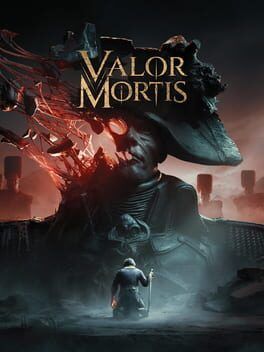
Image: IGDB
Store links: Valor Mortis on Steam
A favorable critical reception surrounds a game that still divides players
Valor Mortis arrives with the kind of split identity that makes a soulslike review worth writing carefully. Metacritic lists One More Level’s action RPG as “Generally Favorable” on PC, based on 55 critic reviews, while the same listing shows a “Mixed or Average” user score. OpenCritic’s page presents an even wider critical spread, with scores ranging from GameSpot’s 6/10 to TheGamer’s 4.5/5 and DualShockers’ 8.5/10. That range reflects the game itself: this is a combat-first experiment with a rare setting, a strong central loop, and enough roughness around readability and feature creep to make enthusiasm depend on what you want from a soulslike.
The factual frame is also messier than usual. Metacritic lists Valor Mortis as released on Oct. 13, 2026, with PC, PlayStation 5, and Xbox Series X/S critic pages represented. OpenCritic lists a Sep. 24, 2026 release date for PlayStation 5 and Xbox Series X/S. The provided sources do not resolve that discrepancy, so the safest reader guidance is to check the platform storefront you plan to use. Metacritic’s buy box lists a Best Buy price of $34.99, discounted from $39.99, but no Steam store URL is included in the supplied materials.
As a review, Valor Mortis lands best when judged less as a build-crafting RPG and more as a pressure test for first-person melee combat. It is a Napoleonic soulslike from the Ghostrunner studio, developed by One More Level and, according to NintendoSmash and Metacritic, published by Lyrical Games. The question is whether that combination gives the genre a new shape, or whether it is another familiar stamina-and-checkpoint gauntlet with a different coat of mud. My answer is qualified but positive: Valor Mortis distinguishes itself when steel, gunfire, plague magic, and parries converge, then stumbles when its systems compete for attention.
The Napoleonic horror setting does real work
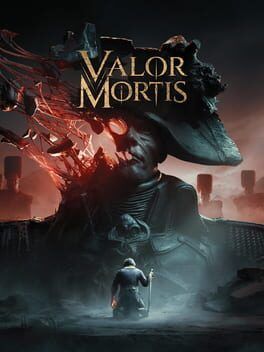
The strongest reason Valor Mortis stands apart is its world. NintendoSmash describes an alternate 19th-century Eastern Europe in which Napoleon Bonaparte has won the Battle of Waterloo, and the continent is suffering from a supernatural plague tied to his war. Analog Stick Gaming similarly frames the premise around Napoleon’s continued conquest after Waterloo, with soldiers and civilians transformed into horrific creatures. Heise’s review emphasizes the grotesque image at the center of the game: Napoleon’s troops resurrected as monsters, with purple plague imagery pushing the setting toward body horror rather than military pageantry.
That premise is not background decoration. It changes the emotional texture of exploration. NintendoSmash points to muddy battlefields, plague-ridden villages, ruined fortresses, and corrupted horrors. Try Hard Guides, quoted on Metacritic, praises the “inspired setting” and “incredible body horror.” Heise calls the game aesthetically revolting in a positive critical sense, noting that the first-person view forces the player close to corpses, impacts, and executions. In a genre crowded with castles, crypts, and ash-gray kingdoms, Valor Mortis earns attention by making war history feel infected rather than ornamental.
The protagonist is William, though the supplied sources differ slightly in presentation. NintendoSmash calls him a soldier of Napoleon’s Grande Armée who dies at the start and awakens among corpses with a mysterious substance inside him. The Punished Backlog identifies him as William Dowsett, a British soldier serving in Napoleon’s army, resurrected and imbued with Nephtoglobin. Metacritic’s summary says, “You served Napoleon. You died for Napoleon. You have risen for Napoleon,” and says the plague’s corrupting power pulses through William’s veins. The shared point is clear: the player character is both victim and instrument of the plague, guided, manipulated, or urged onward by Napoleon’s voice.
For players exhausted by opaque item-description storytelling, Valor Mortis takes a more direct route. NintendoSmash specifically says the plot does not require players to search dense lore to understand what is happening. Analog Stick Gaming also notes a stronger emphasis on traditional storytelling than many soulslikes, with enough information to keep the central mystery moving. That directness costs the game some of the archaeological pleasure associated with FromSoftware-style narrative, but it gives the campaign firmer momentum.
Combat is the build, and parrying is the thesis
Valor Mortis works best when treated as a first-person dueling game with soulslike consequences. NintendoSmash describes lanterns as the checkpoint equivalent of bonfires: resting restores William’s health, Nephtoglobin, and Ferrofluid Flasks, respawns regular enemies, allows fast travel, and lets players spend Catalyst on leveling, stats, and equipment. Death drops Catalyst at the site of the last failure, and losing it before retrieval means it is gone. The foundation is familiar by design.
The differentiator is how that foundation feels through One More Level’s camera. The studio’s Ghostrunner history matters here because multiple sources connect Valor Mortis to kinetic first-person action rather than to a slower shield-raised dungeon crawl. OpenCritic’s Eurogamer blurb calls it a fusion of swordplay, gunplay, and parkour. NintendoSmash says the first-person perspective works well in both combat and exploration, comparing the ability flow to BioShock. Heise argues that the camera makes each block, hit, beheading, and failure more immediate.
NintendoSmash identifies parrying as the centerpiece. Successful parries create large openings for fatal attacks, and the broader combat model includes melee duels, dodging, firearms, and transmutations. The same review states that players can have three melee weapons and three firearms at a time, while transmutations serve both combat and exploration. That tool density is where Valor Mortis feels most distinct. It asks you to read an enemy at arm’s length, decide whether to parry, dodge, fire, or cast, and then accept that a failed read can carry the resource-loss penalty expected from the genre.
That makes the combat-first label accurate. The RPG layer supports encounters, but the game’s identity rests on execution. If you want a soulslike primarily for stat planning, armor optimization, and long-range build fantasy, the supplied criticism suggests Valor Mortis may feel comparatively narrow. If you want a first-person action RPG that turns every enemy into a timing puzzle, its best moments have a strong argument.
Progression is purposeful, but less expressive than the setting
Valor Mortis includes recognizable RPG progression, though the sources point to a game that prioritizes tool mastery over sprawling character identity. NintendoSmash confirms Catalyst is spent at lanterns to level up, improve stats, and upgrade equipment. It also notes that transmutations are used in exploration, which gives progression some environmental utility rather than keeping every upgrade inside combat math.
The tension is whether those systems meaningfully expand player choice. TheSixthAxis, quoted by OpenCritic, says One More Level’s many ideas often snap together, and praises the game for avoiding “laborious RPG trappings.” That is a compliment if you come to Valor Mortis from Ghostrunner and want forward motion. It is less reassuring if you come from Elden Ring, Lies of P, or Nioh looking for deep build divergence. The game appears to trade breadth for immediacy.
One Metacritic user review argues that Valor Mortis encourages mastery of its whole weapon roster rather than a single scaled build, comparing that philosophy to Doom Eternal’s situational weapon use. User reviews should be treated as anecdotal, but that reading fits the broader critical picture. Valor Mortis is less about becoming a bespoke class and more about learning when each part of William’s kit should come out.
As an RPG connoisseur, I like that clarity, but I also felt the limitation implied by the critical spread. A strong soulslike progression curve should let players recover from difficulty through comprehension, investment, or altered strategy. Valor Mortis clearly supports comprehension and investment. The sources are less convincing on altered strategy. Upgrades, weapons, and transmutations matter, but the campaign’s dominant demand remains: meet the encounter on its timing terms.
The difficulty curve is thrilling until readability becomes the boss
Difficulty is central to Valor Mortis, and the supplied sources broadly agree that the game is demanding. Heise calls it brutally difficult and says it requires intense concentration. Analog Stick Gaming describes the first-person perspective as both enjoyable and increasingly frustrating, especially in a combat model built around stamina management, dodging, blocking, parrying, and pattern recognition. Shacknews, quoted by OpenCritic, says the game is unforgiving but remembers the fun between frustration.
That balance is fragile. A parry-focused game lives or dies on attack clarity. Try Hard Guides, quoted on Metacritic, names visual clarity of enemy attacks as the main flaw, even while saying the issue did not significantly affect enjoyment. GamesRadar+, quoted by OpenCritic, is more skeptical, arguing that shifting the camera to first person is not enough in an overcrowded soulslike field and finding the gameplay familiar despite moments of character. GameSpot’s OpenCritic excerpt goes further, saying there are “bones of a great game” but that superfluous mechanics detract from the ones that work.
Those critiques line up with the experience Valor Mortis seems to be selling. First-person melee increases embodiment, but it also narrows spatial awareness. A third-person soulslike lets players read flanks, spacing, and boss body language from a detached viewpoint. Valor Mortis puts the threat in your face. When animations are clean, that intimacy sharpens the duel. When effects, enemy movement, or camera pressure obscure a tell, the penalty can feel harsher than intended.
This is where the game’s difficulty curve will split players. Patient players who enjoy repeating encounters until timing becomes muscle memory will find a rewarding line from confusion to command. Players who tolerate difficulty only when every hit feels perfectly legible may want to wait for patches, community consensus, or a discount. The challenge is not the problem. The consistency of communication is the risk.
In a crowded soulslike field, Valor Mortis succeeds as a specialist
The market context matters because Valor Mortis is asking for attention in a genre full of accomplished competitors. Analog Stick Gaming opens from that premise, noting there is no shortage of soulslikes and that it is difficult for a new one to stand out. Heise adds a harsher commercial note, reporting that Valor Mortis’ Steam player count had reached only about a quarter of the figures for One More Level’s 2020 hit Ghostrunner at the time of its article. Heise attributes part of the release environment to a crowded fall window, including the looming attention pull of GTA 6, though the supplied text does not provide hard sales numbers.
That context does not diminish Valor Mortis creatively. If anything, it explains the game’s gamble. One More Level could have stayed closer to Ghostrunner. The Punished Backlog explicitly says the studio “zigged” instead of making an expected Ghostrunner 3, channeling first-person kinetic design into a grimdark Napoleonic action RPG. The result is not a clean genre revolution, but it is a recognizable identity: plague-war horror, direct storytelling, parry-forward first-person combat, firearms, supernatural abilities, and checkpoint punishment.
The practical buying advice follows from that identity. Valor Mortis is easiest to recommend to players who value combat feel and setting over exhaustive RPG buildcraft. It is also a strong curiosity for anyone who has wanted a Napoleonic soulslike that avoids simple historical cosplay and commits to supernatural corruption. It is harder to recommend at full confidence to players sensitive to first-person melee readability, players who want wide class expression, or players who bounce off games that mix several action systems at once.
Because Metacritic lists a discounted $34.99 Best Buy price against a $39.99 base price, the value proposition is less punishing than a premium $70 release, at least where that listing applies. Still, platform-specific availability and date discrepancies should be checked directly on your store of choice.
Verdict
Valor Mortis is a distinctive, flawed, and worthwhile action RPG. Its best argument is not novelty by camera angle alone. It is the way One More Level uses first-person perspective to make a diseased Napoleonic battlefield feel close, ugly, and physically dangerous. The setting separates it from many soulslikes immediately, and the direct story presentation gives the campaign a clearer spine than the genre often provides.
The combat carries the recommendation. Parrying, firearms, transmutations, and harsh checkpoint consequences form a loop that can be genuinely absorbing. The weaker side is the progression ceiling and the unevenness reported across critics: some mechanics appear to crowd the core duel, and several sources flag frustration around first-person readability or overfamiliar genre structure.
For this Valor Mortis review, the score lands at 7.5. That reflects a game with a strong setting, satisfying combat, and enough originality to justify attention, but also one whose difficulty curve and RPG systems do not fully escape the crowded soulslike field. Play it if you want a combat-first Napoleonic soulslike with body-horror atmosphere and a demanding parry game. Wait if you need cleaner readability, deeper build expression, or confirmed platform details before committing.
Final Verdict
A solid gaming experience that delivers on its promises and provides hours of entertainment.