
Review

By Pixel Perfect
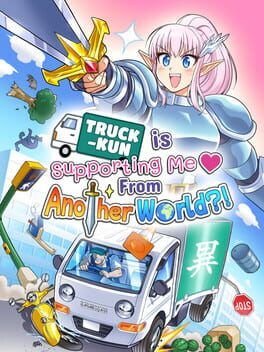
Image: IGDB
Store links: Truck-Kun Is Supporting Me From Another World?! on Steam
A great gag hits the road, then has to keep driving
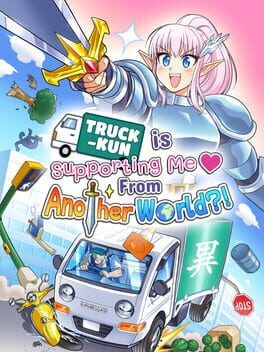
Truck-kun Is Supporting Me From Another World?! launched on July 29, 2026 for PC and Xbox Series X|S according to Overworld’s public listing, pairing Strange Scaffold with Frosty Pop on a run-based arcade driving game built around one of anime’s most recognizable isekai jokes. That is the strongest thing about it, and also the challenge it never fully outruns. The premise gets the laugh immediately. The question for this Truck-kun Is Supporting Me From Another World review is whether the game has enough driving craft, routing pressure, and score-chasing texture to survive after the meme lands.
The setup, as described across Siliconera, GamersHeroes, Green Man Gaming, MonsterVine, and Noisy Pixel, casts Carissa Ward as an ambitious office worker whose promotion is interrupted by the genre’s favorite delivery vehicle. After being hit by Truck-kun, she reincarnates as an elven warrior in a fantasy world. Through magic, she contacts the driver responsible and sends him on a mission: create enough mayhem in the real world to feed her progress in the other one, defeat the Skeleton King, and secure a resurrection route back to her job before Monday.
That joke is sharp because the game commits to it mechanically. Pedestrians are not only slapstick casualties. They become enemies for Carissa to defeat. Cars, billboards, cones, and other destructible city objects are not only clutter. They charge her sword meter. Honking the horn when that meter is full lets Carissa unleash her big attack. The best moments arrive when those systems overlap and the city becomes a routing puzzle with punchlines attached.
The arcade loop has a satisfying first impact
At its liveliest, Truck-kun understands the appeal of a compact indie arcade driving game. You are dropped into a small city, identified by GamersHeroes and Noisy Pixel as Wenvale, and asked to cause maximum productive chaos before the timer runs out. Siliconera describes runs as timed drives in which hitting people spawns opponents for Carissa, while smashing environmental objects fills the sword gauge above the on-screen portal. MonsterVine notes that objectives can include hitting parked cars, drifting a set number of meters, or honking repeatedly, with completed tasks adding time and progress.
That structure creates a clean rhythm. Find a crowd, swing into a drift, clip a line of pedestrians, pivot toward destructible objects, fill the meter, honk, and watch the fantasy-side payoff. Deliveries add a useful bit of Crazy Taxi flavor, and the police heat system gives the city a little escalating friction as runs continue. GamersHeroes praised the feedback loop as one that encouraged repeated “one more run” sessions, while Siliconera found the driving mostly fine on controller and singled out drifting and reverse positioning as effective tools.
I agree with the broad shape of that praise, with a caveat. The game’s charm is strongest when you are improvising. A good run feels like a tiny arcade mess where every turn has a purpose, even if that purpose is absurd. The delivery premise is not a menu wrapper pasted onto driving. It gives a silly, legible reason for nearly every collision. For the first stretch, that is enough to make Truck-kun feel like a playful Crazy Taxi inspired indie game rather than a single-joke prototype.
Score chasing runs into a shallow upgrade curve
The longer campaign is where the delivery fantasy starts losing speed. MonsterVine’s review describes the story as roughly three to four hours and argues that repeated runs begin to feel shallow because the experience does not evolve much over that time. That criticism lines up with the design tension at the center of Truck-kun. The systems are readable and immediately funny, but the game asks them to carry a full progression structure built around stars, milestones, random objectives, and repeated time-attack runs.
Randomized objectives provide short-term direction, yet they can also narrow the way you drive. MonsterVine gives the example of parked-car targets pushing the player back to familiar areas such as a parking garage, making the city feel smaller. The same outlet also reported getting stuck grinding a milestone tied to meters traveled while boosting across multiple runs. That matters for an arcade game because repetition can be fuel when the scoring model invites expression, cleaner routes, and risky optimization. Here, repetition sometimes feels administrative.
Truck-kun does have score-chasing ingredients. You can extend time through tasks, juggle delivery priorities, manage heat, boost through tougher targets, and time Carissa’s ultimate for big fantasy-side clears. The issue is depth. The game is better at producing funny collisions than at pushing you to master a route. It gives you reasons to keep driving, but fewer reasons to improve beyond meeting the next milestone. For players who love bite-sized arcade loops, that may be enough. For players chasing the long-tail elegance of the best arcade score games, Truck-kun feels thinner than its premise suggests.
Controls are workable, but the truck never feels completely elegant
Arcade driving lives or dies on feel, and Truck-kun sits in a slightly awkward middle lane. Siliconera reported that controller driving was mostly fine, with easy, effective drifting and useful reverse control, but also noted an adjustment period around steering sensitivity. The same source said Strange Scaffold confirmed in Steam Discussions that button remapping would be added, which is a practical improvement for players who want more precision or a layout that better suits repeated runs.
Other coverage is less forgiving. Noisy Pixel’s headline frames janky driving as the factor that derails a fun idea, and MonsterVine reported moments where boosts or dashes did not always register cleanly against police cars. GamersHeroes, on the other hand, praised the arcade antics and gave the game an 80 percent score while acknowledging that some objectives are easier than others and that players can get stuck in spots.
Those reactions are not contradictory so much as they reveal the tolerance test Truck-kun presents. This is not a sterile racer. It is a chaotic comedy game about a magical truck committing genre crimes for an elf in another world. A little looseness fits the slapstick. But when progression depends on specific tasks, meters, heat responses, and repeat runs, steering quirks and collision oddities become harder to laugh off. The driving has enough snap to sell the premise, especially in short sessions. It does not have the buttery precision that would make grinding the same city for optimal clears consistently satisfying.
The joke has heart, but the campaign stretches it thin
The writing works best when it treats its nonsense with complete sincerity. Siliconera describes Truck-kun as reveling in absurdity, from Driver’s guilt over repeatedly sending pedestrians to another world to the game’s refusal to dwell on the morality of its own premise. Green Man Gaming’s feature frames the game as an affectionate riff on isekai conventions, including RPG leveling, overpowered fantasy heroes, and the cultural joke of Truck-kun as a forced reincarnation device.
Carissa is the piece that keeps the whole thing from becoming empty noise. Her problem is ridiculous, but understandable in miniature: she has a life to resume, a job waiting, and a fantasy villain blocking her return. The fantasy-side portal and pixelated progress display, described by GamersHeroes, also give your driving a constant parallel objective. You are not simply racking up city damage. You are watching another screen’s worth of consequences play out in tiny bursts.
Still, the campaign’s connective tissue appears to be a sticking point. MonsterVine found the narrative insufficient to justify the repeated vehicular rampages, while Noisy Pixel concluded after a few hours that a strong idea did not become a great game. That is close to where I land. The premise stays funny longer than expected because the mechanics are tied to the joke. It does not quite bloom into a richer character comedy or a deeper arcade challenge by the credits.
Verdict: a clever isekai driving game best enjoyed in short bursts
Truck-kun Is Supporting Me From Another World?! has the confidence of a small game that knows exactly what its hook is. Strange Scaffold’s design turns an anime meme into a functional arcade loop, and Frosty Pop’s published release lands in a space where indie games can still surprise by being specific, strange, and compact. If you want a Truck-kun game review boiled down to buying advice, here it is: come for a funny, chaotic, short-form isekai driving game, not for a deep competitive score-chaser.
The strongest audience is easy to identify. Anime fans who know the Truck-kun gag will get the extra flavor. Players who enjoy arcade driving, time extensions, goofy objectives, and compact “one more run” loops will find real pleasure here. Anyone specifically searching for a Crazy Taxi inspired indie game should expect a looser, more joke-driven cousin rather than a successor with comparable driving finesse or routing sophistication.
The weaker fit is just as clear. If repeated milestones, small maps, and randomized task lists tend to feel like chores to you, Truck-kun’s three-to-four-hour structure, as reported by MonsterVine, may feel longer than it is. If precision driving is your main priority, the sensitivity complaints and reported jank are worth considering, even with Strange Scaffold’s confirmed button-remapping plan.
Truck-kun has enough arcade charm to work beyond its novelty hook, but only barely enough score-chasing depth to support the whole trip. It is warm, weird, and easy to root for, with a premise that crashes cleanly into its mechanics. It is also repetitive, occasionally awkward, and better remembered for its first brilliant collision than its final milestone.
Final Verdict
A solid gaming experience that delivers on its promises and provides hours of entertainment.