
Review

By Pixel Perfect
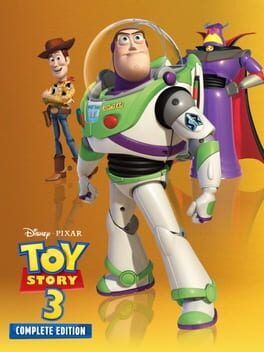
Image: IGDB
Store links: Toy Story 3: Complete Edition on Steam
A 2010 licensed favorite returns with a very 2026 question
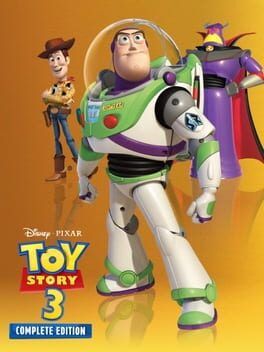
Toy Story 3 Complete Edition arrives in 2026 as an enhanced re-release of the 2010 Toy Story 3 game, and the tension is clear from the first menu: this is still fundamentally the same breezy, kid-friendly 3D platformer that older players remember, now cleaned up for modern platforms and bundled with content that was previously split across versions and add-ons.
That is the strongest confirmed fact across the available review coverage. PlayStation Universe describes the package as the same core game from sixteen years ago, with contemporary presentation upgrades and all DLC released to date. Invision Community says the Complete Edition is based on the Xbox 360 and PS3 versions rather than the PSP version, and highlights 4K support at up to 60 frames per second. Gaming Age lists the 2026 release for PS5, Xbox Series X, Switch, and PC, with Atari/Digital Eclipse as publisher and Digital Eclipse as developer. Invision Community also links to the Steam page, confirming the PC presence through Valve’s storefront.
As a Toy Story 3 Complete Edition review, the most useful way to look at this package is not as a reinvention. It is a preservation-minded, lightly enhanced return of a licensed platformer that was already unusually sturdy for its era. The story mode is short, the upgrades are selective, and the design still carries 2010 assumptions about kid-friendly camera work, collectible pacing, and simple character abilities. Yet the reason this reissue works better than many nostalgia products is that Toy Story 3’s original split structure still has shape: a linear movie adventure on one side, and a playful Toy Box sandbox on the other. In 2026, that second half remains the reason families and returning players should pay attention.
Story mode is short, varied, and clearly built for younger players
The campaign adapts the movie while taking liberties with set pieces and side adventures. Invision Community and Video Chums both describe a structure that moves through familiar Toy Story 3 locations such as Andy’s house, Sunnyside Daycare, Bonnie’s house, and the climactic trash sequence, while also reaching into broader Toy Story memory. One of the most effective early detours is the Buzz Lightyear video game sequence inspired by Toy Story 2, where Buzz fights through Zurg’s base, battles minions, and navigates a space-themed action stage.
Video Chums breaks the story mode down into eight main stages, and Gaming Age similarly calls it a very short campaign that can be finished easily in an afternoon. That length cuts both ways. For families with younger players, it is approachable and digestible, especially because the levels keep changing their flavor. The campaign moves between horseback chase scenes, train platforming, character-switching puzzles, carnival-style games, stealth, rail sliding, space combat, and more traditional 3D platforming. Invision Community praises that variety, noting that the game avoids feeling repetitive by shifting objectives and play styles from level to level.
The character design is simple but functional. PlayStation Universe says story sections ask players to switch between Woody, Buzz Lightyear, and Jessie, each with unique abilities used to progress. Gaming Age gives the clearest examples: Woody can use his pull string like a lasso on hooks, Jessie can reach small platforms others cannot, and Buzz can throw Woody or Jessie. This is not demanding platforming by modern genre standards, and PlayStation Universe notes that the game is generously forgiving and clearly geared toward younger players. That is a strength if you are shopping for family games in 2026. It is a limitation if you want the depth or precision of a modern mascot platformer.
The campaign also has a few rough edges that feel preserved rather than solved. Video Chums calls the stealth mission Hide and Sneak annoying and says the final Buzz battle, Muffin to Fear, is creative but very hard and not especially fun. Those are useful warnings because Complete Edition does not appear, based on the available source material, to redesign these difficulty spikes or pacing dips. The story mode remains charming, compact, and occasionally uneven.
Toy Box mode is still the real value of the package
If the campaign is the guided family movie ride, Toy Box mode, also referred to as Woody’s Roundup by Video Chums and Gaming Age, is the reason Toy Story 3 Complete Edition still feels alive. PlayStation Universe describes it as an open-world-style mode where players build up a toy town, attract new toys, open new areas, chase secrets, complete missions, and collect rewards. Gaming Age says players clear land, finish quests for townsfolk, earn gold, and unlock buildings, costumes, decorations, and new zones such as Sid’s Haunted House and Zurg’s Spaceport.
That structure has aged better than expected because it gives younger players room to tinker without demanding mastery. Building placement, town painting, outfit collecting, photography missions, races, sports, gadgets, and mini-games create a loop that feels loose in the right way. Video Chums highlights dress-up missions that give the wardrobe a purpose, as well as surprise side levels reached through discoveries such as a lightning rod at Sid’s Mansion or a laser pistol at Zurg’s Spaceport. For a family game, that kind of toy-chest logic still lands: try a thing, unlock a door, dress a character, race a horse, take a photo, stumble into another pocket of play.
Complete Edition adds one important piece of platform parity. Invision Community reports that Emperor Zurg, previously exclusive to the PS3 version’s Toy Box mode, is now available for everyone in this release. Invision also says the package includes four new customizable theme packs for the Toy Box town. PlayStation Universe frames the edition as including all DLC released to date, while Gaming Age says it gathers extras that previously depended on platform or purchase route. The sources align on the larger point: this is the most complete modern version of Toy Story 3’s sandbox offering, even if the underlying mode remains a sixteen-year-old design.
For returning players, that matters more than the story campaign. The campaign is a nostalgia hit, but Toy Box is where the Complete Edition earns its name. It gives the re-release replay value, makes the package easier to recommend to parents, and softens the impact of the short main story.
The remaster looks cleaner, but some PS3-era seams remain
The visual upgrade is real, though sources describe it as selective rather than transformative. Invision Community says the game supports 4K resolution at up to 60fps and praises the crisp environments and sharper character models on a 4K screen. PlayStation Universe also cites a large uplift in screen resolution and frame rate for the current-generation version. For a 2010 licensed game, that presentation lift is enough to make the environments easier to read and the toy-scale worlds more pleasant to revisit.
This is where the Toy Story 3 remaster review conversation needs restraint. Nothing in the provided material suggests a full remake with rebuilt levels, modern animation systems, or reworked cinematic direction. PlayStation Universe specifically says the core experience is the same game, for better or worse, and notes that cutscenes remain locked to PS3-era technical limits. That means the playable sections benefit most from the modernization, while the story presentation can still expose the age of the source.
Performance impressions are broadly positive in the available coverage, especially around the 4K and 60fps target reported by Invision Community, but the platform spread leaves unanswered questions. Gaming Age lists PS5, Xbox Series X, Switch, and PC, while the other excerpts focus on PS5, Xbox, or Steam presence in isolation. There is no detailed comparative performance data in the source material for Switch versus PS5 or PC, and no PC requirements are provided here. Readers choosing between versions should treat the 4K/60fps discussion as confirmed by Invision Community’s account of the enhanced package, not as a guarantee that every platform version performs identically.
For audio, Gaming Age praises the music, noting the recognizable presence of Randy Newman’s “You’ve Got a Friend in Me” and Buzz’s theme. It also reports that Jim Hanks reprises Woody rather than Tom Hanks, and Mike MacRae voices Buzz rather than Tim Allen. That distinction is worth making for film fans. The performances are described by Gaming Age as strong for a Disney project, but this is still a game cast configuration rather than a one-to-one film cast reunion.
Co-op and platform details need a careful read
The available source material agrees that Toy Story 3 Complete Edition is positioned as a family release, but there is one notable conflict around online play. PlayStation Universe says the Complete Edition supports co-operative play, either locally or online, across both story mode and Toy Box mode. Gaming Age’s platform box, however, lists Players: 1-2 and Online: Leaderboards. Those claims do not line up cleanly.
Because the provided material does not include an official publisher feature sheet, the safest guidance is to verify co-op details on the storefront for your platform before buying if online co-op is important to your family. Local two-player support is supported by Gaming Age’s player count, and PlayStation Universe’s review further supports co-op play more broadly. Online co-op, however, should be treated as a point requiring store-page confirmation because Gaming Age’s listing narrows online functionality to leaderboards.
Platform coverage is clearer but still not perfectly uniform across sources. Gaming Age lists PS5, Xbox Series X, Switch, and PC. PlayStation Universe reviewed the PS5 version. TheXboxHub covered the Xbox Series X version. Invision Community links to the Steam page for Disney/Pixar Toy Story 3 Complete Edition. None of the provided source text gives a price, upgrade path, physical edition breakdown, or cross-buy information. Gaming Age lists the medium as digital/physical, but without edition pricing or retailer details in the excerpt.
That leaves the practical advice fairly simple. If you already own and can easily play the backward-compatible Xbox 360 version, Invision Community’s own comparison frames Complete Edition as a modernized package with improved visuals, Zurg availability, theme packs, and current-hardware convenience rather than a redesigned game. If you do not own it, or if you want the PS3-exclusive Toy Box content folded into a modern release, the value case is much stronger.
Who should buy Toy Story 3 Complete Edition in 2026
Toy Story 3 Complete Edition works best for three groups: families looking for a forgiving 3D platformer, returning players who want a cleaner and easier way to revisit a beloved licensed game, and Disney or Pixar fans who value the Toy Box sandbox as much as the campaign. For those players, the package has a warm, sturdy rhythm. It understands that play can be objective-based without becoming stressful, and its strongest ideas are tactile ones: lassoing hooks, hopping across tiny Jessie platforms, throwing characters as Buzz, painting a town, unlocking costumes, and letting a child turn a western sandbox into their own little mess of buildings and missions.
Players chasing a substantial modern remaster should be more cautious. The story mode’s eight-stage structure is short, some levels have aged better than others, and the upgrades described by sources are mostly resolution, frame rate, content consolidation, and availability. PlayStation Universe’s note about PS3-era cutscene limitations is a reminder that this is a sparing restoration, not a rebuilt Toy Story 3 game for 2026.
Still, the original game’s craft shows through. Licensed games from the early 2010s often lived or died on brand recognition, but Toy Story 3 had a clever split identity that still helps it stand apart. The campaign gives younger players a readable adventure through familiar scenes and imaginative detours. Toy Box gives them a place to experiment. The Complete Edition makes that easier to access on modern hardware and gathers the scattered extras into one version.
My recommendation is positive with expectations managed. Buy it for family co-play, Toy Box tinkering, and a polished route back to one of the better movie tie-ins of its generation. Wait for a sale if you are mainly curious about the campaign or already own a playable older copy. In 2026, Toy Story 3 Complete Edition feels worthwhile because the underlying game still has heart and structure, but its remastering is modest enough that nostalgia should not do all the purchasing work for you.
Final Verdict
A solid gaming experience that delivers on its promises and provides hours of entertainment.