
Review

By Story Mode
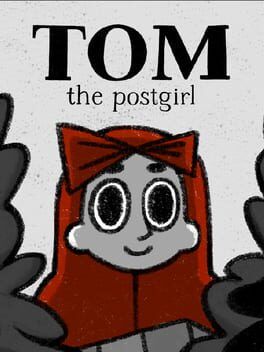
Image: IGDB
Store links: Tom the Postgirl on Steam
A cute delivery route that keeps looking through the wrong windows
Tom the Postgirl launched for Nintendo Switch and PC on October 29, 2026, according to Impulse Gamer, which identifies the game as a point-and-click narrative adventure developed by Oopsie Daisies and ARTE France and published by ARTE France. That concrete release detail is the safest place to begin, because the game itself is built on a much less safe idea: a red-hooded postgirl takes a village delivery job, then turns every stop into an excuse to spy on the people behind the curtains.
For narrative indie fans, the tension is immediate. The premise sounds slight, almost cozy, until the reported scenes start to stack up. Pure Nintendo describes a first-day delivery route that moves from a simple post office assignment to encounters that feel closer to horror than whimsy, including a location called The Kennel where adoption notices use children in place of animals and peeping through windows reveals children being treated like pets. XPN Network similarly frames the game as an adventure where the player becomes an accomplice to invasive behavior, uncovering bizarre secrets instead of simply posting letters and leaving.
That makes this Tom the Postgirl review less about whether the game has a large mechanical toolkit and more about whether its uneasy rhythm works on Switch. The answer, based on the available review record, is yes for players who like surreal narrative adventure games, dark comedy, and compact indies that commit to an uncomfortable bit. It is much harder to recommend to anyone who wants warmth without cruelty, puzzles without social transgression, or a protagonist whose curiosity comes with a visible conscience.
The delivery loop is simple, but the mischief gives it momentum
The sources are consistent about Tom the Postgirl’s basic structure. You play as Tom, a new post office worker who travels around a village delivering packages. Impulse Gamer says the controls are straightforward, covering walking, running, and interacting with people or objects, while areas open through a map and new batches of mail arrive after delivery objectives are completed. Pure Nintendo describes moving around an overworld map, pressing A to enter locations, and choosing whether to deliver packages or, in some cases, open them instead.
This is not presented in the source material as a dense puzzle game. Daily Game Bytes goes further, saying the game felt closer to a walking simulator than a traditional point-and-click adventure, with most of the experience built around visiting locations, snooping on townsfolk, and interacting with the world in ways that cause chaos. XPN Network echoes that reading by saying the game encourages curiosity over complex puzzle-solving, with the pleasure coming from examining environments and discovering hidden interactions.
That simplicity is a tradeoff. On one hand, players looking for mechanical resistance, item-combination puzzles, or elaborate deduction may find the core loop basic. On the other, the stripped-down interaction model appears deliberate. Tom’s job provides the route. Her curiosity supplies the escalation. The strongest reported design choice is that snooping is not merely flavor text. Pure Nintendo says Tom’s actions can prevent some events or make them worse, and Daily Game Bytes notes that the ending tallies how much chaos the player caused before assigning a personality profile. That gives the game a small but meaningful feedback loop: every glance through a window feels like a temptation, and every opened package risks turning a delivery into interference.
Its tone is the whole fight, and some players will lose patience with it
Every cited outlet agrees that Tom the Postgirl is strange. The disagreement, or at least the useful tension, is whether that strangeness lands as clever discomfort or as too much. Impulse Gamer calls out crude, uncomfortable, and occasionally shocking humor, while still praising the surprising turns and a major twist. XPN Network highlights drug-dealing pigeons, cowboy worms, grumpy squirrels, chainsaw-loving hippies, and unconventional priests as examples of the game’s surreal imagination. Pure Nintendo’s Kennel example pushes the tone into darker territory, emphasizing disturbing imagery beneath the storybook surface.
That makes the game’s narrative stakes unusual for an adventure title. There is no combat rhythm to assess here, no set-piece gauntlet, no boss arena where the game resolves tension through action. The pressure comes from the pause before you choose to look. Tom, as described by multiple sources, is impassive, nosy, and mischievous. Pure Nintendo notes that even after witnessing disturbing scenes, Tom’s eerie smile remains. Vandal’s Metacritic excerpt similarly describes the allure of controlling an impassive Tom with a half-smile and piercing gaze in a scandal-ridden town.
For the right player, that distance is the point. The game turns voyeurism into a playable structure and uses the village as a cabinet of grotesque little stories. For others, Tom’s lack of visible alarm may make the experience feel mean rather than mischievous. The safest recommendation is narrow but clear: Tom the Postgirl is best for narrative adventure game fans who enjoy absurd, taboo, darkly comic writing and who are comfortable with the player being made complicit in the joke. If you want a charming postal-life sim, this is very likely the wrong delivery.
The Switch presentation sells the contradiction between storybook and sinister
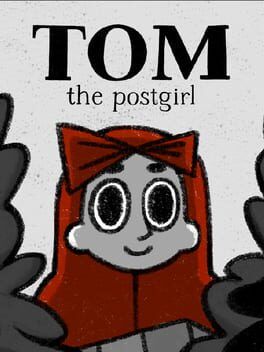
Tom the Postgirl’s visual identity appears to be one of its strongest points across the review record. Impulse Gamer praises the hand-drawn art direction and describes Tom beginning in a red hooded uniform before heading toward the village. XPN Network describes a black-and-white hand-drawn style with frame-by-frame animation that evokes classic cartoons while making the village feel uncanny. Daily Game Bytes calls the art cartoon-like and says it reinforces the absurd mood.
Those descriptions point to a presentation built on contrast. The red hood evokes a familiar fairy-tale silhouette, and Pure Nintendo directly compares Tom’s look to a Little Red Riding Hood-style protagonist. The environments and residents, according to the sources, then sour that expectation through scandal, cruelty, and surreal comedy. In a game about staring too long at things you should leave alone, detailed hand-drawn scenes are not decoration. They are the delivery mechanism.
On audio, the source material is thinner, so the verdict has to be more cautious. Impulse Gamer’s Metacritic excerpt praises a fitting soundtrack, but the provided sources do not offer deep discussion of sound design, voice work, or Switch speaker performance. On technical performance, the same caution applies. Daily Game Bytes reports no crashes, bugs, scaling issues, or ultrawide artifacts on Nobara Linux, but that is a PC/Linux account, not a Nintendo Switch performance test. The provided Switch-focused excerpts do not flag major technical problems, yet they also do not supply frame-rate measurements or loading analysis. For a Nintendo Switch indie review, the responsible conclusion is that the available coverage supports confidence in the game’s art direction and basic usability, while detailed Switch performance data remains limited in the provided material.
Short runtime, replay hooks, and a critical record tilted positive
The biggest practical question is length, and the sources do not give one single answer. Daily Game Bytes says a completed playthrough took about one hour. GAMES.CH, in its Metacritic excerpt, describes a short playtime of roughly two hours. Vandal’s Metacritic excerpt reports roughly three hours for a first playthrough and over four hours for 100 percent completion, with act selection available after finishing and three save slots. Those differences may reflect playstyle, completion goals, platform, or how much optional snooping each reviewer pursued.
The useful takeaway is that Tom the Postgirl is short by design. This is a compact narrative adventure rather than a longform mystery box. That affects its value proposition, though the provided sources do not include a price, so there is no firm price-per-hour judgment to make here. The replay argument rests on missed secrets, different levels of mischief, personality profiling at the end, and act selection after completion as reported by Vandal. XPN Network also points to replay value through hidden details and experimentation.
The wider critical picture is favorable within the provided record. Metacritic lists the Nintendo Switch version as “Generally Favorable” with five critic reviews shown, all categorized as positive and none listed as mixed or negative at the time of that page capture. Impulse Gamer scored it 4.4 and called it a surprise with memorable characters, dark humor, and secrets. Nindie Spotlight’s excerpt calls it odd, creepy, twisted, clever, and funny. The positive consensus does not erase the content warning baked into almost every review. It does clarify that critics who accepted the premise tended to find the ride worthwhile.
Verdict: a sharp little narrative oddity for players who like discomfort
Tom the Postgirl on Switch is worth picking up for a specific kind of narrative indie fan: the player who likes compact adventures, hand-drawn visual identity, dark jokes, branching mischief, and stories told through environmental observation rather than long exposition dumps. Its reported strengths are clear. The village is memorable, the premise has teeth, the art style supports the tone, and the short structure appears to avoid overstaying its welcome. The game also seems to understand that curiosity needs consequences, since sources describe opened packages, preventable or worsened events, secrets, and an endgame profile based on the player’s chaos.
Its weaknesses are equally important. The gameplay is basic by several accounts, and Daily Game Bytes specifically frames it as closer to a walking simulator than a classic point-and-click adventure. The humor can be crude and disturbing, according to Impulse Gamer and Pure Nintendo, and the game’s central act of peeping on residents will be a deal-breaker for some players. The available source material also does not provide enough evidence for a strong technical verdict on Switch beyond the absence of major complaints in the excerpts and praise for the presentation.
As a buyer’s guide, the recommendation is conditional but positive. If you come to narrative adventure games for mechanical depth, wait for a sale or watch more footage first. If you enjoy surreal stories with uncomfortable comedy and can accept a short runtime, Tom the Postgirl looks like one of the stranger Nintendo Switch indie review cases of 2026: small, sharp, appalling in places, and difficult to confuse with anything else on the eShop.
Final Verdict
A solid gaming experience that delivers on its promises and provides hours of entertainment.