
Review

By Pixel Perfect
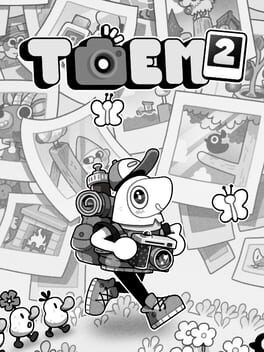
Image: IGDB
Store links: Toem 2 on Steam
A sequel built on familiar footing
TOEM 2 arrives with the clearest possible creative risk: according to PlayStation LifeStyle, Polygon, GamingTrend, and ScreenRant, Something We Made has kept the sequel extremely close to the 2021 original’s structure. You are once again a young photographer leaving home to witness a magical Toem event, helping strangers, collecting stamps, and turning curiosity into progress through a black-and-white world. The tension is obvious for anyone searching for a TOEM 2 review before buying. The first game’s charm came from discovery. A sequel has to preserve that softness without feeling like a photocopy.
On that question, TOEM 2 mostly succeeds. The setup is familiar by design, but the sequel has a warmer sense of momentum because its requests, towns, and helper characters are more layered. Siliconera describes the new trip as beginning in Homelanda, where news of the Whirlhill Festival and the blooming Whirling Birch sends the player out to capture another special moment. That premise is gentle rather than dramatic, but it works because TOEM has always been about small acts of attention: noticing the odd angle, the shy creature, the person whose problem sounds simple until you actually look around.
The caveat is real. GamingTrend calls the sequel “a lovely” but unremarkable return, noting that it took about five hours to complete its photo journal and that the final destination feels apparent from the start. PlayStation LifeStyle similarly says the payoff is basically identical to the first game. That does not sink TOEM 2, but it does define it. This is a sequel that refines a beloved loop rather than overturning it, and your appetite for that will determine how magical the return trip feels.
Photography remains the language of play
The smartest thing TOEM 2 does is keep the camera as the center of the adventure. This is still a photo adventure game where progress comes from reading clues, framing subjects, and matching a request to something hidden in the environment. GamesRadar+ highlights the pleasure of talking to everyone and chasing detours across each map, while ScreenRant frames the loop as a relaxing photographic scavenger hunt. That description is accurate to the appeal: TOEM 2 is built for players who like poking around without being punished for wandering.
The sequel’s best additions happen through the lens. Siliconera points to an early Focus mechanic that can trigger a paper to become an airplane, while later interactions include actions that affect environmental objects, reveal subjects, or turn screws. Polygon and ScreenRant both describe area-specific tools such as a hammer for fixing loose nails and a screwdriver for pipe and screw puzzles. PlayStation LifeStyle notes that these interactions often play with the shift between the isometric exploration view and the first-person camera view, which is where TOEM 2 finds its cleanest sequel logic.
These changes matter because they expand what a photograph can do without turning the game into a gadget checklist. The camera still asks you to look before you act. The new tools simply make that act a little more tactile. Hammering, twisting, focusing, and spotting hidden subjects give each town a local verb, and those verbs help quests feel less interchangeable. The puzzle difficulty remains friendly, based on the supplied coverage. ScreenRant says the game does not rush players and even its mini-games avoid time limits, while Polygon emphasizes puzzle-solving without the friction associated with harsher puzzle games. That keeps TOEM 2 cozy, but it also means players looking for demanding logic puzzles should temper expectations.
New movement gives the little worlds more shape
The biggest mechanical upgrade outside the camera is movement. PlayStation LifeStyle specifically notes that the player can jump this time, adding platforming puzzles and making exploration more enjoyable. Siliconera also points to light platforming as part of the sequel’s more exploratory design. It sounds modest on paper, but in a game about inspecting spaces from every angle, a jump button changes the texture of a town. It gives you a reason to look behind, above, and around instead of treating each scene as a flat postcard.
GamingTrend says the controls are intuitive and responsive, which is essential for a game that depends on frictionless wandering. TOEM 2 does not appear to be chasing precision-platformer tension. Its movement exists to make curiosity feel better in the hands. That is the right choice. A mistimed leap or fiddly camera would bruise the mood immediately, so the sequel’s mobility works best as a soft extension of the original design rather than a full genre pivot.
There is an important scope note in the source material. Polygon describes three new locations: Cropten, a farm full of animals; Taletorp, a dark forest village with a fantasy tabletop flavor; and Deltburg, a city centered around an aquarium and civic spaces. PlayStation LifeStyle also highlights an early fantasy world with knights and a dungeon. GamingTrend, meanwhile, refers to five regions. The excerpts do not fully reconcile that count, so the safest reading is that outlets may be counting main towns, total zones, or starting and ending areas differently. What is consistent is the critical impression that TOEM 2’s regions are compact, themed, and dense enough to reward thorough exploration.
The charm lands because the requests have better texture
TOEM’s writing lives or dies by request design. Fetching a photo of a creature or object is simple, but the clue has to be playful enough that taking the picture feels like solving a tiny riddle rather than ticking a box. Across the supplied reviews, TOEM 2 fares well here. PlayStation LifeStyle says the writing is sharp and that helping certain characters multiple times builds more meaningful relationships. GamesRadar+ praises the witty, playful dialogue. Polygon calls out personable characters and adorable animals. TheXboxHub’s excerpt says the game is dense with delightful characters, quests, and critters despite feeling short.
That density is the sequel’s real answer to the “is there enough new here?” question. TOEM 2 may repeat the skeleton of the original, but the towns appear more lived-in because requests overlap with friendships and recurring helpers. When an apprentice construction worker needs your camera-hammer trick across a region, as Polygon describes, the tool is tied to a person instead of floating as an abstract upgrade. The same goes for the plumber and screw-turning interactions mentioned in multiple reviews. These are small narrative anchors, but small anchors are exactly TOEM’s scale.
The game’s coziness also avoids the live-service trap that can creep into modern “relaxing” games. ScreenRant explicitly contrasts its no-rush structure with stress-inducing task systems, noting that TOEM 2 lets players proceed calmly. That makes it a good fit for players who want an indie puzzle adventure they can finish in an evening or weekend without daily chores, resource management, or stamina anxiety. It is brief, but its brevity is deliberate rather than empty.
A prettier sequel with one aesthetic tradeoff
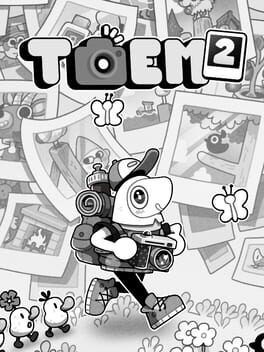
Visually, TOEM 2 continues the monochrome identity that made the first game instantly recognizable. ScreenRant describes its black-and-white artwork as a classic comic-strip style filled with quirky designs, while GamingTrend says the hand-drawn look returns with a slightly more cartoony refresh. The effect, based on the critical consensus, is still inviting: readable, funny, and packed with tiny character details that reward looking closely.
The sequel is not visually identical, though. Siliconera notes a shift toward visible 3D models in the world alongside 2D characters and critters, and says that while the design still fits the overall aesthetic, the contrast can feel a little off in some photos. That is a useful criticism because TOEM is a game about composing images. If a sequel’s mixed presentation makes certain shots feel less cohesive than the original’s, that is a meaningful tradeoff rather than a cosmetic quibble.
Audio seems to be one of TOEM 2’s safest wins. GamingTrend praises the soundtrack by returning composers Launchable Socks and Jamal Green as varied, whimsical, and thematically appropriate across zones. ScreenRant also calls out collectible cassettes that let players revisit favorite songs. In a short adventure, music does a lot of emotional stitching. TOEM 2’s soundtrack appears to understand when to bounce, when to breathe, and when to let a quiet walk stay quiet.
Length, platforms, and the practical buying question
TOEM 2 is short. PlayStation LifeStyle and Polygon both describe it as roughly a four-hour adventure, while GamingTrend reports about five hours to reach 100% photo journal completion. Those estimates make it easy to recommend in the right context and easy to caution against in another. If you judge value mainly by hour count, TOEM 2 will look slight. If you prefer concise games that execute a specific idea cleanly, its runtime is part of the appeal.
For platform-specific readers, the provided material supports PS5 and Xbox coverage. PlayStation LifeStyle reviewed the PS5 version, ScreenRant also discusses 100% completion on PlayStation 5, and TheXboxHub covered the game under its Xbox Series X review section. The supplied excerpts do not include price, PC availability, Switch availability, frame-rate targets, resolution details, upgrade paths, or storefront listings, so those remain outside this review’s confirmed scope. No source excerpt flags major technical problems. GamingTrend specifically praises responsive controls, but that is not the same as a full performance analysis, so cautious buyers should still check platform-specific impressions if technical polish is their top concern.
As a TOEM 2 PS5 review and TOEM 2 Xbox review verdict, the recommendation is similar across both audiences based on available evidence: buy it if you loved the first game’s photo-first exploration and want a denser, slightly more interactive return. Wait for a sale if you need a sequel to surprise you structurally or if a four-to-five-hour runtime feels too brief at launch price. TOEM 2 is charming, clever, and carefully made, but it is also openly iterative.
Score and verdict
TOEM 2 preserves the original’s gentle soul while adding enough new camera interactions, movement, recurring helpers, and themed locations to justify the return trip. Its best ideas are modest but well-fitted: jump to explore, use camera-based tools to solve local problems, follow playful clues, and let the world’s tiny jokes pull you down side paths. The sequel’s weakness is that its larger arc appears to echo the first game too closely, and several sources agree that the sense of revelation is diminished.
That still leaves a lovely indie puzzle adventure with a strong sense of craft. TOEM 2 is at its best when it trusts the player to be nosy, patient, and kind. It does not need sharp stakes to hold attention. It needs a weird little request, a creature hiding in plain sight, and a camera that turns looking into helping. On that front, Something We Made has delivered again.
GameLoop score: 8.2 out of 10. The score reflects strong charm, approachable puzzle design, excellent audio, and meaningful mechanical refinements, held back by familiar structure, a short runtime, and a final payoff that multiple outlets describe as less fresh than the original’s.
Final Verdict
A solid gaming experience that delivers on its promises and provides hours of entertainment.