
Review
By Story Mode
A sharper Prince, finally on Nintendo
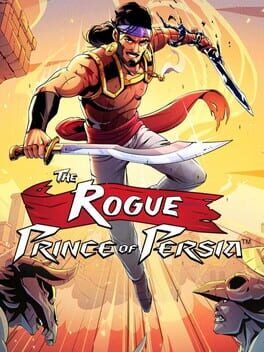
After a bumpy but promising early access run on PC, The Rogue Prince of Persia arrives on Switch and Switch 2 as a fully formed roguelite. Evil Empire’s Dead Cells heritage is obvious the moment you wall‑run into a vault, kick an enemy into spikes, then chain that into a slide and finisher. The question now is not whether the core game works, but whether these new Nintendo versions do justice to that kinetic combat and fast restart loop, and whether this can sit comfortably alongside Hades 2 and TMNT: Splintered Fate as a go‑to run‑based obsession.
On Switch 2 the answer is almost unqualified yes. On the original Switch, it is a more complicated story.
Combat and parkour: the best the series has ever felt
The Rogue Prince of Persia leans hard into what the franchise always flirted with but never fully committed to: parkour as a combat language. Your basic move set is simple on paper jump, double jump, wall‑run, slide, dodge, melee strike, and a contextual kick that turns enemies into physics objects. In practice, the way these pieces snap together is where the game sings.
Fights reward you for staying airborne and aggressive. A typical encounter might see you wall‑run over a pit, bounce off a shielded foe to break their guard, kick them into another enemy to stagger both, then drop‑kick a third into a bed of spikes. The animation work sells every impact. Enemy telegraphs are clear without being patronising, and once you learn a biome’s roster you can start treating them as tools in your traversal rather than just obstacles.
Compared with Hades 2’s more deliberate, arena‑based rhythm, Rogue Prince is scrappier and more improvisational. It asks you to read the room geometry as carefully as you read enemy tells. Against TMNT: Splintered Fate it is simply a better feeling action game. The Turtles’ combat is punchy but grounded. The Prince feels like he is always one misstep from disaster or brilliance, and the controls are precise enough that failure rarely feels unfair.
Roguelite structure and progression after early access
If you bounced off the early access build because it felt thin, the 1.0 console version is a clear step up. There are more biomes in the run, a healthier spread of enemy types, and most importantly, a much broader arsenal of weapons and medallions that meaningfully alter your playstyle.
Runs are structured as a branching sequence of zones, with optional challenge rooms and risk‑reward detours. The roguelite meta layer revolves around collecting a persistent currency to unlock new weapons, modifiers, and starting loadouts. Crucially, the unlock pace has been tuned. Early access sometimes front‑loaded bland stat bumps before letting you at the fun toys. On Switch and Switch 2, you start seeing wild builds sooner, from bleed‑focused whips that thrive on hit‑and‑run wall‑runs to heavy blades that turn kicks into miniature explosions.
The overall loop still lands a notch below the genre’s best. Hades 2 remains unmatched in how every run advances story, relationships, and new mechanics. Rogue Prince has narrative dressing and some light worldbuilding, but it is mostly there to justify the next dive into combat rather than to drive you forward. In that sense, it feels closer to Dead Cells a systems‑first roguelite where the high is mastering a toolkit, not unravelling a plot.
That said, as a pure mechanical sandbox it is far stronger now than it was in early access. Variety between runs is solid, and the game is generous about letting you chase synergies instead of drip‑feeding upgrades.
Level variety and biome identity
The first few areas still lean on familiar desert city and fortress aesthetics, but the full release spreads its wings more. Later biomes introduce trickier vertical layouts, moving traps, and environmental quirks that force you to rethink your movement patterns. Some zones emphasise long wall‑run chains over bottomless pits, others compress the space into tight rooms where your beloved aerial approach becomes much riskier.
Layout generation is more conservative than in something like Spelunky or even Hades 2’s wilder realms. Rooms often feel like hand‑authored chunks being shuffled into new orders rather than fully emergent spaces. The trade‑off is that platforming challenges tend to be fair and readable at high speed. There is rarely a moment where a leap of faith cheap‑shots you into a hazard.
If there is a criticism, it is that visual variety occasionally lags behind mechanical variety. You will see a lot of sandy stonework and warm‑hued interiors in your first dozen hours. It looks good, but Hades 2 and TMNT: Splintered Fate both do a better job of making each step of a run feel like a sharp aesthetic departure. Rogue Prince eventually gets there, but it takes a little too long to show its full range.
Switch 2 performance, input latency, and visual stability
On Switch 2, The Rogue Prince of Persia is the version the designers clearly had in mind. The game targets 60 frames per second and holds it in almost all circumstances. In docked mode the image is crisp, with a high enough rendering resolution that the bold outlines and colour gradients stay clean even during frenetic combat. Handheld play is similarly stable, with no glaring drops in clarity.
Most importantly for an action‑platformer that lives and dies on timing, input latency on Switch 2 feels excellent. Dodges and wall‑runs trigger exactly when you expect. There is none of the mushy analogue stick response that sometimes plagued more demanding action titles on the original hardware. Parrying tight enemy strings feels reliable, and reclaiming control after a hitstun is snappy enough that you can often salvage a bad situation with a quick climb or kick.
Shader compilation stutter, a common issue for smaller studios on consoles, is essentially a non‑issue here on Switch 2. The first run after boot might show a faint judder during certain new effect triggers, but once cached, traversal and combat remain glass‑smooth. Visual stability is also strong. There is no intrusive screen tearing, and effects density ramps up in boss fights without muddling silhouettes.
Side by side with Hades 2, Rogue Prince is just a hair rougher, mostly in camera work and clarity when lots of overlapping effects fill the screen. Supergiant’s game is borderline pristine. But in terms of raw responsiveness, Switch 2 players will not feel short‑changed. TMNT: Splintered Fate, by contrast, is noticeably looser in both framerate consistency and input feel than what Evil Empire delivers here.
Original Switch performance: good, but with clear limits
On the original Switch, the picture is more mixed. The target is still 60 frames per second and in simpler rooms the game hits it, but heavier combat scenarios and certain late‑game biomes dip into the 40s. The upside is that frame pacing remains mostly even, so you do not get the ugly hitching that can make platformers feel unpredictable. The downside is that you can feel the slowdown when the screen is packed with enemies, traps, and particle effects.
Input latency is marginally higher on the older system. It is not disastrous, but when you have experienced the same game on Switch 2 you can feel the slightly softer response, especially in handheld mode where Joy‑Con sticks are less precise. Wall‑jump chains that feel automatic on Switch 2 demand a touch more intention here. It is still absolutely playable, and much better than some of the rougher action ports on the platform, but perfectionists will notice.
Visual compromises are more obvious. Dynamic resolution kicks in frequently, softening the image in busy scenes. The thick line work that defines characters and foregrounds occasionally shimmers in handheld mode, and smaller enemies can blend into the background when the image is under load. None of this breaks the game, yet it chips away at the clarity that is so central to reading hazards at a glance.
Crucially though, crashes and hard locks are rare. Evil Empire has shipped a surprisingly solid Switch version in terms of stability. If you have tolerated performance in titles like Dead Cells or the original Hades on the first Switch, you will be broadly comfortable here, just with more frequent dips than the best‑in‑class efforts.
How it stacks up against Hades 2 and TMNT: Splintered Fate on Switch 2
If you are eyeing your roguelite budget on Switch 2, the comparison points are obvious. Hades 2 is the gold standard, TMNT: Splintered Fate is the licensed surprise, and The Rogue Prince of Persia is the new kid trying to justify its royal bloodline.
Moment to moment, Rogue Prince is the most acrobatic of the three. If movement is your primary thrill, it arguably clears even Hades 2, which is more about precise dashes and spell spacing than wall‑runs and rebound kicks. TMNT: Splintered Fate has fun cooperative chaos and a nostalgic hook, but its levels and encounters are more static. The Prince’s world feels like one big assault course designed for stylish play.
In depth and structure, though, Rogue Prince sits squarely in the middle. It is considerably richer and more replayable than TMNT: Splintered Fate, which can start to repeat itself after a dozen hours. Yet it does not reach the same systemic sprawl or narrative density as Hades 2. If you want a game you can live in for months, Hades 2 remains untouchable. If you want a focused, high‑mobility action game with a strong but not overwhelming meta progression, Rogue Prince fills that niche nicely.
Technically, on Switch 2, all three are well optimised. Hades 2 still feels the sharpest both visually and in controller feel. Rogue Prince is close behind, with only occasional visual noise holding it back in crowded scenes. TMNT has the weakest performance profile of the trio, making Rogue Prince a safer bet if you are sensitive to inconsistent framerates.
Verdict: is this the next must‑play roguelite on Nintendo’s new hardware?
The Rogue Prince of Persia on Switch 2 is an easy recommendation for anyone who cares about fast, expressive movement in their roguelites. The combat system, taken with the refined progression that came out of early access, makes for a game that is constantly pushing you to play smarter and flashier. Input latency is low, performance is strong, and the visual presentation holds up, making the experience feel close to its PC counterpart.
On the original Switch, it is a very good port held back by ageing hardware. If that is your only option and you have room in your library for another action‑heavy roguelite, you will still get a responsive, mostly stable game, but you will be making concessions in clarity and consistency that do noticeably blunt the game’s edge.
Is it the single, unmissable roguelite on Switch 2 Hades 2 still wears that crown by virtue of its storytelling and almost absurd level of polish. Yet The Rogue Prince of Persia comfortably earns a place on the same shelf. It is a superb second or third pillar in a run‑based rotation, and if you have been waiting to see whether the early access promise would coalesce into a must‑play console version, consider that box ticked, especially on Switch 2.
Final Verdict
A solid gaming experience that delivers on its promises and provides hours of entertainment.