
Review

By Night Owl
Trading Souls and Stacking Decks
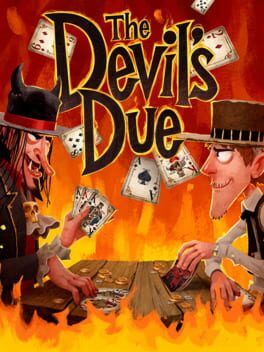
The Devil’s Due has a killer pitch. You’ve lost your soul in a poker game against the Devil and the only way out of the pit is to cheat your way through escalating infernal card battles. The new Steam demo finally lets that premise breathe, and it’s immediately clear this is not just another Slay the Spire clone. At its best, it feels like an anxious, smoky backroom brawl where every draw might save you or bury you.
The demo runs through an early slice of the campaign, long enough to get a feel for the core systems and a taste of how runs will spiral as you push deeper into hell. It is still a contained vertical slice, but there is already a strong sense of identity to how it plays and how it looks.
Card-Driven Combat With Actual Poker Brains
Most card-based roguelikes say “deckbuilder” and then quietly abandon the card game they are borrowing from. The Devil’s Due leans in. Every fight is built around constructing poker hands from the cards you draw, then juicing those hands with a layer of ability cards that bend or outright break the rules.
On a basic turn you are trying to assemble the strongest hand you can from a shared draw, weighing whether to chase the perfect combination or settle for something weaker but safer. Enemies telegraph what they are going for and that turns every round into a low boil of risk versus reward. Going for that inside straight to outmuscle a boss feels deliciously reckless, especially when the stakes are permanent damage or a failed run.
The real hook, though, is cheating. Ability cards let you swap ranks, duplicate cards, mark draws, and mess with your opponent’s hand. The demo drip-feeds these tricks at a smart pace so your first few fights are clean poker, then gradually twist into something much more tactical and expressive. When it clicks you stop thinking in terms of “Play card, do damage” and start thinking like a hustler, mapping three turns ahead around a specific hand you are trying to engineer.
Run-to-run progression is still in its early form here but already hints at depth. You unlock new cheats and modifiers, find relic-style perks that alter odds or scoring, and tinker with your starting setup. It does not yet match the outrageous synergies of the genre’s best, though. In this demo you will see combos and clever interactions, but not many builds that feel truly broken in that satisfying roguelike way. The foundation is strong; the ceiling just is not visible yet.
Roguelike Structure In A Crowded Field
Structurally this is familiar territory. You move through a map of branching encounters, choosing between ordinary fights, events, and tougher showdowns that promise greater rewards. Losing a run snaps you back to the hub with a bit more meta currency, a few new cards or cheats unlocked, and the creeping urge to take another shot.
What helps The Devil’s Due stand out in a market overflowing with card-based roguelikes is how committed it is to the poker fantasy. The whole design orbits that idea rather than using it as a thin coat of theme. When a random event offers you a devilish deal that alters the odds in your favor now in exchange for a punishing drawback later, it reinforces the feeling that you are in a rigged casino where the house is personal.
That said, if you have played a lot of this genre, the demo’s structure is not going to surprise you. The map nodes, relic equivalents, and meta progression all track closely with the usual suspects. It is the moment-to-moment decision making inside battles that feels fresh, not the scaffolding wrapped around them.
Tone, Writing, And Atmosphere
The tone lands somewhere between smoky noir and grinning pulp horror. You are not trudging through po-faced despair; you are trading barbs with the Devil, cutting deals with demonic pit bosses, and bluffing your way past horrors that feel more amused than enraged. The writing in the demo is sparse but pointed, with short exchanges that sell character without bogging down early runs in exposition.
That sense of personality goes a long way toward separating The Devil’s Due from the pack. Even minor encounters have a bit of flavor rather than reading like a menu of passive bonuses. You get a feel for a world where Hell operates like a crooked casino floor, and you are just another desperate sap trying to game the system.
The pacing of this tone work is smart for a demo. It gives just enough context to make choices feel meaningful while staying out of the way of the card play. If the full game keeps this restraint while layering in more narrative arcs and recurring characters, there is a real opportunity for it to stick in your memory rather than blur into the mass of anonymous roguelikes.
Production Values: Stylish, If Not Lavish
On the production side The Devil’s Due has obvious indie constraints, but it uses them well. The art leans most heavily on sharp character illustrations and bold UI rather than elaborate animation. Cards are cleanly readable, suit and rank information pops instantly, and enemy designs have a snickering, Faustian flair that suits the premise.
The soundtrack quietly does a lot of the heavy lifting. Jazz-tinged, low-key tracks sell the feeling of late-night degeneracy without becoming repetitive too quickly. Sound effects on shuffles, deals, and card slams have the right tactile snap, and key abilities fire with just enough flair to feel rewarding when you pull off a big swing.
Technically, the demo runs smoothly and loads quickly, with no glaring issues beyond the occasional minor UI hitch when multiple effects trigger in quick succession. Menus are functional rather than flashy, but that stripped-down approach keeps you focused on the cards, which is where the game actually shines.
Does It Actually Stand Out?
With so many roguelike card games already jostling for attention, “good” is not enough any more. The Devil’s Due needs a sharp edge to cut through, and based on the demo it might just have one. The way it folds real poker logic into its battles feels distinct. You are making recognizably poker-driven decisions instead of generic damage calculations, and that texture is exactly what a genre saturated with copycats needs.
At the same time, the demo is not a revelation. If you bounce off map-node grind or slow-burn meta progression, nothing here will convert you. Its production values, while stylish, are not eye-popping, and some players will find the early runs a bit straightforward while the card pool is still relatively shallow.
Still, the potential is clear. If the full release doubles down on wild cheats, more extreme build paths, and nastier devilish deals, The Devil’s Due could end up as one of the more memorable card-driven roguelikes on Steam rather than another also-ran.
Demo Verdict
As a hands-on slice, The Devil’s Due demo succeeds in the most important way. It makes you think “one more run” because you want to see what new way you can twist the odds. The card-driven combat hook is strong, the tone is confident, and the production values, while modest, are cohesive and considered.
Right now it feels like a very promising hand waiting on a couple of key draws. If the developers can expand the card pool, sharpen the difficulty curve, and lean harder into the gleeful nastiness of its premise, The Devil’s Due has a real shot at cashing out big when it finally leaves the table.
Final Verdict
A solid gaming experience that delivers on its promises and provides hours of entertainment.