
Review
By Story Mode
Platform reviewed: Android
Also on: PC, iOS
Developer: BUNKWORKS
Genre: Point-and-click adventure, comedy corporate thriller
The Biggleboss Incident arrives on Android with a bold pitch: it wants to be the Monkey Island of miserable office life. It mostly pulls it off, delivering a tightly written, fully voiced adventure that feels like someone spliced Office Space and a low-stakes Metal Gear plot into a classic LucasArts-style point-and-click.
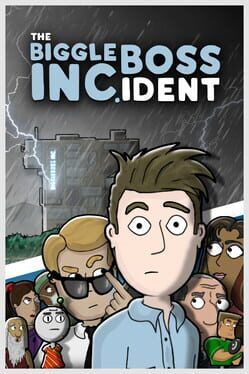
You play as Tom, a perpetually late office drone scrambling to finish his big Project AGER pitch while Biggleboss Inc. insists, repeatedly, that there is absolutely nothing sinister happening behind the scenes. Naturally, the more people say that, the more you start spotting surveillance vibes, security oddities, and corporate doublespeak lurking in every corridor.
On Android, what stands out first is how readable and approachable everything is. Backgrounds are cleanly illustrated, UI elements are big enough for thumbs rather than mouse pointers, and the game boots straight into play with no account nonsense, ads, or online checks. For a genre that can easily feel cramped on a phone, Biggleboss is surprisingly comfortable.
Comedy and corporate-thriller tone
Biggleboss succeeds as a comedy because it never forgets it is also a workplace game. The jokes come out of recognisable office misery: pointless security protocols, coworkers who weaponise positivity, meetings that feel vaguely like interrogations. Tom’s internal monologue and item descriptions are consistently snarky without turning him into a complete jerk, which is important given how much time you spend listening to him riff on staplers, HR posters, and ominous corporate slogans.
The writing leans more toward sharp and chatty than laugh-a-minute slapstick. There are genuine laugh-out-loud moments, usually when a simple puzzle solution spirals into an overdramatic espionage beat, but the baseline is a steady smirk. The corporate thriller angle gives the humor some structure: that repeating reassurance that there is nothing sinister becomes a running gag that gradually mutates into genuine suspicion.
Crucially, the tone never tips into bleak cynicism. The game clearly loves the genre it is sending up, from stealthy cardboard-box antics to overblown conspiracies, and that affection keeps it light even as it pokes at surveillance culture and nonsense office-speak. If you have ever stared at an open-plan office and thought it felt a bit like a stealth mission, this will hit a little too close in the best way.
Puzzle design: smart, fair, and just shy of brilliant
Biggleboss openly positions itself as a modern point-and-click: classic structure without the moon logic. For the most part, it delivers. Puzzles are rooted in the realities of the office, then nudged into absurdity. You will forge your way past security, bend procedure to your will, and manipulate colleagues to open doors or reveal secrets, but the answers tend to make sense.
Goals are usually clear. Tom’s immediate objectives are well signposted in dialogue and environmental details, and most multi-step puzzles unspool logically. Venturing through the office often becomes a chain of little cause-and-effect setups: talk to someone, notice their quirk, pocket an item that plays into it later. The design trusts you to remember these small character details without shoving them in your face.
There are a few moments where the solution leans more on genre intuition than everyday logic. If you grew up with LucasArts adventures, you will probably spot these patterns instantly: the joke answer that is also the correct answer, the slightly convoluted item combo that pays off with a gag. Newcomers might stall once or twice, but Biggleboss avoids the worst sins of the genre. Interactables are clearly highlighted, hotspots are generous, and failure states are non-existent, so experimentation is painless.
The one real knock is that the game rarely surprises with its puzzle structure. It is cleverly executed rather than wildly inventive. You will not find the kind of wild lateral leaps that defined the most memorable set pieces in something like Day of the Tentacle, but you also will not be angrily alt-tabbing to a walkthrough every five minutes. This is a cozy, well-paced design that respects your time, even if it stops short of redefining the genre.
Touch controls and mobile feel
Porting a traditional point-and-click to a phone can easily go wrong, but the Android version of The Biggleboss Incident feels like it was built with touch in mind.
Tapping to move and interact is responsive, with big enough targets that mis-taps are rare even on smaller screens. Contextual actions keep the interface streamlined: you usually tap once to move and tap again to interact, rather than wrestling with separate verbs scattered across the HUD. When multiple hotspots sit close together, the game does a decent job of favouring the nearest one and rarely misreads your intent.
Inventory management is straightforward. A single tap selects an item, then you tap on the world to use it. Dragging is used sparingly, which is wise on mobile, and interface prompts are clear about what you are holding and where it can reasonably go. There are a couple of sections with slightly fiddly positioning, but they are the exception, not the rule.
Performance is solid on mid-range hardware, which matters for a text and voice-heavy adventure. Loads between scenes are short, autosaves are frequent, and the game runs fully offline. No ad breaks, no intrusive overlays, no energy timers. It respects the platform in a way a lot of mobile ports still do not.
The only real concession you might wish for is more flexibility in text sizing on very small phones. Dialogue is fully voiced, which softens the blow, but those who like reading every line might find themselves holding the screen a little closer than usual.
Presentation: voice acting and art carry the day
For a solo-developed project, The Biggleboss Incident sounds and looks far more expensive than it has any right to. The art favours bold shapes and clean lines over hyper-detailed backgrounds, which not only reads well on mobile but reinforces the game’s slightly surreal, staged-office vibe. Departments feel distinct but coherent, letting you mentally map out the workplace as you go.
The voice work is genuinely impressive. Tom’s delivery walks a tightrope between smug and bewildered, and the supporting cast sell their archetypes without turning into pure caricature. The script gives them enough material to avoid feeling like simple joke-delivery machines; they have rhythms and running bits that make the world feel lived in rather than just written.
Music keeps the corporate thriller tone ticking along with light, conspiratorial cues that never drown out the dialogue. It lifts tension in stealthier sequences and punctuates punchlines when the writing leans into farce.
Who is it for among adventure-game fans?
If you already love point-and-click adventures, The Biggleboss Incident is very easy to recommend on Android. It scratches the classic itch without the genre’s nastiest habits and does it in a tidy, phone-friendly package. Long-time LucasArts and Sierra fans will appreciate the clear lineage in the structure and humour, but also the clear effort to streamline friction points.
Players newer to the genre, or those who bounced off older titles due to obtuse logic and clunky interfaces, should not be scared off. Biggleboss is welcoming, fair, and compact enough that it feels like a complete story rather than a sprawling, exhausting epic. The corporate setting is relatable even if you have never rolled your eyes at a real-world stand-up meeting.
Where it might land less well is for players who want their adventure games to be either brutally challenging or wildly experimental. This is not a puzzle gauntlet, and it is not a strange art piece that twists the form into something new. It is a very polished, very charming throwback that chooses comfort and coherence over risk.
Verdict
The Biggleboss Incident on Android is a smart, funny corporate thriller that fits the platform almost perfectly. Its touch controls are thoughtfully implemented, its puzzles are fair and satisfying, and its writing and performances are strong enough to carry you through any occasional rough edge.
It does not revolutionise the point-and-click genre, but it absolutely reminds you why people fell in love with it in the first place, and it does so from the palm of your hand.
Score: 9/10
Final Verdict
A solid gaming experience that delivers on its promises and provides hours of entertainment.