
Review

By MVP
TetherGeist Review
Precision platformers live and die by their movement systems. Players will forgive sparse storytelling, minimalist visuals, and brutal difficulty spikes as long as the controls feel immaculate. TetherGeist understands that rule immediately. This indie platformer from O. and Co. Games plants itself firmly in the shadow of Celeste, but instead of feeling like a pale imitation, it introduces one genuinely compelling hook that gives the game its own identity.
That hook is Astral Projection.
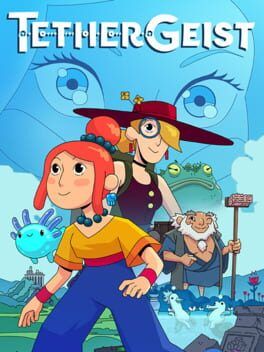
You play as Mae, a young villager undertaking a dangerous pilgrimage alongside her axolotl spirit companion Bao. The setup is simple, but the emotional framing works because the game never buries itself in exposition. The real storytelling happens through movement, hesitation, and mastery. Every room becomes a conversation between the player and the mechanics.
Astral Projection is what transforms TetherGeist from another difficult indie platformer into something memorable. Mae can separate her spirit from her body, creating a tethered projection that allows for midair repositioning, momentum adjustments, and puzzle solving. The mechanic initially feels strange because it asks players to think in two layers simultaneously. Your physical body matters, but so does the ghostly extension moving independently through hazards and platforms.
The brilliance of the mechanic is how naturally the level design evolves around it. Early stages gently introduce projection as a traversal tool. You might launch your spirit across spikes to activate a switch or create an opening for your physical body. Later stages become significantly more demanding, requiring rapid projection cancels, directional precision, and careful momentum control while navigating screens packed with moving hazards.
TetherGeist’s best moments happen when the game stops feeling like a platformer and starts feeling like controlled chaos. There are sequences where Mae ricochets through narrow corridors while her spirit threads through moving traps in perfect synchronization. The rhythm becomes hypnotic once the controls click.
Importantly, the game earns its difficulty curve. A lot of modern precision platformers confuse punishment with challenge. TetherGeist mostly avoids that trap because every death feels educational. Rooms are compact, checkpoints are generous, and restart times are nearly instantaneous. Failure becomes part of the learning process instead of a frustrating interruption.
That said, the game occasionally pushes too hard in its later sections. Some late-game screens lean heavily into execution-heavy gauntlets that border on exhausting rather than exhilarating. Celeste understood the importance of pacing difficult sequences with emotional cooldowns and mechanical variety. TetherGeist occasionally forgets to breathe, throwing dense obstacle combinations at players for extended stretches.
Still, the underlying movement is strong enough to carry those rough patches. Mae feels responsive in a way that many indie platformers fail to achieve. Jumps have just enough weight without becoming sluggish, aerial adjustments are predictable, and wall interactions remain clean even during demanding sequences.
The comparison to Celeste is unavoidable, but TetherGeist also shares DNA with games like The End is Nigh and Super Meat Boy. Unlike Super Meat Boy’s twitch-heavy brutality, however, TetherGeist focuses more on flow-state execution. It wants players to build elegant movement chains rather than merely survive impossible obstacle courses.
Visually, the game embraces a soft, dreamlike aesthetic that contrasts nicely with the punishing gameplay. Environments are colorful without becoming noisy, which is important in a genre where visual clarity directly impacts performance. Hazards remain readable even during hectic projection sequences.
The soundtrack deserves mention as well. Precision platformers rely heavily on rhythm, and TetherGeist’s music subtly reinforces movement timing without overpowering the action. Ambient tracks during exploration sections help maintain the game’s reflective tone.
On Nintendo Switch, performance is thankfully reliable for most of the adventure. The game targets responsiveness above all else, and it generally succeeds. Handheld mode feels particularly suited to the game’s quick-restart structure. Input latency remains low, and frame pacing is stable during the majority of platforming challenges.
There are occasional hiccups during visually busier late-game sequences where particle effects and layered hazards briefly introduce small performance dips. They are noticeable because precision platformers demand exact timing, but the issues never become severe enough to undermine the experience completely.
What matters most is that TetherGeist understands why players love this genre in the first place. It respects player improvement. It trusts repetition. It builds mechanics that deepen over time instead of relying on gimmicks.
Not every experiment lands perfectly. Some challenge rooms feel overtuned, and the narrative remains fairly lightweight compared to genre standouts. But the Astral Projection mechanic is strong enough to separate TetherGeist from the endless wave of indie platformers chasing Celeste’s success.
That alone makes it worth paying attention to.
TetherGeist may not dethrone the giants of the precision platformer genre, but it confidently earns a place beside them. For players hungry for another brutally satisfying test of timing and muscle memory, this is one of the stronger indie platformers to hit Nintendo Switch in recent memory.
Final Verdict
A solid gaming experience that delivers on its promises and provides hours of entertainment.