
Review
By Story Mode
Platforms previewed on: PC (Steam demo and press build)
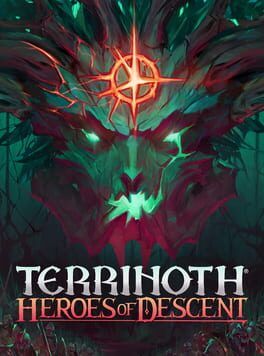
Terrinoth: Heroes of Descent arrives with a lot of baggage. You are not just adapting a beloved Fantasy Flight board game, you are stepping into a genre already crowded with heavyweights like Divinity: Original Sin 2, XCOM and the more recent wave of digital dungeon crawlers. After several hours across the Steam demo and an extended press build, what is most striking is that Artefacts Studio is not trying to make a crunchy tactics sim for min-maxers. Heroes of Descent is a measured attempt to translate the rhythm and feel of Descent’s tabletop turns into a more approachable, story-first tactical RPG.
That focus is both its biggest strength and the thing that may frustrate veterans coming in expecting an uncompromising ruleset.
From cardboard to keyboard: how “Descent” does it feel?
The good news for fans of Terrinoth is that this really does feel like a Descent offshoot rather than a generic fantasy tactics game with the logo pasted on. Hero archetypes, monster types and even the way missions are framed will be instantly familiar if you have ever spent a weekend hunched over a pile of plastic miniatures.
The early campaign throws you into that comfortably pulpy Terrinoth mix of reanimated skeletons, barrow-wights and demonic lieutenants, with named heroes that lean hard into the board game lineage. Quests unfold as discrete scenarios strung together by short but voiced story beats, very reminiscent of playing a Descent campaign with the Legends of the Dark app handling narration and bookkeeping.
Crucially, the game understands that Descent is about tempo and clarity of information. Mission objectives are legible, enemy intent is clearly telegraphed and UI callouts do a good job of approximating the board game’s explicit rules text. When you line up a skill shot or a clever combo, it has that same feeling as sliding a hero miniature into just the right square and rolling a satisfying handful of dice.
If you wanted a literal port of the board game’s mechanics, this is not that. There is no strict one to one mapping of dice symbology or line of sight rules, and rounds are less granular than moving, attacking and resting as separate mini phases. Instead, Heroes of Descent distills the structure into a more conventional turn based RPG where each hero has a limited pool of actions governed by cooldowns, resource meters and class specific mechanics. It is a translation by spirit, not letter, and that feels like the right call for a videogame.
Turn based combat: approachable first, deep second
Combat in the current build sits in an interesting middle ground. Battles are grid based and strictly turn order driven, with initiative, cover and elevation all having a role to play. Each hero starts with a small but focused toolkit. The mage’s cone blasts and elemental fields, the tank’s taunts and shield walls, the rogue’s mobility and backstabs and the healer’s mix of buffs and small heals all feel immediately readable even if you have not touched the board game.
The positive side of this is that fights are snappy. Most early encounters resolve in a handful of rounds, and you rarely spend more than a few seconds puzzled over what a skill does. Area of effect and status previews are excellent, making it clear who will be hit, what debuffs will land and how turn order will shift.
The tradeoff is that early on, there is not a huge amount of room for experimentation. The first couple of hours rely heavily on a basic loop. Tanks draw attention, damage dealers nuke priority targets, and support heroes clean up. Enemy AI in the preview build is functional rather than brilliant. It will focus fire injured heroes and understands flanking, but it does not often surprise you with lateral plays or risk taking moves.
Things pick up once you unlock class specializations and more advanced skills. The board game’s love of synergies and combo chains does start to come through. For instance, you can spec your warrior toward counterattack heavy builds that thrive on being swarmed, or build a mage who turns the battlefield into a patchwork of hazards and elemental zones that other heroes can exploit for bonus effects. The more the game leans into these interactions, the closer it gets to the satisfying puzzle feel of a good Descent encounter.
Right now, though, it feels like the combat is tuned more for accessibility than depth. Difficulty spikes are rare in the preview slice. Even on higher settings you can usually brute force your way through mistakes rather than being punished as harshly as something like a failed scenario in the tabletop game. Whether that gentler curve holds for the full campaign remains to be seen, but tactics buffs looking for a punishing brain burner may find it a bit polite.
Progression and loot: streamlined but slightly safe
Heroes of Descent borrows the long term progression feel of a Descent campaign and boils it down into something closer to a modern RPG skill tree system. Each hero has branching paths of active and passive abilities and a gear system that emphasizes clear stat upgrades and a handful of affixes over deep itemization.
Within the preview campaign, leveling up feels meaningful. New skills genuinely change how you approach encounters and often slot into obvious synergies with your core rotations. You can see the fingerprints of the board game design in traits that reward positioning, coordinated attacks and timing.
That said, this is not a loot fiesta. Equipment drops at a measured pace, and there is little of the tinkering and oddball build crafting you might expect if you are used to games like Midnight Suns or Wildermyth. The early access style slice feels curated in a way that serves the story, but it also means progression can feel somewhat railroaded. You will almost certainly make many of the same choices on repeat runs because some talents simply outshine others, at least in the current build.
Where the game could grow before launch is in offering more ways to break its own rules. Consumables, environmental interactions and perk synergies are present but fairly conservative. The systems are stable and easy to understand, yet leave you wanting a layer or two more opaqueness and experimentation so that veteran players can really dig in.
Campaign structure: built for couch sessions, workable solo
Campaign structure is where the adaptation feels most confident. Scenarios are designed in digestible chunks that make sense for both solo play and co op sessions. Each mission runs thirty to forty minutes from briefing to wrap up in the material we played, which hits a similar cadence to a single Descent quest.
Between missions you return to a hub where you handle upgrades, change loadouts and chat with NPCs. This layer is fairly light but it does enough to make the campaign feel like a continuous journey rather than a disconnected set of skirmishes. Crucially, the game autosaves at sensible points and supports drop in cooperative play so that friends can join for a session and then bow out without corrupting your long term progress.
In solo play, the interface for swapping between heroes is smooth, and the game lets you queue up abilities and movement in a way that keeps turns moving. There is a small amount of friction in micromanaging four characters alone, but not enough to feel like the design is fighting you. The tactical camera and information overlays are perfectly readable when you are juggling the entire party yourself.
Co op is where the board game DNA really shines. The preview build offers online and local options, and turns become engaging little negotiation phases as you decide who will burn cooldowns now and who will hold back. Visual prompts for other players’ planned moves do a nice job of replicating that moment at the physical table when you reach for a miniature and another player stops you to suggest a better line.
The main concern is that story sequencing is fairly linear and conversation choices do not yet have obvious long term consequences. If you are hoping for a branching narrative where different groups will see dramatically diverging campaigns, the current structure looks closer to a guided adventure with some optional side paths. It works well for keeping a group on the same page, less so for replayability.
Early verdict ahead of launch
Taken as an early access style snapshot, Terrinoth: Heroes of Descent is in a promising place. It successfully translates the feel of Fantasy Flight’s Descent universe into a digital co op tactics RPG that prioritizes clarity, accessibility and cooperative flow over hardcore mechanical density. Combat is already solid, if a bit reserved, and the progression systems do a convincing job of evoking a campaign board game without burying players in math.
Where it needs to push harder before release is in depth and variety. Enemy AI and encounter design could afford to be nastier, class builds could use more wild outliers and the campaign would benefit from a few more divergent routes that reward repeat runs with a group. None of these feel like structural flaws as much as areas where a good adaptation could become a great one.
If you come to Heroes of Descent expecting a digital rulebook translation of the tabletop game, you may be puzzled by how streamlined it is. If you come looking for a co op friendly tactical RPG that captures the mood, pacing and camaraderie of a Descent night with friends, this build suggests Artefacts Studio is on the right track. The foundation is strong. Now it is on the team to add enough teeth and texture before launch to keep both new adventurers and grizzled Terrinoth veterans hooked for a full campaign.
Final Verdict
A solid gaming experience that delivers on its promises and provides hours of entertainment.