
Review

By Night Owl
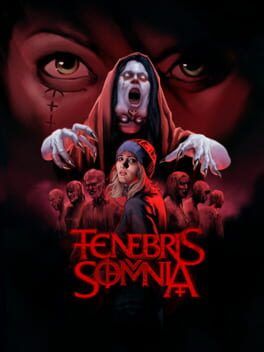
Image: IGDB
Store links: Tenebris Somnia on Steam
A risky horror hybrid that lives or dies by mood
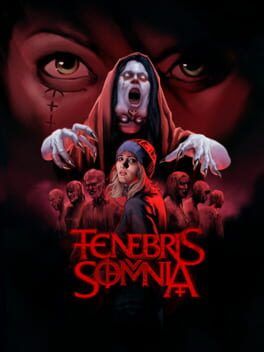
Tenebris Somnia arrived on Oct. 16, 2026, according to both Metacritic and OpenCritic listings, carrying a premise that could have collapsed into novelty: a retro-styled survival horror adventure interrupted by live-action horror cinematics. Metacritic lists Saibot Studios as developer and New Blood Interactive in its company listing, while OpenCritic names New Blood Interactive, Andrés Borghi, and Saibot Studios among the creators. A Reddit review thread also identifies Andrés Borghi and Saibot Studios as developers, with New Blood Interactive as publisher.
That credit spread matters because Tenebris Somnia feels like a meeting point between indie game craft and low-budget genre filmmaking. Its strongest idea is also its biggest risk. The Tenebris Somnia horror game asks the player to buy into coarse 2D pixel exploration, survival-horror item management, point-and-click-style clue reading, and FMV sequences that give its nightmare creatures physical presence. If any one layer feels cheap, the mood breaks. For most of the run, it does not.
The result is a compact, deliberately abrasive horror adventure whose atmosphere carries it through several rough edges. It is less satisfying as a combat game than as a haunted object box, where every room, prop, locked door, and creature encounter pushes Julia deeper into a relationship that has curdled into demonic architecture. As an indie horror review, the key question is not whether Tenebris Somnia has the budget of a modern survival-horror remake. It does not. The question is whether its low-resolution dread and filmed intrusions can sustain pressure without becoming a trick. Mostly, yes.
Julia's breakup nightmare gives the horror a clean emotional hook
GameCritics describes the setup plainly: Julia, troubled by realistic nightmares of her ex Iván being tortured by demons, visits their old apartment and discovers that he has made a dark bargain to erase the part of his soul that still longs for her. She is pulled into a warped manifestation of his memories, moving through spaces tied to their past, including the apartment and the film school where they met.
COGconnected's review adds early scene detail that captures why the opening works. Julia arrives to find boarded windows, a destroyed short film they made together, blood, broken mirrors, and a black door that leads into a rearranged version of the apartment marked by strange symbols. Those are useful horror details because they are domestic before they are supernatural. The game begins with the remains of a shared life, then turns that life into a navigable wound.
Tenebris Somnia is at its best when its horror is personal rather than lore-heavy. Julia and Iván being young filmmakers is not treated as decoration. GameCritics notes that the game uses their creative roles and relationship history as part of its broader theme, and that Julia's comments on objects such as movie posters or impossible nightmare imagery shed light on half-remembered moments. That gives the exploration a reason to be slow. You are not only looking for keys. You are reading the afterimage of a relationship through production debris, apartment clutter, classrooms, and monstrous exaggerations.
Puzzle flow leans closer to adventure game logic than action horror
Tenebris Somnia gameplay is built around survival-horror movement, limited resources, and puzzle solving. GameCritics places it squarely in a third-person survival horror formula, with Julia exploring surreal two-dimensional halls, conserving scarce supplies, and charting routes around common monster threats. COGconnected frames it as a marriage between survival horror and point-and-click adventure design, emphasizing item collection, clue reading, contextual item use, and occasional item combination.
That balance is important for expectations. Players coming in for tense exploration and object-based puzzle chains will find the game in its element. Rooms feel intentional, and GameCritics specifically notes that the apartments and classrooms do not feel arbitrary or extraneous. The puzzle flow is at its strongest when the game lets you build a mental map, identify an obstacle, find an object with a clear thematic or spatial relationship to that obstacle, then return through dangerous ground with enough uncertainty to make the trip matter.
Combat is present, but the sources consistently describe it as secondary. COGconnected notes that players ready weapons with L2 and attack with R2, with melee weapons and some guns available, while also saying combat is not the focal point. That matches how the game creates pressure. Monsters are there to make the act of thinking unsafe. The danger is not usually tactical depth; it is the cost of hesitation, wasted ammunition, and arriving at a fight without what you need. GameCritics' stated low point was reaching a mid-game boss underprepared, which signals the harsher side of the design. Resource scarcity gives Tenebris Somnia its bite, but it can also punish players who assume the game is mainly a puzzle adventure with monsters as scenery.
The FMV presentation is the scare engine, with one visible fault line
The live-action cinematics are Tenebris Somnia's signature feature. GameCritics says the game shifts into visually rich live-action cutscenes during narratively significant moments, often avoiding dialogue and relying instead on the expressions of flesh-and-blood actors. That choice fits the game's dream logic. The FMV scenes do not simply explain events; they retexture them, giving the pixel-world horrors a damp physicality that the sprites can only suggest.
One example cited by GameCritics is the candle-headed Obscurata, a creature that leaves a stronger impression once the abstract pixel monster is translated into live action. Several listed critical excerpts echo that strength. Metacritic's excerpt from Noisy Pixel praises the FMV sequences alongside tension-fueled combat and thoughtful puzzle design. OpenCritic's Digital Chumps excerpt says the FMVs give tangible life to the otherworldly horrors of the pixel art. Game Informer's Metacritic excerpt says the indie horror film component adds to the experience rather than feeling like a gimmick.
There is a caveat. GameCritics reports that later segments rely more heavily on CGI, and that this weakens the rawness created by the tangible pixel art and live-action approach. That is the main presentation fault line. Tenebris Somnia's best scares come from friction: low-resolution game space colliding with filmed bodies, practical textures, and abrupt cinematic intrusion. When the imagery becomes smoother and more artificial, some of that friction softens. It does not sink the game, but it makes the later spectacle feel less dangerous than the earlier, grubbier material.
Sound and visual texture do heavy survival-horror work
The most reliable fear in Tenebris Somnia comes from texture. GameCritics describes the playable world as coarse, pixelated sprites accompanied by a discordant MIDI-style soundscape, with scratchy, compressed demon howls cutting through a droning score. That combination is doing survival-horror work before any enemy reaches Julia. The audiovisual design makes rooms feel contaminated, as if the game itself is an old file being played back through damaged hardware.
This is where the retro look earns its keep. The 8-bit or 16-bit influence mentioned in Metacritic's summary could have been a simple nostalgia cue. Instead, the low fidelity gives the imagination room to worsen what the screen withholds. Monsters are readable enough to threaten, but abstract enough to remain unstable until an FMV sequence gives them a face, a body, or an unnerving silhouette.
The audio matters because Tenebris Somnia is not built around constant mechanical complexity. You spend a lot of time examining spaces, interpreting clues, and moving back through areas whose danger level may have shifted. In that rhythm, sound becomes a resource warning and a mood trap. The score's drone and the compressed creature effects keep the player braced, even during puzzle solving. For horror players who value sustained unease over frequent jump scares, this is one of the game's clearest strengths.
Atmosphere holds, but the rough edges are real
Across the available critical record, Tenebris Somnia has been received favorably while still drawing notes about friction. Metacritic lists the PC version as Generally Favorable based on 17 critic reviews, with platform review counts also shown for Nintendo Switch, Nintendo Switch 2, and PlayStation 5. A Reddit review thread, however, lists only PC under platforms for Oct. 16, 2026. Because the provided sources do not include official storefront pages for each platform, the safest reading is that PC is clearly documented in the review thread and Metacritic's PC listing, while Metacritic also tracks additional platform review pages.
OpenCritic's page lists 42 critic reviews in the provided material, and its excerpts show the split clearly. TheSixthAxis praises the slow drip of story and tension through live-action cutscenes. COGconnected calls it a likely game of the year contender for survival horror or point-and-click fans. Shacknews, by contrast, describes it as an interesting experiment and conversation piece more than something the reviewer would return to. Impulsegamer's excerpt praises the visual style, creative puzzles, atmosphere, and creature designs, while also noting combat and puzzle frustrations, early story revelations that weaken some mystery, and slower movement that can make boss encounters awkward.
That range matches the experience Tenebris Somnia appears designed to create. It is mood-driven first, elegant second. The atmosphere sustains the full run better than the combat does, and the puzzles are stronger when they feel like environmental deduction rather than checklist backtracking. The game is at risk whenever it asks for precision action or lets later CGI overpower its handmade horror texture. Still, those issues are interruptions, not the identity of the piece.
Buyer guidance and score
Tenebris Somnia is easiest to recommend to players who like classic Resident Evil or Silent Hill structure, but are open to a top-down retro presentation and adventure-game puzzle emphasis. Metacritic's summary explicitly compares it to those classic survival horror traditions while noting its 8-bit or 16-bit-style 2D aesthetic, puzzle solving, creature combat, and secrets hidden within cinematics. If your ideal horror game is about route planning, item anxiety, strange keys, cursed rooms, and dread-soaked audiovisual style, this should be on your list.
It is a weaker fit for players who primarily want fluid combat, heavy weapon feedback, or modern action-horror pacing. The sources describe combat as light or secondary, and multiple review excerpts point to rough edges around boss encounters, puzzles, or movement. Metacritic's Where to Buy section in the provided material lists a Fanatical price of $23.24 with a 7 percent discount from $24.99, along with Amazon entries at $34.99 and $49.99. Those are storefront listings on Metacritic, not an official publisher pricing statement, so treat them as availability signals rather than definitive MSRP.
GameLoop's verdict: Tenebris Somnia is a sharp, strange indie horror release whose FMV sequences, audio grime, and emotionally charged nightmare spaces outweigh its awkward combat and occasional presentation wobble. It is not the cleanest survival horror game of its class, but it is one of the more memorable mood pieces, and its best images linger after the screen goes dark.
Final Verdict
A solid gaming experience that delivers on its promises and provides hours of entertainment.