
Review

By Pixel Perfect
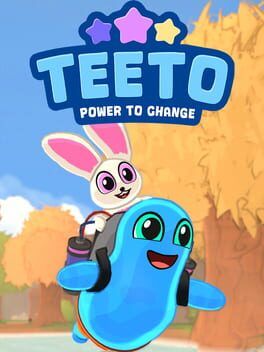
Image: IGDB
Store links: Teeto on Steam
A small 3D platformer launches with big charm and a few listing wrinkles
Teeto arrives as a colorful 3D collectathon from developer Eat Pant Games, with Super Rare Originals identified as publisher by Qualbert and LadiesGamers. Checkpoint Gaming lists Super Rare Originals alongside CouchPlay Interactive as publishers, so there is a small source discrepancy around the publishing credits rather than the developer. Platform availability is also reported with slightly different wording: LadiesGamers lists Steam for Windows, plus Nintendo Switch and PlayStation, while Checkpoint Gaming lists PC, Nintendo Switch, PS5, and Nintendo Switch 2. The Steam storefront page confirms the PC listing for Teeto.
There is a minor timing split in the source material as well. LadiesGamers lists a July 15, 2026 release date, while Checkpoint Gaming lists July 16, 2026. For buyers, the practical takeaway is clear enough even if the date formatting differs by outlet or region: this is a mid-July 2026 release across PC and consoles, with Steam as the most concretely documented storefront in the supplied material. LadiesGamers lists the price at US $17.99, UK £14.39, and EU €17.99, and also reports Steam Deck Verified status. The Steam page headline in the source material says “Save 20% on Teeto on Steam,” but the provided storefront scrape does not include a full price breakdown beyond that sale wording.
That matters for the shape of this Teeto review because Teeto is entering a crowded, nostalgia-friendly lane. Qualbert frames it against the recent resurgence of collectathon 3D platformers and explicitly cites the appetite for Mario and Banjo-style design. Checkpoint Gaming points to influences including Astro Bot, Crash Bandicoot, and Super Mario Odyssey. Teeto’s pitch is smaller and scrappier than those mascot giants, but its strongest reported qualities are exactly the ones a cozy platformer needs: readable movement, playful worlds, a good collection loop, and a sense that every level wants to show you something odd.
Teeto gameplay is built around transformations, and that is its best idea
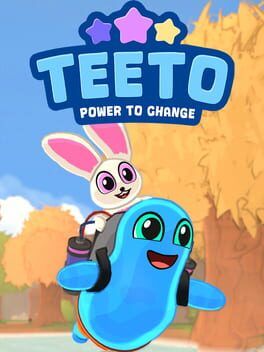
Across the reviews, the clearest point of agreement is that Teeto’s central transformation mechanic gives the game its identity. You play as Teeto, a blue blob created by the bunny scientist Nory, who rides along on your back and comments on the journey. Video Chums describes the basic move set as running, jumping, dodging, and throwing blue balls, then notes that Teeto can absorb certain objects and adopt their traits. LadiesGamers gives the cleanest examples: a flower lets Teeto grapple across gaps, water can extinguish flames, fire can melt icy obstacles, and a sofa can be absorbed for a deliberately silly form. Checkpoint Gaming adds Bouldersmash for breaking special walls, Grappling Vine for swinging, and Flamethrower for melting and burning obstacles.
The important part is that these powers are not treated as invisible upgrades. LadiesGamers reports that Teeto physically changes into whatever has been absorbed, with unique animations and Nory reacting to those forms, such as sitting on a sofa-Teeto or riding inside a bucket form. That small animation language is exactly where Teeto seems to punch above its scale. The Teeto gameplay loop asks you to read a level, spot the object or element that solves the current problem, then use that borrowed trait to move forward, solve a puzzle, or uncover an optional reward.
The movement itself is generally described as approachable rather than precision-first. LadiesGamers says jumping feels responsive and that Nory’s parachute-like glide makes platforming forgiving. Checkpoint Gaming similarly says Teeto starts with a floaty double jump and glide, making most platforming breezy. GameTyrant is more guarded, calling the controls mostly standard 3D platformer fare with double jump, dive, attack, shot, and transformation abilities, but also says they can feel a bit stiff and criticizes the lack of extra momentum when jumping out of a dive. That split defines the feel: Teeto appears comfortable and easy to inhabit for casual exploration, but it may not satisfy players who judge 3D platformers by acceleration curves, advanced movement tech, or high-speed traversal.
Its charm comes from tiny jokes, expressive animation, and collectible weirdos
Teeto’s story is deliberately light. Qualbert describes the setup as straightforward: Teeto travels with Nory, collects Vionites and Michaels, and fights shadow creatures causing trouble across the land. GameTyrant and Checkpoint Gaming add that humans have vanished after an incursion involving Shadows, leaving animals and once-inanimate objects in a changed world. LadiesGamers frames Nory as the inventive bunny who creates Teeto to restore balance, rescue Michaels, and deal with spreading corruption.
The narrative does not appear to be the reason to play. The appeal is tone, character, and the way the world keeps tossing little gags into the path. Video Chums praises Nory’s adorable “kiwi voice,” the funny dialogue scenes, expressive facial animations for Teeto, and oddball moments such as harmless bears recording a podcast in a cave. Checkpoint Gaming highlights the New Zealand flavor through Kiwi accents and points to strange side quests, including a sentient can of beans in an abandoned supermarket wanting to be scanned at checkout and inflatable pool ornaments who are in love.
The collectible Michaels are the standout charm object. Video Chums calls them “Baby Michaels” and says rescued ones inhabit an island in the hub area. Qualbert notes that finding Michaels is a joy because the developers characterize them in little one-off ways, including examples such as “Michael who just bought a drone” and “Michael with a cooler hat.” That kind of collectible design is valuable in a collectathon because it turns checklist behavior into curiosity. The reward is not only another counter ticking upward, but a new joke, a new tiny resident, or a new visual surprise.
Costumes add another layer. Qualbert says players can spend collected stars on outfits, with examples including pirate Teeto, emo Teeto, and Axolotl Teeto. Video Chums also reports that gem thresholds unlock silly costumes. The source material uses slightly different collectible terminology, with Vionites, gems, and stars all appearing across outlets, but the structure is consistent: levels are packed with optional pickups, those pickups gate progress or unlock cosmetics, and Teeto’s hub gives you a place to see rescued characters and return to earlier stages.
Level pacing works best when exploration leads, then stumbles when bosses take over
Teeto’s overall structure is reported most specifically by GameTyrant, which says the game is divided into four acts with six levels each. According to that review, the first five levels of each act are either linear spaces or more open-ended environments where players collect Vionite and reach an exit door, while the sixth level is a boss fight. Those acts are represented as islands with doors in a large hub, and Vionite is needed to open the path to the next act. Qualbert also reports that completed levels can be revisited from the world hub, which fits the collectathon emphasis on replaying stages to clean up missed items.
That pacing sounds strongest when Teeto is mixing platforming, puzzling, and bite-sized novelty. Video Chums describes a steady variety of scenarios, from building sandcastles with water and shovel-and-bucket transformations to sneaking around a giant tree. Checkpoint Gaming says some abilities are situational and only appear once or twice, such as the Couch form, but concludes that most are integrated well and that helpful hints indicate when a specific ability is needed to progress. For a small 3D platformer, that is a smart design bargain. Teeto does not need every power to become a deep subsystem if each one gives a level a distinct little rhythm.
The problem is the boss cadence. Several sources like parts of the boss design, but they also flag them as Teeto’s roughest pacing breaks. Qualbert found act-ending bosses sufficiently challenging and enjoyed the humor of the first boss rattling off fun facts while attacking. Video Chums says the bosses are strange and silly, but warns that some are so tough they can disrupt the otherwise laid-back gameplay. GameTyrant is harsher, saying boss battles range from okay to quite poor and singling out the fourth and final boss battles as “wonky chores.”
That tension matters if you are coming to Teeto as a cozy pick. The level pacing sounds warm, varied, and collectible-friendly, then periodically narrows into combat checks that multiple reviewers found less graceful than the exploration. Video Chums notes that invulnerability can be toggled whenever you want, which is a meaningful accessibility and comfort option. It also suggests the developers understood that the game’s best self is exploration-led rather than punishment-led.
A cozy pick, but not a frictionless one
For players looking beyond major mascot games, Teeto’s cozy appeal is well supported by the source material. Checkpoint Gaming describes it as a relaxed experience for the most part and says nearly every shadow enemy goes down in one hit, with frequent healing drops offsetting Teeto’s small three-heart health bar. LadiesGamers says combat is simple and that most enemies can be dealt with quickly, keeping the focus on exploration and platforming. Video Chums calls the game adorable, funny, and old-school, while still fresh through its transformation ideas.
That makes Teeto a strong fit for players who want the comfort of a 3D platformer without the scale, speed, or production expectations attached to Nintendo, PlayStation, or other mascot-led tentpoles. It seems especially well suited to players who enjoy revisiting levels, clearing optional objectives, dressing up a character, and being rewarded with jokes rather than lore dumps. The reported Steam Deck Verified status from LadiesGamers also helps its cozy case, since this is exactly the kind of collectathon that benefits from handheld play in short sessions.
Still, cozy should not be confused with totally smooth. Video Chums reports occasional clunkiness, including camera obstruction, jumps that feel missed despite proper aim, and unclear moments such as a sneaking side mission that was hard to parse. GameTyrant reports more serious issues: one collectible glitched and could not be collected, forcing the reviewer to abandon 100 percent completion plans, and in two other levels, including the final boss, objects could not be absorbed at points, requiring full restarts.
Those are not small complaints for a collectathon. If your main pleasure is reaching 100 percent, a bugged collectible is a bigger emotional hit than it would be in a linear action game. If your patience is low for restarting levels because an interaction failed, Teeto may be better after patches. If you can tolerate some rough edges in exchange for personality, Teeto sounds easier to recommend.
Is Teeto worth it? The answer depends on how much polish you need
As a buyer’s guide, the Teeto game review consensus is encouraging but qualified. The strongest case for Teeto is its craft in miniature: transformations that change how Teeto looks and moves, readable platforming, cheerful art direction, expressive character animation, quirky optional objectives, and collectibles that have actual personality. The level loop appears built for people who like poking around, grabbing everything, returning to a hub, unlocking costumes, and rescuing a ridiculous number of tiny characters with tiny identities.
The weaker case is also clear. Bosses interrupt the cozy pacing for several reviewers. Movement is friendly but not especially elegant under scrutiny. Camera and jump feel can wobble. GameTyrant’s reported bugs are the biggest caution, especially for completionists. Performance details such as frame rate, graphics settings, and console-specific behavior are not meaningfully documented in the supplied source material, so the safest performance-related statement is limited to LadiesGamers reporting Steam Deck Verified status and other outlets reporting bugs and polish issues rather than technical benchmarks.
At the reported US $17.99 price from LadiesGamers, Teeto looks like a fair bet for 3D platformer fans who value discovery and warmth over flawless execution. GameTyrant estimates a 6 to 8 hour completion time depending on how much you do, which places it in a compact indie range rather than a giant collectathon marathon. If you are buying for a child, a cozy weekend, or a palate cleanser between larger releases, the invulnerability toggle noted by Video Chums helps smooth over the difficulty spikes. If you are buying specifically for full completion, it is sensible to check current patch notes and player reports first.
Teeto is worth it for genre fans who can forgive a little wobble when a small game has a strong heart and a clever central mechanic. It is less ideal for players who demand airtight camera behavior, boss consistency, or bug-free collecting from day one. In the space beyond the major mascot games, Teeto seems to earn its place by being strange, sweet, and mechanically playful, even when its polish cannot quite keep up with its charm.
Final Verdict
A solid gaming experience that delivers on its promises and provides hours of entertainment.