
Review
By Apex
Setting the meter
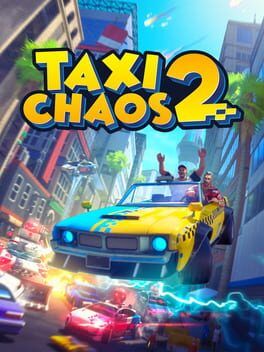
Taxi Chaos 2 arrives on Xbox Series X|S with a clear mission: fix the lifeless feel of the first game by throwing you into a city controlled by AI taxi bots and giving the streets some actual personality. San Valeda is a brighter, busier playground than anything in the original, and on paper the pitch is spot on. A living city ruled by ruthless AI rivals sounds like exactly the kind of twist an arcade taxi throwback needs.
In practice, Taxi Chaos 2 is a clear step up from its predecessor in almost every way, but it still stalls well short of the genre greats it is chasing. The Crazy Taxi DNA is obvious, and there are flashes where the new AI competition and reworked city design finally click, yet too often the experience feels like an early-access proof of concept rather than a fully tuned racer arriving in 2025 on new hardware.
AI taxi bots and competitive chaos
The big headline feature is the AI controlled TaxiBots that dominate San Valeda. Instead of simply racing the clock in isolation, you now share the streets with aggressive rival cabs that genuinely react to what you are doing. Cut them off and they will swerve, boost or even try to block your line into a shortcut. Tail them too closely and you can draft into their slipstream, slingshot past and steal a waiting fare from under their nose.
When it works, this adds a welcome layer of strategy to the arcade formula. You start thinking about traffic flow, timing your boosts and planning routes not just around the environment but around who else is chasing fares. In some challenges the game spawns a swarm of TaxiBots all gunning for the same cluster of passengers, and fighting to be first in line gives the old point A to B loop a nice competitive edge.
The problem is inconsistency. AI behavior swings from comically passive to rubber band nonsense depending on the mode. In open free play or standard arcade runs, bots can feel half awake, cruising nearby but rarely providing real pressure. In score focused challenges they suddenly become psychic, warping into perfect position, snapping into your lane and exhibiting the kind of obvious rubber banding that makes careful driving feel pointless. The idea of AI competition is strong and occasionally brilliant, but it never quite feels balanced or predictable enough to be the foundation of the game.
A better city, but still not a classic
If you bounced off the original Taxi Chaos because the city felt like a sparse tech demo, San Valeda is a clear upgrade. This is a denser, more vertical hub with distinct districts, sharper sightlines and more opportunities to chain risky shortcuts. Elevated highways weave over downtown grids, construction zones carve temporary detours through familiar blocks and sudden weather shifts like heavy rain or fog slightly tweak handling and visibility.
The good news is that San Valeda finally feels like a proper arcade driving playground rather than a sterile sandbox. Passengers are more densely packed, there are more ramps, more intersections where you can gamble on threading through cross traffic and more contextual events that shake up a run, such as a pile up forcing you to improvise a detour on the fly.
The bad news is that the city still lacks the sense of personality and memorability that made Crazy Taxi and its sequels so sticky. Iconic landmarks are thin on the ground, and districts blur together visually. After a few hours, you will know the efficient routes, but you will not necessarily remember them because they were exciting to look at or because they had wild set pieces. Functionally, the layout is stronger than the first game, but stylistically it is still just a bright, generic metropolis that could belong to any budget racer.
Handling, feel and performance on Series X|S
Moment to moment, Taxi Chaos 2 is still about darting through traffic, exploiting absurd jumps and smashing the brakes at the last millisecond to nail a perfect drop off. Handling is looser and more responsive than the first game, with better feedback when you kick the rear out into a drift. The cars now feel less like bricks on rails and more like arcade toys that invite you to nudge against their limits.
Boosting and jumping remain the core tricks, and chaining them through San Valeda is satisfying when the game gives you room. There is a fun rhythm to cutting across multi lane traffic, bouncing off a mid street ramp and landing in an off ramp leading straight to your destination. Hitting those lines is where Taxi Chaos 2 comes closest to recapturing classic Crazy Taxi flow.
On Xbox Series X, performance is mostly solid, targeting a high frame rate that suits the twitchy driving. However, the game does not look like something built for the hardware. Textures are flat, environmental details pop in a little too close to the car and the lighting is serviceable rather than striking. The art direction goes for a cartoon sharp style but never fully commits, so you end up with a clean yet bland presentation. At least loading times are brisk, which is important in a game built around short runs and instant restarts.
Variety, progression and long term appeal
Taxi Chaos 2 tries to address the first game’s barebones structure with a broader mix of modes and a more explicit progression layer. There is a standard arcade mode, a time attack style mode centered on linked fares and tighter routes, plus a series of challenge runs themed around difficult traffic layouts or aggressive AI competition. You unlock new vehicles and cosmetic options as you play, with some performance tuning to encourage experimentation.
Variety on paper is decent, yet after several hours the repetition sets in. Most modes boil down to the same loop of grabbing a fare, following an arrow and improvising around random traffic patterns. There are a few nice wrinkles, like passengers who request riskier driving for higher payouts or dynamic hazards in the city that block your usual shortcuts, but the game does not evolve much beyond slightly faster cars and denser traffic.
Progression also feels shallow. Upgrades do not dramatically change your relationship with the physics, and cosmetic unlocks lack flair. Compare that to Crazy Taxi’s infectious soundtrack, exaggerated character performances and over the top destinations that sold the fantasy of being the most unhinged cabbie on the planet. Taxi Chaos 2 earns points for offering more to do than the original, but it still struggles to answer the question of why you should keep doing it for more than a weekend.
How it stacks up to the original and to Crazy Taxi
Against the first Taxi Chaos, the sequel is an undeniable improvement. The city is more interesting, the handling is tighter, passenger variety is broader and the AI competition at least gives you something to react to rather than just racing ghosts of your past runs. If you liked the framework of the original and simply wanted more of it with some actual energy in the streets, Taxi Chaos 2 delivers that.
Stacked against Crazy Taxi, though, it still comes up short in crucial ways. The sense of speed is good but never exhilarating. The soundtrack exists but does not define the experience. The AI rivals are a clever new spin, yet they feel tacked on instead of being woven into a cohesive, escalating structure of races and score attacks. Where Sega’s classic felt like an immediate arcade classic the moment you touched the wheel, Taxi Chaos 2 feels like a competent tribute that occasionally sparks but rarely dazzles.
Verdict
Taxi Chaos 2 on Xbox Series X|S is the game the original should have been: faster, busier and with just enough AI fueled chaos to keep you engaged through a handful of evenings. San Valeda is a better city to tear through, the TaxiBots are a fun, if inconsistent, twist and the driving model finally feels tuned for reckless play instead of stiff precision.
Yet for all those improvements, it still does not quite stand out in a crowded field of arcade racers and nostalgia driven throwbacks. Lack of strong identity, limited visual flair and repetition across its modes mean Taxi Chaos 2 is more of a solid curiosity than a must own. If you have a soft spot for Crazy Taxi style score chasing and can forgive some rough edges, there is enough here to justify a spin around the block. Just do not expect this meter to run for very long.
Final Verdict
A solid gaming experience that delivers on its promises and provides hours of entertainment.