
Review

By Story Mode
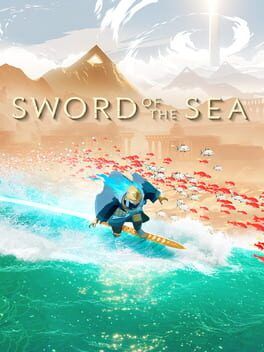
Image: IGDB
Store links: Sword of the Sea on Steam, Langrisser: Sea of Sword on Steam, Wandering Sword: Secrets of the Eastern Sea on Steam
A late Xbox arrival reframes the ride
Sword of the Sea is no longer a PlayStation 5 console exclusive. According to the public release information collected in the supplied sources, Giant Squid’s adventure first launched on PS5 and Windows on August 19, 2025, then arrived on Xbox Series X/S and Nintendo Switch 2 on October 29, 2026. ComicBook.com described the Xbox version as a stealth release and noted that Microsoft Store user reviews were not active at the time of its report, leaving Xbox players with strong signals from other platforms but limited Xbox-specific user feedback.
That timing matters for this Sword of the Sea review because the game now reaches a different audience with a different question. PS5 players encountered it at launch, with ComicBook.com reporting that it was available through PlayStation Plus and later carried a 4.72 out of 5 user rating on the PlayStation Store after more than 15,000 reviews. Steam sentiment was also reported at 89 percent approval, while ComicBook.com cited an 88 Metacritic score. Xbox players, by contrast, are meeting Sword of the Sea after the glow of its original release and after a year of reputation-building.
The tension is simple: Giant Squid has made one of the most graceful traversal games of the current console generation, but grace is not the same thing as depth. Sword of the Sea is a compact, atmosphere-led adventure about momentum, restoration, and visual wonder. Its best moments feel effortless. Its weakest moments come when the game asks whether effortless movement can carry an entire structure by itself.
The hoversword is the whole argument, and it mostly wins
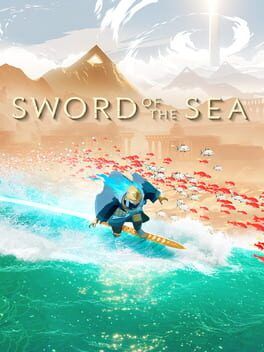
Sword of the Sea lives or dies on the hoversword, a floating blade that the sources consistently describe as a hybrid of skateboard, snowboard, surfboard, and hoverboard. The player controls Wraith, a spectral wanderer moving through a desolate world and gradually bringing water and life back to it. Press Play Media’s Xbox review emphasizes that players spend most of the adventure gliding rather than walking, using dunes, slopes, and rocky contours to build speed, launch into the air, wall ride, and perform tricks.
That design gives the Sword of the Sea game an immediate physical identity. The landscape is built less like a conventional adventure map and more like a sequence of rideable surfaces. Sand becomes wave. Ruin becomes ramp. Distance becomes rhythm. The result is a traversal system that feels inviting from the start, with accessible controls that let players jump, spin, and experiment without having to first master a demanding trick vocabulary.
That accessibility is both a strength and the first sign of the game’s ceiling. Press Play Media notes that Sword of the Sea does not constantly judge performance through a harsh scoring system and does not heavily punish failed tricks. Dedicated challenge areas and unlockable maneuvers give the movement some texture, but the emphasis remains on pleasure rather than mastery. For an action-adventure player, that makes the opening hour sing. For anyone hoping the hoversword eventually turns into a Tony Hawk-style technical sandbox, the game is gentler and shallower than that comparison suggests.
Still, the ride feels considered. Different surfaces affect handling, according to Press Play Media, and the restored ocean adds new ways to move through spaces that were once barren. The best traversal games make travel feel like play rather than connective tissue. Sword of the Sea reaches that standard often enough to justify its central idea.
A dreamlike world with deliberate emotional distance
Giant Squid’s lineage hangs over the experience. TheXboxHub identifies Sword of the Sea as developed by Giant Squid, the studio founded by Journey art director Matt Nava, and calls it a spiritual successor. The public background material also states that Nava returned to a desert landscape because he had ideas left unused from Journey, and that Sword of the Sea tells its story without dialogue, relying on visuals and music.
The premise has mythic clarity. Wraith awakens in a dead or abandoned world, described by Press Play Media as the Necropolis, and works to restore an ancient ocean buried beneath the sands. Ocean Seeds revive water in the wasteland, and the returning sea life opens paths for exploration. Murals, inscriptions, and remnants of a lost civilization carry the narrative burden.
That restraint gives Sword of the Sea its spell. It does not interrupt the glide with heavy exposition. It lets architecture, color, water, and movement suggest a cycle of loss and rebirth. At its strongest, the game understands that restoration is a visual act before it is a plot point. Watching dead spaces bloom back into motion gives the journey its cleanest emotional payoff.
The limitation is that the story rarely deepens beyond suggestion. Press Play Media specifically argues that the cryptic narrative creates mystery but struggles to build a strong emotional connection to the world or its inhabitants. That matches the way Sword of the Sea is structured: it moves like a dream and often narrates like one too. Players who respond to mood, symbolism, and wordless environmental storytelling will find plenty to absorb. Players who need character arcs, dialogue, or sharper dramatic stakes may finish admiring the world from a distance.
Short-form adventure design keeps the pace clean, then exposes the thinness
Sword of the Sea’s compact length is one of its smartest design choices. ComicBook.com tells Xbox players to expect roughly three to four hours for a normal run, or around 10 hours for completionists. In practical buyer’s-guide terms, that is the correct scale for this kind of game. The traversal remains fresh because Giant Squid does not stretch it across a bloated map or bury it under crafting, loot, or excessive questing.
Progression is built around exploration, collectibles, and environmental activation. Press Play Media describes puzzles that generally ask players to reach locations, activate devices, or manipulate objects to open paths. The public gameplay summary adds that players collect Ocean Seeds to bring water back and Tetra that can be donated to vendors to unlock hoversword tricks. Those systems give the world shape without pulling attention away from movement.
The tradeoff is that Sword of the Sea rarely threatens to become difficult. Its environmental puzzles are functional rather than intricate. Its collectibles add reasons to veer off the main line, but they do not fundamentally transform the adventure. Its challenge spaces encourage experimentation, yet the game’s relaxed attitude means failure seldom carries bite.
That structure makes the game easy to recommend to players who want a focused evening-sized journey with high aesthetic confidence. It makes the recommendation more conditional for players who equate value with mechanical escalation. Sword of the Sea is not padded, which is a blessing. It also does not evolve as aggressively as its hoversword concept could have supported.
Set-pieces favor flow over combat pressure
As an action-adventure, Sword of the Sea is unusual because its action grammar is movement first. The supplied public gameplay material mentions battles against large creatures called leviathans at certain points, but the available review text centers overwhelmingly on traversal, exploration, and restoration rather than combat systems. That distinction is important. Anyone coming in for encounter design, enemy variety, or a combat rhythm that escalates across the campaign should recalibrate expectations.
The game’s set-pieces work best as kinetic release: a slope opens, a revived current redirects the route, a ruin becomes a launch path, or the world’s geometry suddenly reads like a skate park hidden under sacred architecture. In that sense, Sword of the Sea is closer to a movement-driven pilgrimage than a traditional adventure with discrete combat arenas.
That approach gives the pacing an elegant arc. You move, restore, open, ride, then move again. The cycle is clean and readable. It is also predictable by design. There is little in the supplied material to suggest deep systemic friction or late-game mechanical surprise. The excitement comes from how beautifully spaces invite motion, not from the game forcing improvisation under pressure.
For this reviewer, that is enough for the runtime, but only just. Sword of the Sea’s spectacle has purpose when the world is changing under the board. When it leans on simple activations and light collection, the magic thins. The game understands flow better than tension.
Platforms, price, and the publication wrinkle
For players deciding where to buy, the platform picture is clearer than the publisher picture. The supplied public listing says Sword of the Sea released on PS5 and Windows in August 2025, then Switch 2 and Xbox Series X/S in October 2026. ComicBook.com says Xbox Series X/S players faced a $30 price, with a 20 percent launch discount dropping it to $24 for a limited period. The supplied Steam store page headline says “Save 30% on Sword of the Sea on Steam,” so PC buyers should check the live storefront price before purchasing.
There is one source conflict worth flagging. Press Play Media describes the Xbox review subject as developed and published by Giant Squid. The public listing supplied with the assignment identifies Giant Squid as the developer and publisher for the original game, but lists Fictions as the publisher for Switch 2 and Xbox Series X/S. The sources agree on Giant Squid as the creative studio behind the game. They do not present the Xbox publishing credit in exactly the same way.
As for performance, the supplied materials do not provide a technical breakdown of resolution, frame rate, graphics modes, or platform-specific bugs. That means this Sword of the Sea Xbox review cannot responsibly claim a definitive Series X/S performance verdict beyond the absence of sourced reports in the provided material. The same caution applies to comparing Sword of the Sea PS5 and Xbox directly. If technical fidelity is your deciding factor, wait for platform-specific analysis or check updated user reports on the storefront you use.
What is clear is availability. PS5, Windows, Xbox Series X/S, and Switch 2 players all have access now according to the supplied release information. The better question is taste. If you buy games for atmosphere, movement, and a concise authored journey, Sword of the Sea is easy to place high on your list. If you need demanding systems, deep combat, or a story with explicit emotional closure, it is safer to wait for a discount.
Verdict
Sword of the Sea is a luminous short-form adventure whose hoversword movement carries it farther than its light puzzles and restrained narrative might suggest. Giant Squid’s world design turns traversal into the main performance, using sand, water, ruins, and revived life to keep the player in motion. It is beautiful, readable, and often serene.
It also leaves some potential on the table. The trick system is approachable but not especially demanding. The story is evocative but emotionally distant. The set-piece design delivers flow rather than friction. Across three to four hours, those choices feel measured. Across a completionist run, the simplicity becomes easier to see.
Buy it if you want a graceful, visually striking adventure built around the pleasure of movement. Be cautious if you are looking for a mechanically dense action game. Sword of the Sea delivers a satisfying ride beyond the spectacle, but its depth comes from atmosphere and pacing rather than challenge.
Final Verdict
A solid gaming experience that delivers on its promises and provides hours of entertainment.