
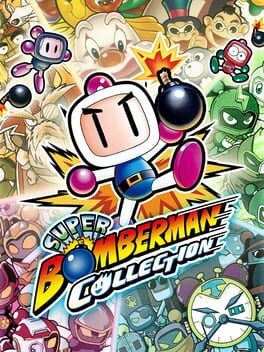
Review

By Pixel Perfect
Scope and Platforms
This review will cover both versions of Super Bomberman Collection:
- Nintendo Switch
- Nintendo Switch 2 (including its specific enhancements like 4K output and GameShare)
The goal is to determine whether this package is the definitive way to play classic Bomberman in 2026, or a missed opportunity.
Structure of the Review
The finished review will be organized into the following major sections:
- Introduction and Context
- What’s in the Box: Game Lineup and Regional Variants
- Emulation Quality and Technical Performance
- Input Latency and Feel
- Online Play, Netcode, and Cross-generation Experience
- Boss Rush Mode
- GameShare and Local Multiplayer Features
- Extras, Museum Content, and Quality-of-life Settings
- Switch vs Switch 2 Comparison
- Verdict: Does This Stand as a Definitive Bomberman Archive?
Each section below outlines the specific questions, tests, and angles the review will address.
1. Introduction and Context
Open by situating Super Bomberman Collection in 2026:
Explain that this is a compilation of seven titles across 12 regional versions, spanning the NES/Famicom and Super Famicom/SNES era, including the first official localizations of Super Bomberman 4 and 5.
Clarify that the focus is not only on nostalgia but on whether these games have been preserved and presented thoughtfully for new and returning players.
Briefly note that the Switch 2 edition has exclusive features like GameShare and higher-resolution output, while the core game list and basic modes are shared.
2. What’s in the Box: Game Lineup and Regional Variants
Detail which games are included:
List Bomberman and Bomberman II for NES/Famicom along with Super Bomberman 1–5 in their various JP/US/EU versions, noting that some titles are duplicated by region.
Highlight the historical significance of finally having localized Super Bomberman 4 and 5.
For each title, sketch what makes it distinct: map design quirks, power-up sets, story modes versus battle focus, and how they represent the evolution of local multiplayer design.
Assess menu navigation and how clearly the compilation communicates what each version is. Call out whether the interface makes it easy to see which region you are choosing, what changed between versions, and whether a player new to the series would understand what to launch first.
3. Emulation Quality and Technical Performance
This is a core pillar of the review.
Explain testing methodology:
Play each included game on both systems in docked and handheld (or portable) modes where applicable.
Use side-by-side comparisons with original hardware and/or authoritative capture where possible, focusing on frame pacing, animation timing, audio pitch, and scroll smoothness.
Key questions to answer:
Describe whether the emulation is cycle-accurate enough for Bomberman’s tight grid-based movement and explosion timing. Note any frame drops, stutters, or audio desyncs in crowded battles.
Discuss how scaling is handled: nearest-neighbor vs smoothing, visible shimmering, correct aspect ratios, and whether pixel-perfect options exist.
Evaluate filters and display options: CRT-style shaders, scanlines, border art, and whether these are tasteful and configurable or forced and intrusive.
Compare Switch versus Switch 2:
On Switch 2, confirm 4K output support, how cleanly the pixel art scales, and whether menus and borders are rendered at native resolution.
On the original Switch, check for any softness or scaling artifacts in docked mode and how legible everything is in handheld.
Note any bugs that impact long sessions, such as crashes, corrupted save states, or broken rewind behavior.
4. Input Latency and Feel
Bomberman lives or dies on responsiveness, so devote a focused section to this.
Outline hands-on and, where possible, measured impressions of input latency in:
Local single-player
Local multiplayer with multiple controllers
Online play on both platforms
Questions to resolve:
Does character movement feel snappy and trustworthy compared with original hardware or high-quality emulation on PC?
Is there a measurable or clearly perceptible difference between Switch and Switch 2 versions?
Do display filters or optional processing add latency, and can players disable them to minimize delay?
Document any platform-specific quirks: Joy-Con wireless latency versus Pro Controllers, and whether Switch 2’s hardware offers a noticeably cleaner or more responsive feel.
5. Online Play, Netcode, and Cross-generation Experience
Describe how the collection handles online matches and co-op.
Clarify which games and modes are playable online, and whether both Switch and Switch 2 users can match together.
Testing plan:
Play under multiple network conditions: strong wired / stable Wi-Fi versus typical home Wi-Fi congestion.
Join matches across regions if possible to stress-test rollback or delay-based netcode.
Play 2, 3, and 4-player sessions and see how performance scales as chaos increases.
Key evaluation points:
Determine whether Konami is using rollback netcode or a traditional delay-based system, based on how the game behaves during spikes.
Note how visible lag manifests: input delay, teleporting bombers, desynced explosions, or dropped inputs.
Assess matchmaking speed, lobby design, rematch flow, and whether you can easily stay grouped with friends across multiple rounds.
Specifically compare online play between Switch and Switch 2:
Check if one version hosts more stable sessions or higher resolution while maintaining frame consistency.
Mention any platform-specific restrictions or advantages in online modes.
6. Boss Rush Mode
Boss Rush is one of the new selling points, so treat it as more than a throw-in.
Explain what Boss Rush actually is: a mode that strings together boss fights from across the included titles, with Time Attack options and multiple difficulty levels.
Questions to answer:
How are bosses selected and ordered, and does the mode meaningfully remix content or simply recycle fights in a rigid sequence?
Do the difficulty levels feel thoughtfully tuned, or are they simple stat tweaks that make encounters feel spongy and tedious?
Does the absence of save states and rewind in Boss Rush create a satisfying arcade challenge, or simply frustrate players used to the compilation’s safety nets?
Evaluate whether Boss Rush adds long-term replay value or feels like a novelty you try once and forget.
Determine how it plays online or in local co-op, and whether input and netcode issues feel magnified under the pressure of timed boss chains.
7. GameShare and Local Multiplayer Features
Focus heavily on the Switch 2-exclusive GameShare feature and how it changes the value proposition.
Explain how GameShare works:
One owner can share the collection with up to three other players who do not own the game. GameChat support allows integrated voice or text communication.
Evaluate setup friction:
How many steps does it take to initiate a GameShare session, and is the process intuitive for less tech-savvy players?
Are there time limits, content restrictions, or performance compromises when playing via GameShare compared with everyone owning a copy?
Judge real-world performance:
Does GameShare introduce extra latency or compression artifacts that hurt readability in chaotic matches?
Compare local wireless and single-system multiplayer on both Switch and Switch 2, focusing on maximum supported player counts per title and how readable the action remains in handheld or portable modes.
Comment on whether GameShare meaningfully enhances the social and party-game side of the collection, or if it feels like a marketing bullet point with limited practical appeal.
8. Extras, Museum Content, and Quality-of-life Settings
Detail all archival and QoL elements.
Museum and library content:
Describe the scope of artwork, design documents, character bios, and soundtrack options.
Assess whether the gallery and music player feel like a proper digital museum of Bomberman history or a lightweight bonus menu.
Quality-of-life features:
Catalog the presence and quality of save states, rewind, button remapping, difficulty toggles, and any assistance options.
Note that some features, such as save/load and rewind, are disabled in Boss Rush and consider whether that decision supports the intended design of that mode.
Evaluate how cleanly these options are surfaced in the UI. Are they a tap away during play, or buried several menus deep?
Accessibility and modern standards:
Mention text size, color contrast, control remapping flexibility, and audio balancing as they apply to a 2026 compilation.
9. Switch vs Switch 2 Comparison
Dedicate a short, decisive section to platform differences.
Visuals and performance:
Compare resolution, clarity, and stability between the two hardware generations. Verify 4K support on Switch 2 and whether the original Switch holds a consistent framerate in the busiest battles.
Input and netcode:
State whether the Switch 2 version offers tangibly better responsiveness and online stability or if the difference is negligible.
Features:
Note that GameShare and GameChat are Switch 2-only and weigh how much that matters if a reader already owns an original Switch.
Price and value:
If pricing differs between versions, contextualize whether the premium for Switch 2 is justified by its exclusive features.
Conclude this section with a platform recommendation depending on whether the reader prioritizes archival purity, online play, or playing with friends who do not all own the game.
10. Verdict: Definitive Bomberman Archive or Missed Opportunity?
Close with a clear stance aimed at Bomberman fans and newcomers.
Frame the verdict around these criteria:
Emulation accuracy and input responsiveness
Netcode reliability and online feature set
The depth and usability of archival content
The practical value of Boss Rush and GameShare
The clarity and charm of the overall presentation
If the collection nails emulation, keeps latency low, and delivers stable cross-generation online with a deep museum and useful GameShare, position it as the definitive Bomberman archive for 2026.
If instead you encounter noticeable lag, rough emulation, shallow extras, or unreliable online play, argue that this falls short and recommend alternatives such as legacy hardware, other compilations, or modern Bomberman entries.
End with a forward-looking note about how Konami could update or patch the collection to better earn its place as the series’ historical benchmark.
Final Verdict
A solid gaming experience that delivers on its promises and provides hours of entertainment.