
Review

By Story Mode
A cult stealth series takes a big swing
Styx was never meant to be mainstream. Master of Shadows and Shards of Darkness were scrappy AA stealth games that lived or died on one thing: how satisfying it felt to never be seen. Styx: Blades of Greed tries something bold, expanding from compact missions to sprawling hub-like sandboxes, layering in co‑op, and modern tech tricks on PC and current consoles.
The good news is that the core fantasy of being a vicious little goblin ghosting through hostile territory is not only intact, it is often better than ever. The bad news is that the ambition outstrips the budget in visible ways, from performance hitches and bugs to a structure that occasionally smothers its own pacing. Whether this earns the whispered "best pure stealth in a decade" praise depends entirely on how much frustration you are willing to forgive in exchange for systemic, high‑ceiling stealth.
Open hubs that finally let Styx breathe
Previous Styx games were built around intricate but relatively contained levels. Blades of Greed blows that up into a handful of massive hub areas that you revisit from a central hideout. These are not open worlds, but they feel like vertical stealth playgrounds, cross‑hatched with ladders, archways, rafters, sewer grates, and terrible ideas.
The verticality is the star. Almost every mission offers at least three or four viable routes, and some of the most memorable moments come from chaining climbable ledges, swinging hooks, and narrow beams into a continuous, improvised route above patrol patterns. Where other stealth games cheat by funneling you down a clearly signposted "stealth path," Blades of Greed usually drops you on the fringe of a fortified compound and lets you puzzle out your own ingress.
There are drawbacks. The expanded scale exposes the limited art budget; interiors repeat, and certain industrial districts blur together. More importantly, the game infamously refuses to give you a conventional map. Instead, you get a rudimentary objective marker and a mental picture of the space you have painstakingly built over repeated excursions. On one hand, this fits the fantasy of mastering a territory through reconnaissance. On the other, it can turn late‑mission backtracking into aimless wandering.
When it clicks, though, the new hub structure is excellent. You start to think of zones as owned, patrolled, or dangerous, planning multi‑stage robberies that cross from rooftops to tavern basements and back, with escape routes pre‑planned. Few modern stealth games trust players with spaces this big or this flexible.
Stealth that means it when it says "do not get caught"
Blades of Greed is at its best when it remembers that Styx is fragile. On higher difficulties, a clean backstab or a well‑timed distraction is still worth more than any combat upgrade. Enemies are alert, vision cones are unforgiving, and the game rarely shrugs when you blunder in front of a torch.
Styx’s classic toolkit returns in refined form. Invisibility and cloning are still the iconic tricks, but the way they interlock with level design is sharper. Creating a clone to lure a guard off a key route, dismissing it just as another patrol rounds the corner, then slipping in behind to pick a lock captures the exact sort of clockwork stealth that fans of Thief or the older Hitman games crave.
Noise and light simulation remain readable, if not cutting‑edge. You can still snuff torches, break line of sight in thick shadow, and use Amber‑Vision to read patrol vectors, with the added benefit of ray traced highlights and clearer contrast on PS5, Series X, and high‑end PC. Crucially, the game does not over‑rely on UI crutches. Information exists in the world, and success depends on treating every approach as a small puzzle.
Where things wobble is consistency. AI behavior on launch code is better than some early previews feared, but you will still see guards fail to investigate obvious disturbances or, conversely, home in on you from suspiciously far away after a body discovery. Ninety percent of the time the rules hold, but the remaining ten percent is exactly what separates all‑time great stealth from merely very good stealth.
Co‑op: brilliant in theory, brittle in execution
On paper, co‑op is the perfect evolution for Styx. Two goblins, twice the mischief, double the ability to orchestrate elaborate ambushes. In practice, the co‑op implementation lands somewhere between inspired and half‑baked depending on how much patience you and a partner bring.
The design absolutely supports coordinated stealth. Having one Styx act as a distraction while the other ghost‑runs objectives is thrilling. You can use clones to chain feints, time synchronized takedowns, and pass up hard‑to‑reach loot once one player has infiltrated a high balcony. There is nothing else quite like two players moving silently through a forbidden fortress, clearing routes for each other without triggering a single alarm.
The problems are largely technical and structural. Online stability on current consoles is inconsistent, with lag spikes and occasional desyncs that are particularly damaging in a game that demands precise timing. The checkpoint system can also be punishing in co‑op, sometimes resetting you further back than feels reasonable after a shared slip‑up, stretching already long missions.
Still, if you approach it as a stealth sandbox to be savored with a dedicated partner, rather than as a seamless co‑op campaign, it is one of the most distinctive ways to play stealth in years. Just know that this is not drop‑in, drop‑out slickness; it is closer to an old PC mod that happens to be officially supported.
Modern tech that helps more than it hinders
On PC, Blades of Greed ships with DLSS support, including the latest frame generation options on compatible RTX hardware, and the benefits are immediate. These maps are dense with geometry and overlapping shadows, and keeping a high frame rate while perched above a bustling courtyard is vital for feeling in control. DLSS 3 and above do a good job of smoothing performance without the ghosting that often haunts darker games.
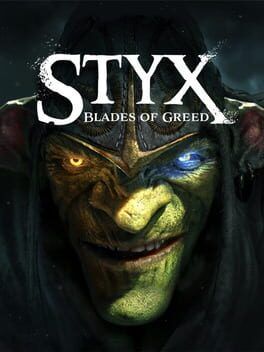
Image quality is not jaw‑dropping, but the art direction carries more weight than raw fidelity. The amber glow of Quartz deposits, the disgusting sheen on Styx’s skin, and the cold steel of elven fortresses all look good in motion, especially with higher settings and ray traced reflections enhancing Amber‑Vision.
On PS5 and Series X, performance modes target a responsive frame rate and usually hit it, though busy scenes can dip. The lack of bespoke PS5 Pro features is not a dealbreaker, but it does underline how conservative the console tech options feel compared to other 2026 releases. This is a game that benefits enormously from any extra GPU headroom you can throw at it.
The rougher side of the tech story shows up in bugs and physics jank. Getting caught on geometry during tense escapes, seeing ragdoll bodies vibrate down staircases, and the occasional AI pathfinding freakout are all part of the experience. Patches have already improved stability from early builds, but if you demand immaculate polish, Blades of Greed is not it.
Rough edges that cut deeper than they should
For all the praise the stealth systems deserve, the surrounding game frequently sabotages its own strengths. The narrative is serviceable at best, a predictable romp through factions squabbling over Quartz, with Styx’s caustic commentary doing more to carry scenes than the plot itself. The writing wavers between genuinely funny and try‑hard, and a few gags are recycled one too many times across the campaign.
Side objectives and collectibles are a mixed bag. On one hand, they provide welcome incentives to fully explore each hub, nudging you into hidden crawlspaces and remote towers. On the other, they can feel like padding when the game asks you to re‑run familiar routes to flip another switch or grab yet another trinket buried in a guarded basement.
Most damning for some players will be the onboarding curve. The early hours are plodding, tutorial‑heavy, and more linear than the rest of the game, creating a false impression that Blades of Greed is a tame, modernized stealth‑action hybrid. The real experience only emerges several missions in, once your mobility options open up and the hubs begin to stack objectives. A less patient audience will bounce off long before the design shows its true face.
The result is a stealth game that can feel almost hostile to newcomers. It throws you into the deep end of large, unmapped environments with unforgiving guards, then fails to explain its best systems clearly. Genre diehards will relish this, but it is a big reason why some reviews have been far harsher than the mechanical quality strictly deserves.
Does it earn "best pure stealth in a decade"?
That phrase has been thrown around in early praise, and it is both accurate and misleading. If "pure stealth" means a game that is fundamentally about not being seen, where direct combat is a punishment rather than a power fantasy, then Blades of Greed deserves to be in that conversation. Its commitment to stealth as the dominant verb is rare in a landscape where most big releases default to stealth‑optional action.
However, "best in a decade" implies a level of craft and consistency that Blades of Greed does not quite reach. Hitman’s World of Assassination trilogy remains the gold standard for systemic infiltration, and smaller titles like Ronin or certain immersive sims offer cleaner, more reliable stealth. Styx’s new outing competes by offering dense, climber‑friendly maps built around a uniquely vulnerable, mobile protagonist, but the cracks in AI, navigation, and technical polish hold it back from undisputed greatness.
If you can live with those flaws, the payoff is substantial. Few games let you look at a fortress and genuinely wonder how you are going to thread through its every layer, then reward you for figuring it out entirely on your own terms. Even fewer let you do that with a friend.
Platform verdict and final thoughts
On PC with a strong GPU, Blades of Greed is the definitive version, thanks to DLSS options and more flexible performance tuning. Current‑gen consoles deliver a solid experience that captures the design intent but sits closer to the edge of acceptable performance, especially in co‑op.
Taken as a whole, Styx: Blades of Greed is messy, demanding, and often infuriating. It is also one of the only stealth games in recent memory that feels utterly uncompromised in its devotion to sneaking. The expanded open‑hub levels are a genuine evolution for the series, co‑op is a rough gem that stealth fans should not ignore, and the modern tech support on PC helps mask the AA seams.
It is not the flawless stealth masterpiece some have hoped for. It is, instead, a scrappy goblin of a game: ugly, clever, and hard to love at first, but unforgettable once you learn its rhythms. For players who still miss the days when being caught was a failure, not a suggestion, Blades of Greed is absolutely worth slipping into the shadows for.
Final Verdict
A solid gaming experience that delivers on its promises and provides hours of entertainment.