
Review

By Story Mode
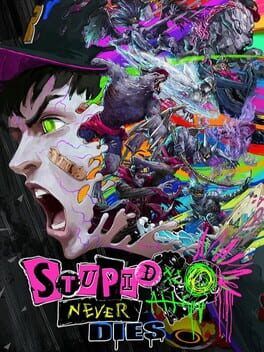
Image: IGDB
Store links: Stupid Never Dies on Steam
A veteran debut built to invite Suda51 comparisons
The concrete story around Stupid Never Dies starts with pedigree and tension. This is the debut game from GPTRACK50, a Japanese studio connected in the provided coverage to ex-Capcom producer Hiroyuki Kobayashi, with 8Bit/Digi also naming Shinya Shigeyoshi and Koji Kakae among the veteran talent. The comparison that follows the game everywhere is Suda51, but the sources are clear on the important distinction: Stupid Never Dies is not identified as a Suda51 or Grasshopper Manufacture game. It is a GPTRACK50 action roguelite whose collage-art, pop-punk, toilet-diving weirdness keeps making critics reach for that vocabulary.
That matters for the Stupid Never Dies review conversation because expectations are doing a lot of work here. Push Square’s PS5 review frames it as a bizarre debut action effort entering a crowded roguelite field. 8Bit/Digi is much warmer, calling it the kind of ridiculous, cheesy, over-the-top project that feels like Warm Bodies filtered through a Suda51 sensibility. MonsterVine, GamesRadar+, and Analog Stick Gaming are far less forgiving, arguing in different ways that the personality cannot fully carry the repetition, combat issues, and uneven campaign structure.
GameLoop’s read lands between admiration and frustration. Stupid Never Dies has the nerve of a cult object, the visual confidence of a notebook covered in stickers, and a premise that sprints straight past good taste. It also has a combat loop that several sources describe as loose, gated, or grind-heavy. The result is a game worth watching if you prize strange action games, but harder to recommend at full confidence if you came for the snap and discipline associated with the best character action.
Davy’s love story has heart, but the joke curdles
The setup is loud enough to survive a dozen trailers. Davy is a zombie in a postwar world where monsters, led by KOM, devastated humanity. 8Bit/Digi says 98 percent of the world’s population has been wiped out, leaving zombies on the surface and monsters in underworld realms. Davy finds Julia, a frozen human woman in an abandoned mall, and becomes determined to bring her back to life. With help from Dr. Frank, and through monster-devouring powers tied in Shacknews’ account to a Phoenix Egg, he flushes himself down a scientifically enhanced toilet and raids the underworld for strength and answers.
As action-game fuel, it is efficient and ridiculous. It gives the player a hub, a reason to run dungeons, an escalating monster gallery, and a hero whose weakness is baked into the fiction. Shacknews notes that Davy is slow and speech-slurred in the human layer, then faster and more capable in the underworld. Push Square points to the Roomba-style movement option in the hub as a small but smart quality-of-life detail, turning what could have been dead-air shuffling into a joke that does not overstay quite as badly.
The tonal risk is Julia. Shacknews raises the sharpest objection, criticizing the game’s use of a frozen woman with little agency and describing the phone-browsing element, where Davy learns about her through her social media, as uncomfortable rather than successfully transgressive. MonsterVine similarly calls the premise paper-thin and argues that the game’s “weird for the sake of being weird” affectation permeates the experience. 8Bit/Digi sees the same broad premise more charitably, leaning into the Warm Bodies parallel and celebrating the absurdity.
That divide is the game in miniature. Stupid Never Dies can be charming when it is about a cowardly zombie idiot trying to become a hero through awful plans and worse biology. It is shakier when it asks the romance to be the emotional engine. The heart is visible, but the writing does not always earn the sweetness it wants from the player.
Combat improves through monster forms, then hits its ceiling
Stupid Never Dies is built around runs into underworld “layers,” with Davy fighting fantasy and horror-inspired enemies, eating monsters, and absorbing powers. Push Square names werewolves, cyclops, and harpies among the enemies that can feed this transformation loop. Analog Stick Gaming describes the central power as Style Eat, while MonsterVine frames the structure as a third-person action RPG that clearly borrows from roguelikes even if GPTRACK50 has not explicitly labeled it that way in the quoted material.
The recurring criticism is feel. Push Square says Davy’s default combat initially comes across as loose, then improves when the player begins using monster forms, while still lacking the punch of a proper character action game. GamesRadar+ is harsher, listing wonky combat as a major reason to avoid the game and arguing that leveling can outweigh player skill. MonsterVine says the moment-to-moment gameplay is where the experience starts to fall apart. Analog Stick Gaming’s concern is similar from another angle: in a run-based hack-and-slash, the combat must hold up over repetition, and its review says those worries persist across the game.
The better version of Stupid Never Dies appears when the buildcraft takes over. Push Square highlights perks purchased from Bessie, body parts with stats and active modifiers, and loadout optimization across runs. One example cited in that review is a head part that surrounds Davy with landmines when he is knocked down. Those details suggest a game with ideas scattered across every shop counter and monster corpse.
The problem is that ideas are not impact. The best action games make the controller feel like a conductor’s baton: windup, hit stop, dodge, punish, reset. Based on the supplied review record, Stupid Never Dies has the costume changes and escalation, but not always the rhythmic precision. If you are here for transformations and chaos, there is material to chew on. If you are here because “Suda51 Stupid Never Dies” made you expect a razor-edged action oddity, the sources point to a fuzzier, less satisfying blade.
The roguelite structure keeps interrupting its own momentum
Pacing is where the cult novelty has the hardest time becoming a durable action game. Push Square says the opening hours are overstuffed with exposition and that early campaign progress can be restrictive, with bosses followed by returns to the beginning so the game can introduce more story or systems. MonsterVine goes further, saying it is impossible to reach KOM on the first, second, third, or even twentieth try because of how the campaign is structured and gated. Shacknews describes the underworld as time-limited because zombies remain partly human, forcing Davy back to the surface between runs.
There is a version of that loop that should work. A weak zombie dives into monster territory, steals power, returns to the mall, upgrades, and tries again. Push Square says the game eventually settles into a steadier rhythm, with Davy constantly edging forward as his power and combat capabilities increase. That is the classic roguelite promise: failure as forward motion.
The concern is how long Stupid Never Dies takes to get there and how often it grabs the player by the collar. In a cleaner run-based action game, the first failed attempts still teach routes, enemy timing, resource priorities, and risk appetite. Here, the provided criticism suggests that progression gates and tutorialized system layering can make success feel less like mastery and more like waiting for permission. GamesRadar+’s complaint that leveling can trump player skill lands in the same place.
That does not make the structure empty. Perks, body parts, monster forms, hub vendors, and underworld timers give Davy’s descent a clear mechanical spine. The issue is pacing density. Stupid Never Dies wants to be a punk song, but too often it stops between verses to explain the amp settings.
Its best asset is presentation, even when the tone tries too hard
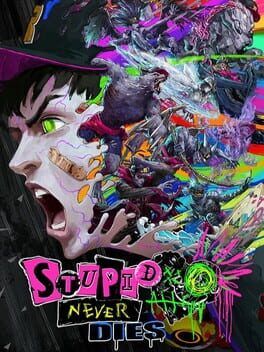
Across positive and negative reviews, the game’s look is the one element that keeps cutting through. Push Square calls out a scribblecore aesthetic, chaotic sticker-bomb presentation, and a mall hub full of pop-culture references, including shop signs riffing on Romeo and Juliet family names. GamesRadar+ praises the punky visual presentation even while criticizing the underlying design. Shacknews describes an early-2000s pop-punk energy full of collage art, neon colors, notebook scribbles, and hormonal, heart-first stupidity. Analog Stick Gaming also places the game near the orbit of Grasshopper-style action, even as it finds the cast underdeveloped.
That visual confidence is not cosmetic fluff. For an action roguelite fighting for attention in a stacked genre, identity is survival. Stupid Never Dies knows exactly how it wants to move, dress, and sneer. The abandoned mall is a smart anchor for a game about dead youth culture, dead humanity, and a dead boy who has mistaken fixation for destiny. The best jokes, according to the coverage, come from Davy’s loser-hero energy and the supporting absurdities around him, including Acelino, described by Shacknews as a were-chihuahua figure and by Analog Stick Gaming as a Chihuahua man tied to Dr. Frank’s operation.
The audio evidence in the provided sources is thinner, so the Stupid Never Dies score cannot lean heavily on music or sound design. Shacknews does call one theme a “banger,” but the supplied material offers far more detail about look, tone, and structure than about soundtrack consistency, voice work, or combat audio feedback. On that basis, the presentation deserves credit for personality, while the audio grade has to remain more cautious.
The style is the hook. It is also the camouflage. Stupid Never Dies can look like a lost PS3-era cult favorite resurrected for modern hardware, but the repeated complaints about combat and grind make clear that attitude alone does not solve the design problem underneath.
Stupid Never Dies PS5 performance and buying advice
For readers specifically searching Stupid Never Dies PS5, the most useful confirmed point from the provided material is that Push Square reviewed the PS5 version and focused its major criticism on pacing, exposition, combat looseness, and roguelite structure rather than naming a specific resolution, frame-rate target, crash pattern, or platform-exclusive technical flaw in the excerpt supplied. Analog Stick Gaming categorizes its review under PlayStation and PC, while 8Bit/Digi reviewed PC. MonsterVine links the Steam page, confirming a PC storefront listing exists, but the provided sources do not include a price, install size, performance mode breakdown, DualSense feature list, or upgrade path.
That limits how far a responsible performance verdict can go. There is no source-backed basis here to claim flawless PS5 performance, a locked frame rate, or major technical instability. The safer buyer guidance is that the known risk is design-led rather than tech-led: combat feel, pacing interruptions, progression gating, and tolerance for its aggressive tone. If those sound like deal-breakers, better performance would not fix the core issue. If the premise and presentation are exactly your lane, the PS5 version at least has public review coverage discussing the game as playable enough to judge on its systems.
So, should you buy it? Stupid Never Dies is easiest to recommend to players who collect strange action games, enjoy roguelite progression even when it is messy, and value personality over polish. It is harder to recommend to players who want DMC-adjacent combat precision, fast onboarding, or a run structure where skill expression leads the dance from hour one. The game’s cult appeal is real, but the sources suggest the novelty fades before the mechanics fully bloom.
Our Stupid Never Dies score is a 6 out of 10. The game has a memorable silhouette, a committed world, and flashes of buildcraft worth exploring, but its action foundation is too uneven and its pacing too clogged to make the weirdness consistently sing.
Final Verdict
A solid gaming experience that delivers on its promises and provides hours of entertainment.