
Review

By Big Brain
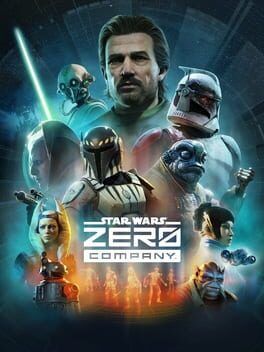
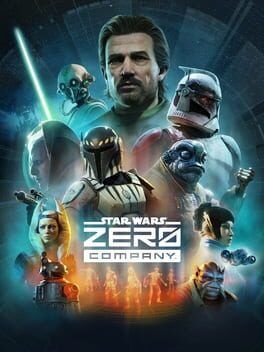
Image: IGDB
Store links: Star Wars Zero Company on Steam
A strong launch-week verdict with one strategic catch
Star Wars Zero Company arrives August 27, 2026 with unusually broad critical momentum for a licensed tactics game. OpenCritic lists Bit Reactor’s debut in the 98th percentile of scored games, while multiple reviews cited in its aggregation land around 9/10. That is the concrete development around this release: the first major modern Star Wars squad tactics game from Bit Reactor, made in collaboration with Respawn Entertainment and Lucasfilm Games, is being received as a major success.
The catch is the one strategy players should pay attention to before buying. Several outlets praise the campaign, writing, presentation, and accessibility, but the tactical ceiling is less settled. PCGamesN calls it a “fun if less than challenging XCOM-like” and says its missions become too simple on normal difficulty. OpenCritic’s listed lower-end excerpt points to technical issues, inconsistent pacing, and uneven difficulty. RPGFan praises the balance and customization, but also notes pressure in the economy. That tension defines this Star Wars Zero Company review: Bit Reactor appears to have built a strong Star Wars strategy RPG, but its long-term value depends on whether players want a sharp, character-driven campaign or a punishing tactics sandbox that constantly breaks their habits.
The confirmed setup is a clean fit for the genre. PlayStation Blog’s hands-on report places the story around 20 BBY, near the end of the Clone Wars, with players controlling Hawks, a former Republic officer leading a mercenary outfit trying to escape debt to a Hutt family. Zero Company is pulled into a plot involving the Infinite Coil, described by PlayStation Blog as a Separatist-aligned cult rumored to possess unnatural abilities. IGN and Console Creatures both describe the group’s threat as involving a dangerous plague, with IGN naming its leader as Fathom. This is Star Wars on the margins of a known war, which is exactly where squad tactics tends to work best: the heroes are important enough to matter, but expendable enough for every injury to sting.
The tactics are familiar, but the Star Wars tempo changes the math
The easy shorthand is “Star Wars XCOM,” and the sources make clear that the comparison is earned. PCGamesN describes Zero Company as a creative collaboration between Bit Reactor, whose staff includes former Firaxis developers, and Respawn, the studio behind the Star Wars Jedi games. Bleacher Report says comparisons to XCOM are “inescapable” and points to familiar genre fundamentals: cover, flanking, overwatch, action points, destructible cover, class-like roles, and percentage-based shots that can still miss at high odds.
Where Zero Company starts to develop its own rhythm is in how much it pushes the player toward proactive sequencing rather than static cover trading. PlayStation Blog describes three-action-point turns built around movement, attacks, overwatch, and character-specific talents, including sharpshooter abilities and party-wide buffs. Bleacher Report adds that players can call for backup once per turn, trigger assisting attacks, and charge shared “advantage” points through attacks to spend on ultimate abilities. Those reported systems matter because they reward tempo. If advantage grows through aggression and assists layer onto active plans, the optimal turn is less about hiding behind the best wall and more about manufacturing a damage window before the enemy board state stabilizes.
That is also where the game’s likely balance debate begins. PCGamesN says it quickly increased difficulty from normal and eventually relied on the same four operatives despite a larger roster. For a tactics game, that is a red flag with two interpretations. The friendlier read is that Zero Company wants Star Wars fans who do not live on ironman campaigns to see its story, experiment with power fantasy builds, and avoid spreadsheet fatigue. The harsher read is that class tuning may not force enough adaptation. If a small set of operatives solves most maps, the campaign risks becoming a solved meta before the final act.
My buyer guidance is simple: do not treat normal difficulty as the strategic baseline if you already understand XCOM, Gears Tactics, or Mario + Rabbids. The sources point to a game with strong fundamentals and broad readability, but the best version of Star Wars Zero Company gameplay is likely found one difficulty step above the recommendation, where AP refreshes, assists, ultimates, and overwatch traps have to be managed rather than enjoyed as free momentum.
Customization and bonds give the squad campaign its staying power
Zero Company’s strongest strategic idea may sit outside the shot percentages. PlayStation Blog reports an optional character creator with species choices including human, Togruta, Weequay, and Twi’lek, plus facial details, body types, outfits, voice, personality types, battlefield talents, combat specializations, and weapon classes. It also confirms astromechs can join the unit as support characters, with AP buffs and adjustable personalities.
That breadth matters because the game is built around a mercenary company, not a fixed Jedi party. RPGFan describes a loop of mission, crew conversation, team buffing, and another mission. It also says bonds between team members can incrementally improve damage and other stats. Console Creatures reports that some characters receive side missions and arcs, but can die during missions, ending those arcs and removing related content. Bleacher Report adds an injury structure in which defeated characters accumulate injuries, with a third injury causing permadeath, except where the game makes exceptions.
This is the system layer that most clearly separates Zero Company from a reskinned tactics board. A roster only becomes strategically meaningful when attachment and optimization are pulling against each other. If Jae or Kabb is statistically useful, narratively interesting, and at risk of permanent loss, the player is no longer choosing the cleanest damage line in isolation. The campaign asks whether a wounded favorite should sit out, whether a bond bonus is worth deploying a suboptimal pair, and whether credits go toward the ship, the black market, or a weapon upgrade for a unit who might not survive the next bad flank.
Console Creatures does note a cost to this structure, saying the story can feel disjointed because field characters may not always fit into main-mission cutscenes with the same force as the core ship cast. That tradeoff is familiar in tactics design. A fully authored party gives writers more control, while a roster with death risk gives the player more ownership. Based on the reported design, Zero Company chooses ownership often enough to make its squad management matter, even if some companion arcs land harder than others.
The economy sounds lean in a genre that benefits from scarcity
The most interesting detail for long-term strategy players is not the lightsaber count. It is the resource pressure. PCGamesN lists a dense hub economy built around credits, intel, capacitors, focus points, contacts, bonds, den experience, and other currencies, while saying the systems loop together clearly rather than becoming overwhelming. RPGFan goes further, arguing that Zero Company has the opposite problem from modern games that shower players with excess cash: upgrading the ship can prevent meaningful black market spending, and black market purchases can delay broader infrastructure.
That is good design if the campaign supports it. In squad tactics, abundance flattens identity. If every weapon mod, den upgrade, and utility item is affordable by the midpoint, the only real decision is purchase order. Scarcity creates build direction. A player investing in the ship is likely betting on long-term operational strength. A player buying rare mods is prioritizing immediate mission tempo. A player spreading resources across a wider roster is insuring against injuries and death, while a player funneling upgrades into an elite core is accepting fragility for peak output.
This also answers a practical question for players coming from XCOM. Zero Company appears to reduce the administrative harshness that can make Firaxis-style campaigns intimidating, but it does not remove planning. PCGamesN says the hub has depth without being overwhelming. RPGFan says hard spending decisions persist. That combination is promising because it means the game can be approachable without becoming strategically weightless.
The risk is balance drift. If PCGamesN’s experience of settling into the same dominant squad reflects the broader meta, the economy could push players toward a solved investment pattern: upgrade the best four, patch injuries when needed, and ignore the roster’s theoretical width. That is where Bit Reactor’s post-launch support, if any is announced later, will be worth watching. Small changes to injury recovery, bond growth, ability costs, or black market pricing could shift the campaign from one optimal lane into several viable squad economies.
Presentation carries real tactical value, not only fan service
Across the cited reviews, Zero Company’s presentation is the least disputed strength. PlayStation Blog describes a John Williams-inspired score, booming horns, stirring strings, and a visual palette with dusky space-Western color. PCGamesN says the game makes an immediate impression with triple-A shine. Bleacher Report calls the production values intense and praises the sound design, ambience, soundtrack, and brand authenticity. IGN credits the collaboration’s cinematic side with giving weight to a campaign centered on mercenaries rather than Force users.
For a tactics game, that polish is not cosmetic trivia. Readability and drama sit on the same board. Destructible arenas, clear cover states, expressive unit animations, and identifiable enemy silhouettes make better decisions possible. Music and cutscenes give the attrition layer emotional context. If a named operative dies after several bond conversations, the loss lands harder because the game has invested in them as a person rather than a stat block.
The story reception is similarly strong, though not without caveats. Console Creatures calls the narrative one of the strongest parts of the package and praises Hawks as a defined but customizable protagonist shaped by past failure. RPGFan finds the plot enjoyable if predictable, but says camaraderie among the team members is where the story shines. IGN praises the mercenary perspective and says the villain Fathom is allowed to remain mysterious, with her relationship to her son adding texture.
This is where Zero Company best uses the license. The Clone Wars setting provides immediate stakes, but the campaign reportedly works because it looks sideways at the conflict. Hawks is not Anakin, Obi-Wan, or a destiny-bearing Sith opponent. The player is commanding contractors, clones, defectors, nobles, Mandalorians, droids, and drifters caught in the machinery of a galactic war. That is fertile ground for a Star Wars tactics game because the fantasy is command responsibility, not invincibility.
Performance and platform caveats make patience reasonable for some players
The review picture is not clean enough to call Zero Company an unconditional day-one purchase for every tactics fan. OpenCritic’s excerpt for a 7.5/10 review describes annoying technical issues, inconsistent pace, and uneven difficulty across an approximately 40-hour linear, story-driven experience. RPGFan also lists roughly thirty to forty hours of gameplay. PC Gamer’s review information says it reviewed the PC version on a Core i5-12600K, RX 9070 XT, and 32 GB of RAM, lists multiplayer as none, gives an expected price of $50 or £40, and marks Steam Deck as “Not Likely.”
Those are important practical signals. A 40-hour tactics campaign with no multiplayer lives or dies on campaign pacing, replay value, and build variety. If you want a competitive or endlessly procedural tactics platform, the available source material does not support that expectation. If you want a polished single-player Star Wars strategy RPG with replayable squad choices, character deaths, and different builds, the evidence is much stronger.
Platform information in the provided sources confirms a PS5 version through PlayStation Blog and a PC release through PC Gamer’s Steam link and RPGFan’s Windows review platform. OpenCritic’s source listing includes PC, PS5, and Xbox Series in one review URL, but the excerpts here do not include a direct storefront or publisher platform statement for Xbox. Buyers should verify their preferred storefront before purchase, especially if cross-save, controller support, or handheld compatibility matters.
Patch-sensitive players should watch for launch updates before committing. The technical issues cited in OpenCritic’s lower review excerpt are not quantified in the provided material, so it would be unfair to overstate them. Still, the combination of reported difficulty inconsistency and possible PC handheld limitations suggests a sensible split: Star Wars fans and story-first tactics players can buy early with confidence, while high-difficulty purists and Steam Deck owners should wait for post-launch performance reports and balance notes.
Verdict: a real campaign first, an XCOM heir second
Star Wars Zero Company succeeds because Bit Reactor seems to understand the strategic fantasy that Star Wars has rarely explored at this scale. The best-supported strengths are clear: strong production values, a compelling mercenary campaign, deep customization, meaningful squad bonds, and tactical systems that make action points, assists, cover, and ultimates easy to read. The best-supported weaknesses are also clear: normal difficulty may be too forgiving, class balance may encourage a narrow squad meta, pacing can wobble, and technical issues have been reported by at least one critic excerpt collected by OpenCritic.
As a Star Wars Zero Company review, the recommendation depends on audience. For Star Wars fans who have wanted blasters, droids, cover, injuries, and hard crew decisions instead of another Force-led power arc, this looks like one of the strongest uses of the license in years. For tactics veterans, it is a high-quality campaign with a familiar skeleton and some soft edges. Start above normal, rotate the roster before the economy locks you into favorites, and treat permadeath and bonds as the real difficulty multipliers.
Bit Reactor’s Star Wars game is not diminished by sounding familiar. The question is whether familiarity is the ceiling or the foundation. Based on the available reporting and review evidence, Zero Company is closer to the latter: a strong, cinematic Star Wars tactics campaign that earns its place, even if it may need tougher tuning and technical cleanup to become the long-term strategy benchmark its best moments suggest.
Final Verdict
A solid gaming experience that delivers on its promises and provides hours of entertainment.