
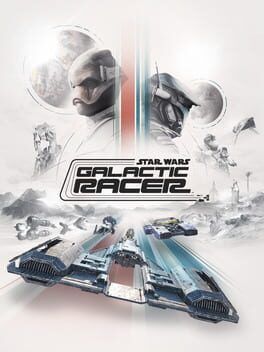
Review
By Apex
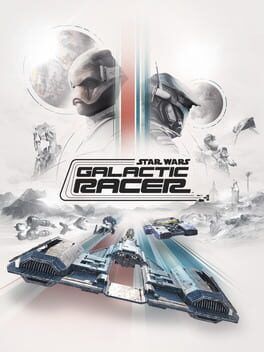
Image: IGDB
Store links: Star Wars: Galactic Racer on Steam
Fuse’s first race has bigger stakes than nostalgia
Star Wars: Galactic Racer arrives with a concrete pedigree and a clear pressure point: according to VGC, it is the debut game from Fuse Games, a UK studio founded in 2023 by former Criterion leads, and it is published by Secret Mode with a stated October 6 release date. That background matters for a Star Wars racing game because the appeal is split in two. It has to satisfy players who still associate the license with podracing, but it also has to stand up as a modern arcade racer in a genre where speed alone no longer wins the grid.
On the evidence available from PS5-focused reviews and publisher-facing coverage, Galactic Racer clears that first hurdle by treating the Star Wars setting as a framework for readable vehicle classes, hazardous planets, and build decisions rather than as decoration. VGC describes the Galactic League as an underground, unsanctioned circuit where syndicates bankroll chaos. Console Creatures places the game in the New Republic era after Return of the Jedi, with appearances from Phantom Menace racers such as Ben Quadinaros and Sebulba, and tracks on planets including Tatooine, Lantaana, Jakku, Ando Prime, and Sentinel One.
The tension is that this is not a simple throwback. Push Square says Fuse avoids fully labeling the campaign a roguelite, while multiple reviews, including Push Square, Collider, Monstervine, Star Wars News Net, and PSX Extreme, describe run-based campaign structure, temporary upgrades, carryover progression, and event choices. For players searching for a Star Wars racing game that behaves like a traditional cup ladder, that structure is the main buying question. For players who want an arcade racer review to answer whether the driving can survive repeated runs, the answer is more encouraging: the handling model appears to be the anchor, with the license feeding risk, spectacle, and track identity.
Handling is class-based, readable, and intentionally punishing
The most consistent praise across the review material concerns feel. Collider, reviewing on PS5, calls the handling excellent and says the speed feels amazing. Push Square compares the blend to MotorStorm: Pacific Rift, WipEout HD, and Burnout 3: Takedown, which is useful shorthand only if you separate the pieces: terrain danger, high-speed anti-gravity aggression, and combat-heavy takedown energy. Star Wars News Net says each vehicle type carries its own challenges, with landspeeders, speeder bikes, skim speeders, and podracers all demanding different play styles.
The strongest design choice is that vehicles are separated by behavior rather than skin. Push Square says speeder bikes are light and nimble, with corner-exit boost behavior that evokes kart-racing rhythm, while skim speeders can “knife” around bends at 90 degrees while maintaining speed. Console Creatures describes landspeeders as the simpler balanced option, while speeder bikes trade tight handling for strong acceleration. That gives Galactic Racer a handling spread closer to a class-based racer than a one-physics-fits-all licensed game.
The tradeoff is brutality. Console Creatures reports blowing up early by overextending Ram Jet use, missing surprise corners, and disintegrating after staying too long around a corrosive hazard. Star Wars News Net notes that even an autopilot upgrade can shut off at an awful moment and send the player into a crash. That kind of failure can feel unfair in weak arcade racers, but here the reported pattern suggests a game built around risk budgeting. Boost, cooling, shields, and route knowledge are part of the driving line.
As a racing specialist, the encouraging detail is that mistakes are described as legible. The sources do not describe floaty steering or vague collision. They describe overcommitment, bad preparation, and track hazards that punish greedy driving. That points to an arcade handling model with bite: accessible enough to throw a craft into the first corner, sharp enough that speed management matters after the first lap.
Track variety comes from planet mechanics, not scenery alone
The Star Wars license supports Galactic Racer best when planets change how you drive. Push Square gives the clearest examples: on Sentinel I, shields can let a player tank corrosive waters and cut corners, while Jakku’s heat can make cooling upgrades valuable because engines may overheat. That is exactly where the setting earns its place. Sand, water, heat, industrial clutter, and alien geography become mechanical variables instead of postcard backgrounds.
Console Creatures lists Tatooine, Lantaana, Jakku, Ando Prime, and Sentinel One among the locations, while Monstervine says the courses cover planets from across the franchise with unique mechanics and strong visual identity. Collider frames the event mix around races, elimination events, field tests, and mystery encounters, so variety is not limited to layouts. In practice, that means a good build for one planet may be compromised on another, which is where Galactic Racer’s run structure intersects with its track design.
There is one reported camera issue worth flagging. Monstervine says enemy crashes can trigger dramatic camera shots, then return control to the player at speed in a way that feels nerve-racking and can be confusing. In a slower combat racer, that might be a minor flourish. In a game repeatedly described as extremely fast, any forced perspective change has competitive cost. If you are sensitive to cinematic interruption during high-speed control, that is the clearest handling-adjacent caveat in the provided review set.
Even with that caveat, the planet design sounds like the game’s smartest use of Star Wars. It does not rely solely on familiar names. Tatooine has heritage value because of podracing, but the more important evidence is that planets such as Jakku and Sentinel I ask for different setups, different restraint, and different racing lines.
Progression is the dividing line: roguelite structure in an arcade shell
Galactic Racer’s campaign is the feature most likely to split buyers. Push Square says the campaign has a roguelite itch despite the developer’s hesitancy around the label. Collider describes branching routes through events, rewards between races, vehicle modification along the way, and League Entry Tokens that can be lost through crashes or failed placement requirements. Monstervine says losing most event types can return the player to the start of a run, while PSX Extreme says cash and some progress can carry forward to help with future upgrades.
That design changes the job of a racing campaign. First place is valuable, but survival and preparation matter too. Push Square notes that the campaign does not always require winning every race, sometimes turning fifth or sixth place into a useful result if it earns enough credits for the next upgrade. That is a strong fit for an illegal Star Wars league where the car, or craft, is part of the story of risk. It is also a warning for players who want a clean sequence of bronze, silver, and gold cups with no reset pressure.
The buildcrafting appears substantial. Push Square reports more than 300 parts, plus vehicle base-stat leveling and racer styles that can emphasize traits such as defense or boost. Star Wars News Net describes runs where a player might become a turbo-resetting speed build in one attempt, then lean into concussion mines and weapons in another. Collider similarly cites upgrades, passive parts, active abilities, and Racer Styles as elements that change the traits and approach of a run.
Balance may need attention. Monstervine specifically calls the Auto-pilot ability “busted,” while Star Wars News Net describes autopilot as helpful but capable of switching off at a disastrous time. Those are different readings rather than a direct contradiction: one critic sees a potentially overpowered aid, another sees a risky tool with failure states. Either way, build balance will matter because Galactic Racer is asking players to replay, experiment, and accept bad runs. A dominant assist or a few obviously superior parts could narrow what is otherwise the game’s best long-term system.
The story is light enough for racing, with disagreement over its depth
The campaign premise is broadly consistent across sources. VGC says players compete in the Galactic League, an underground circuit built around danger and syndicate money. Push Square identifies the player character as Shade, a talented delivery driver pulled into a political plot involving star racer Kestar Bool. Collider also describes Shade being drawn into a rivalry with reigning champion Kestar Bool, with League founder Darius Pax involved in keeping control of the competition. Console Creatures adds that Shade is chasing glory and revenge in the Outer Rim.
The tone seems deliberately pulpy. Monstervine calls the story rivalry-driven and melodramatic, a fit for Star Wars and racing. Push Square is more reserved, describing a straightforward rags-to-riches arc with enough political intrigue for franchise fans, while saying the storytelling is light enough to fade into the background if you do not care. PSX Extreme is higher on it, calling the narrative surprisingly deep for an arcade racer and praising characters such as Q-33N and Biddy Blas.
That spread is useful for expectations. Galactic Racer should not be approached as a story-first Star Wars game in the mold of an action-adventure campaign. The reported strength is that it gives context to runs, rivals, and planets without stopping the racing loop. The New Republic-era setting and returning Phantom Menace racers add connective tissue for fans, but the reviews do not suggest that lore is required to understand why the next event matters.
For a licensed racer, that is the right weight. The story gives the league personality and stakes, then lets the vehicles do the heavy lifting. Players who want Star Wars banter, alien rivals, and recognizable eras appear to get enough. Players who skip dialogue for lap times should not be fighting the game to reach the next grid.
PS5 performance impressions are positive, but hard numbers are missing
For this Galactic Racer PS5 review, the practical limitation is that the provided sources praise the PS5 experience without supplying complete technical specifications. Collider explicitly says it played on PS5 and found smoother racing, modern graphics, excellent handling, and speed that exceeded expectations. Push Square’s PS5 review reports a high-excitement racer that produced narrow wins and punished misjudged corners. PSX Extreme focuses heavily on audio, praising Gordy Haab’s score and the race-craft sound effects, including classic sounds for familiar podracers.
What is not confirmed in the supplied material is equally important. The excerpts do not provide a verified PS5 frame rate target, resolution, graphics mode split, VRR support, DualSense feature list, install size, or launch patch details. No source excerpt here identifies a specific performance problem such as stutter, tearing, long loading, or crashes on PS5. That absence is encouraging, but it is not a substitute for technical data.
Visually, the game is repeatedly characterized as fast and flashy without becoming unreadable. Monstervine says the speed is high enough to be thrilling without becoming too fast to follow. Collider praises the modern graphics. Monstervine also flags the takedown camera interruption, which is a presentation issue rather than a frame-rate complaint. On audio, PSX Extreme’s praise for the score and engine sounds suggests the game understands that Star Wars racing depends on sound pressure as much as scenery.
The buyer guidance is simple: if your main concern is whether Galactic Racer feels stable and responsive on PS5, the available PS5 review material is favorable. If you need confirmed 60 fps, performance mode details, or accessibility and controller specifics before buying, those details are not established by the supplied sources and are worth checking against the final store listing or a dedicated tech analysis at launch.
Verdict: the license helps, but the racing carries it
Star Wars: Galactic Racer works because the license appears to feed the driving model instead of covering for it. The confirmed setup from VGC gives it a serious development hook, with Fuse Games, former Criterion leadership, Secret Mode publishing, and an October 6 release. The review evidence then points to a racer with distinct craft classes, punishing boost and hazard management, planet-specific setup decisions, and a campaign structure that turns upgrades into meaningful choices.
The best reason to play is handling variety. Landspeeders, speeder bikes, skim speeders, and podracers are described as meaningfully different, while builds can shift a run toward defense, boost, weapons, cooling, shields, or assists. The second reason is track identity. Jakku heat and Sentinel I corrosion are the kind of environmental rules that make a licensed arcade racer feel authored rather than assembled.
The reasons to hesitate are specific. The roguelite campaign will not suit everyone, especially if repeated runs and late-circuit failure sound irritating rather than motivating. Monstervine’s criticism of crash camera interruptions is worth taking seriously in a high-speed game. Balance around upgrades such as Auto-pilot may also need post-launch scrutiny. Finally, PS5 impressions are positive, but the supplied sources do not confirm exact performance targets.
As an arcade racer review verdict, Galactic Racer looks like a strong buy for players who want speed, danger, and mechanical variety from a Star Wars racing game, especially on PS5. It is less ideal for players who want a conventional championship ladder or a fully documented technical profile before launch. On the sourced evidence, Fuse’s debut earns its place on the grid.
Final Verdict
A solid gaming experience that delivers on its promises and provides hours of entertainment.