
Review

By Night Owl
A Roguelite Voyage Home
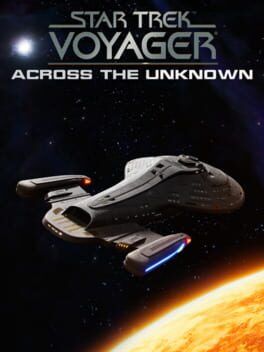
Across the Unknown is not a typical TV tie-in that marches you through recreated episodes. It plays much closer to a mashup of FTL, Crying Suns and Ixion, reframed through the specific lens of Star Trek: Voyager. The console demo makes that pitch immediately clear. Every jump across the Delta Quadrant is a discrete run in a roguelite structure, but the tone is far more about ethical crisis management than min-maxed powergaming.
The core loop is simple on paper. You plot a course through a branching star map, spend deuterium to move, resolve text-heavy events, juggle scarce resources, then return to Voyager to repair, refit and calm a crew that is always one disaster away from falling apart. What makes it click is how often the game forces you into authentically Voyager problems: do you divert power from life support to sustain a shield modulation that might let you slip past a Kazon ambush, or accept hull damage and risk losing critical systems for several turns?
Survival Strategy That Actually Feels Like Voyager
The best thing the demo does is sell the fantasy of commanding a starship that is horribly far from home. Where a lot of licensed games nod at scarcity and then shower you with supplies, Across the Unknown makes every bar on the UI feel like a threat. Deuterium, food, spare parts and morale all deplete faster than you want and slower than you fear, right in that sweet spot where a single bad decision can snowball but a smart recovery feels earned.
This is not a construction sim in the mold of RimWorld or Oxygen Not Included, nor a 4X. It is closer to a narrative-heavy FTL, with each node on the map representing a mini scenario that branches based on your captain’s orders and the current state of the ship. Where something like FTL leans heavily on combat tactics and quick choices, Across the Unknown is slower and more deliberate. Encounters are presented as multi-step events, with checks based on department readiness, system integrity and occasionally individual officers you have chosen to prioritize.
One scenario in the demo, involving a damaged alien relay, can be approached as a salvage opportunity, a diplomatic olive branch or a science experiment. Each route leans on different departments and resource pools. The structure feels very much in conversation with modern story-first management games rather than older, more static licensed strategy titles.
Decisions, Loss and Crew Survival
Permadeath and persistent consequences are where the demo leans most into roguelite design. This is not Darkest Dungeon in space, but crew are absolutely expendable if you overreach. Away missions can come back with injuries, permanent debuffs or body bags. The writing is usually matter of fact about it rather than melodramatic, which actually fits the Starfleet tone.
The interesting wrinkle is that you are not micromanaging nameless redshirts. Even in the demo’s slice, key bridge officers can be temporarily sidelined or come back changed. Losing a specialist is not just a morale hit, it literally closes off certain resolution options in later events. That gives your decision-making a long tail. It also compares favorably to something like Ixion, where population is mostly a number. Here, specific people really do matter.
Runs are structured around trying to push a little farther before Voyager is too battered or your crew too demoralized. On failure you retain some meta progression that unlocks new starting modules and event variants. The demo shows just enough of this to suggest a deep pool of scenarios, but also hints at repetition if the final game is thin on variety. The balance between meaningful loss and repetitive replays will make or break the full release.
Systems, UI and Learning Curve
From a pure systems perspective, Across the Unknown is denser than many licensed tie ins but more approachable than heavyweight sims. Each deck and department has its own condition and upgrade tree, from Engineering to Sickbay to Astrometrics. The loop of clearing damaged rooms, repairing key systems and assigning your limited officers to departmental projects is satisfying once it clicks.
That said, the onboarding in the console demo is only adequate. A brief tutorial lays out the basics, but there is a lot of information packed into an LCARS themed interface that can feel cluttered on first contact. On PS5 the higher resolution keeps it readable. On Switch 2, even with sharper output than the original Switch, the smaller screen makes some text squintworthy in handheld mode.
Compared to FTL or Crying Suns, where each screen has a very tight focus, Across the Unknown loves its menus. There is a sense that the developers are trying to capture the feel of running a whole ship rather than a single bridge view. Whether that feels immersive or busy will depend on how much spreadsheet in space you are willing to tolerate.
PS5 Performance and Controls
On PS5 the demo is reassuringly solid. Performance mode holds a near locked 60 frames per second both in ship interiors and in the more dynamic combat views. Quality mode adds a bit of extra anti aliasing and lighting in nebula scenes, but this is not a showcase title. The art direction is clean and functional, with stylized character portraits and a nice use of Voyager’s interiors, but it rarely pops in the way a big budget space sim does.
The pad mapping is smartly thought out for a management game. Shoulder buttons cycle quickly between departments and event choices, while the d pad lets you snap between submenus without constantly dragging a cursor. You can still move a virtual pointer with the right stick for fine control, but most actions are reachable through context sensitive button prompts. After an hour or so it feels much closer to something like Frostpunk Console Edition than a clumsy PC port.
Load times are comfortably short, which matters a lot in a roguelite structure where restarting runs is common. Jumping from the star map into an encounter or back to the ship management view is almost instant. So far there are no obvious hitching or streaming issues even when multiple event windows and overlays are active.
Switch 2 Performance and Handheld Feel
The Switch 2 version is obviously not running at the same resolution or framerate targets, but it handles the design far better than you might expect. Docked, performance sits in a mostly stable 60 frames per second with occasional dips during busy combat reports. Handheld mode appears capped at 30, which actually suits the slower pace of the game.
Art assets look a touch softer than on PS5, but the interface has been reworked slightly to accommodate the screen. Fonts are thicker, icons larger and some nested options condensed into radial submenus. That keeps things legible but comes at the cost of a few extra button presses to reach deeper ship screens.
Where the Switch 2 build really shines is in touch support. You can tap directly on rooms, choice boxes and map nodes in handheld. That instantly makes it feel more like a tablet strategy game, and it partially offsets the slightly heavier UI. Dragging to reorder power priorities or assigning crew with your finger is more direct than wrestling a virtual cursor. It is not as precise as a mouse, but it is a very respectable adaptation.
Technically, the biggest concern in the demo is text clarity in some of the denser lore popups. Even with the accessibility options cranked up, long event descriptions can run close to the bezel. If you are primarily a handheld player with weaker eyesight, this may end up being more comfortable on a TV.
Fan Service and Canon Touches
The developers clearly know the source material and are not shy about using it, but the fan service is more structural than just cameo spam. Species like the Kazon and the Vidiians show up very early, and the dilemmas around them echo specific Voyager episodes without retelling them beat for beat. Instead of replaying a famous standoff, you run into a similar strategic and ethical knot and have to cut it your own way.
There are subtle canon nods everywhere, from the layout of Voyager’s decks to the way the Doctor’s holographic limitations factor into certain medical crises. Some events pull phrases and concepts straight from the show’s technobabble playbook in a way that will please lore minded players without becoming incomprehensible to newcomers.
Importantly, the game does not completely wall itself off as a museum piece. If you come in with no Voyager knowledge, it reads as a fairly grounded sci fi management sim about a single ship on its own in hostile territory. The crew archetypes are clear enough that you do not need a wiki open just to parse who is who.
Early Verdict: Promising, But Depth Will Be Key
Across the Unknown’s demo and early access builds suggest a thoughtful, systems driven survival strategy game that respects both Star Trek and its management sim peers. In its best moments it feels like a more narrative heavy cousin to FTL, where the stakes of a decision are measured not just in hull points and scrap but in the fragile cohesion of a crew clinging to Starfleet ideals.
The flip side is that you can already feel the boundaries of the event pool if you replay the demo several times. If the full game does not substantially broaden its scenarios and ship development options, it risks the kind of repetition that has sunk more than one otherwise solid roguelite.
As a launch window proposition on PS5 and Switch 2, though, this looks far more like a serious sci fi management sim than a disposable tie in. The survival loop captures the fantasy of being lost in the Delta Quadrant, the consequences for crew survival are sharp enough to sting without feeling arbitrary, and the console specific control schemes are better than many PC first peers. If the developers can keep layering in new crises and meaningful upgrades across the full campaign, Voyager’s long trip home might be worth making again and again.
Final Verdict
A solid gaming experience that delivers on its promises and provides hours of entertainment.