
Review

By Night Owl
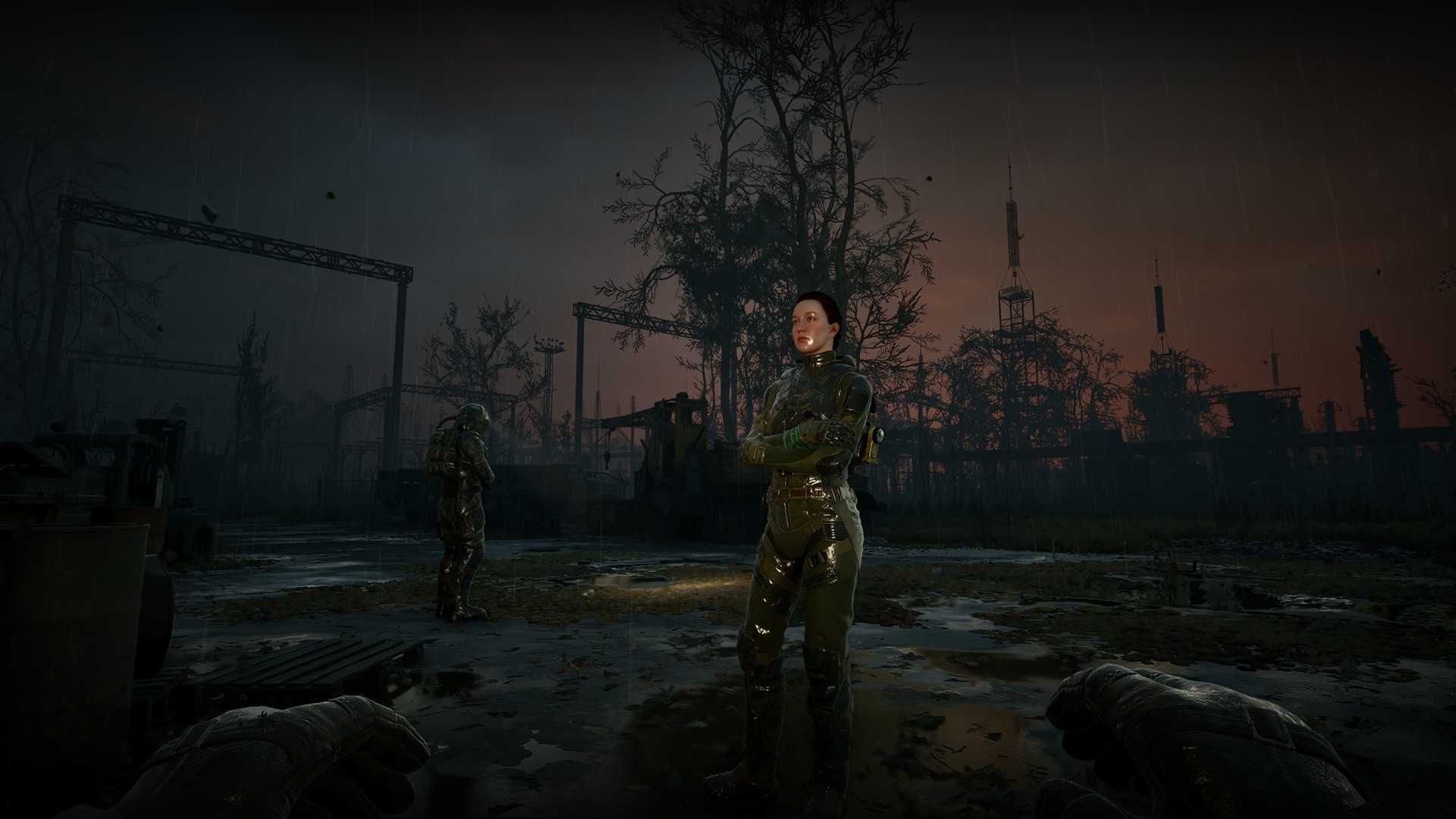
Image: dualshockers.com
A stronger Zone arrives with a weaker war at its center
S.T.A.L.K.E.R. 2: Cost of Hope is GSC Game World’s first major story DLC for Heart of Chornobyl, and its most concrete pitch to returning players is immediate: the expansion restores major series territory, including the Iron Forest and the Chornobyl Nuclear Power Plant, while pulling Duty and Freedom back into the foreground after their reduced role in the 2024 base game.
That is the hook, and also the tension running through this STALKER 2 Cost of Hope review. The DLC gives the Zone a sharper shape, with new spaces that feel hostile, mournful, and worth getting lost in. It also asks players to invest in an old ideological faction conflict that several review accounts, including Rock Paper Shotgun’s, found less successful than the places built around it. Cost of Hope is at its best when it lets geography, fog, radiation, and panic do the storytelling. It is less convincing when it tries to make Duty versus Freedom carry the whole emotional load.
According to the S.T.A.L.K.E.R. Wiki, Cost of Hope takes place during Heart of Chornobyl’s main storyline between “Answers Come at a Price” and “Down Below,” with Skif navigating the reignited conflict between Duty and Freedom. PlayDay.One reports that players who want to jump straight into the DLC can use an Advanced Start, though that comes with a major campaign decision before the expansion begins. That structure matters for returning players: Cost of Hope is designed as an inserted story arc rather than an epilogue, and it expects you to remember how S.T.A.L.K.E.R. 2 feels when the map, your carry weight, and the noise in the dark are all working against you.
The result is the strongest reason to reinstall Heart of Chornobyl since launch, especially if what you missed most was the old series’ sense of place. It is not a clean victory. The DLC’s pacing is uneven, the faction war does not always match the force of its setting, and value depends on how much appetite you still have for long walks through danger. But Cost of Hope understands something essential about this series: the Zone is most frightening when it seems indifferent to whether you understand it.
The 2.0 update changes the conditions of the review
Cost of Hope cannot be separated from the update it launches beside. Rock Paper Shotgun frames the DLC alongside S.T.A.L.K.E.R. 2’s 2.0 update, which that outlet describes as bringing serious performance and visual upgrades. PlayDay.One similarly treats the expansion as part of a broader reappraisal of the game, citing a new lighting system, foliage updates, a fog system, new weapons, binoculars, quality-of-life changes, and improved A-Life behavior.
That matters because Heart of Chornobyl’s launch reputation was split between admiration and frustration. GamingBolt notes that the base game’s original reception was mixed, with praise for its visuals, story, and world sitting beside disappointment over how A-Life compared to older S.T.A.L.K.E.R. games. DualShockers points to another launch-era complaint: the classic Duty and Freedom conflict was largely sidelined, with Freedom at Rostok and Duty isolated enough that players could miss them for long stretches.
Cost of Hope arrives into a better technical context than the one many players remember. PlayDay.One reports playing on PC with an RTX 5080 and Ryzen 5800X, reaching 80 to 100 FPS at max settings and 4K with DLSS set to Quality, and encountering only visual glitches during roughly 15 hours. That is useful evidence, but it is still a high-end PC account, not a guarantee for every rig. Insider Gaming also says its review covered the 2.0 update and the expansion, with around 15 hours played, both endings completed, and more left to do.
For a buyer, the practical read is this: if you bounced off S.T.A.L.K.E.R. 2 because the world felt too unstable or too thinly simulated at launch, Cost of Hope lands after a year of repairs and iteration. The sources do not support saying the game is universally fixed on every setup, but they do support saying the DLC benefits from a noticeably improved build. In a survival shooter where a stutter, spawn issue, or AI lapse can break tension, that improvement is part of the content.
Iron Forest, CNPP, and Lymansk give the DLC its real gravity
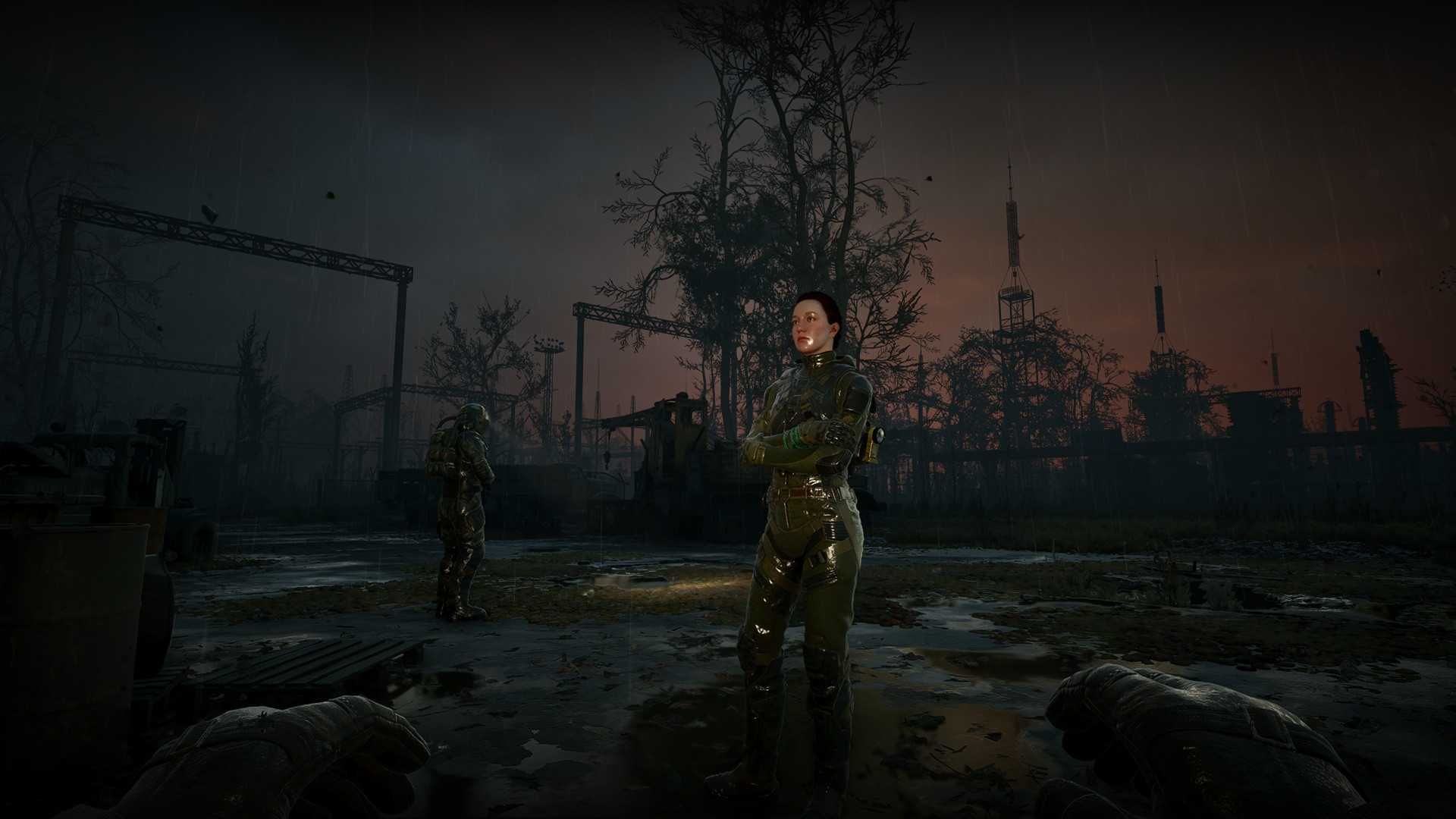
The new and returning spaces are Cost of Hope’s strongest argument. Rock Paper Shotgun says the expansion returns players to the Chornobyl Nuclear Power Plant, a pivotal location from the series’ older identity that the base game avoided. The same review describes the Iron Forest as an expanded version of an isolated anomaly from a previous game, now turned into a hostile stretch of twisted metal, electrical deathtraps, heavy fog, and radio signals carrying the dead’s final words.
That description matches what makes this DLC work as survival horror. The Iron Forest is not frightening because it has a single monster waiting in a scripted room. It is frightening because the place itself seems loaded. Fog narrows your decisions. Metal, static, and anomaly fields make navigation feel unsafe before any enemy arrives. DualShockers connects the area to Call of Pripyat and notes its association with Poltergeists, the kind of enemy that turns loose objects and spatial awareness into a weapon against the player.
The CNPP brings a different kind of pressure. Rock Paper Shotgun describes the expansion’s story route as a grim tour through the sarcophagus and the remains of reactor number four, while also emphasizing that the larger area rewards exploration. It is reportedly less dangerous than nearby Pripyat in some respects, but defined by long stretches of silence and industrial scale. That is a valuable contrast. The Iron Forest presses in. The CNPP looms.
GamingBolt says the DLC’s new zones can be visited in nearly any order once enough progress has been made in the expansion’s main story, and describes them as reimagined versions of locations from Shadow of Chornobyl, Clear Sky, and Call of Pripyat. For veterans, that creates recognition without simply replaying an old map. For newer players, the important point is less historical: Cost of Hope adds territory that changes how you move, scavenge, and listen.
Rock Paper Shotgun also singles out the lost town of Lymansk as a highlight, while avoiding detailed spoilers. That restraint is appropriate. Cost of Hope’s best discoveries are environmental, and environmental surprises are easy to flatten in a checklist. The major takeaway is that GSC’s world design carries the DLC even when the plot does not.
Mission design thrives in facilities, but the walking can bite back
Cost of Hope leans into S.T.A.L.K.E.R.’s old rhythm: hear something half-trustworthy, follow it across ugly ground, find a body or a survivor, then realize the truth costs more ammo, more medkits, and more nerve than expected. DualShockers describes the first half as groundwork built around rumor-chasing and repeated movement across the Iron Forest, saying frustration set in after multiple runs from one end of the area to the other. That criticism is believable because this series has always walked a thin line between meaningful travel and fatigue.
When the DLC gets indoors or into hostile facilities, the same review says it shifts toward what the franchise does best: throwing the player into abandoned or actively dangerous places and making them deal with the consequences. That is where Cost of Hope’s mission design appears strongest. It understands pressure as accumulation. You are not simply fighting enemies; you are managing weight, dwindling supplies, uncertain exits, and the creeping suspicion that whatever is making noise nearby has heard you first.
Insider Gaming says the expansion includes new weapons as part of the broader 2.0 and DLC package, while PlayDay.One also cites binoculars and quality-of-life additions. Binoculars sound small on paper, but in the Zone they change the tempo. Any tool that lets you read a camp, a patrol, or an approach before committing can lower cheap frustration while preserving danger. The fog system cuts the other way, offering cover while also letting the world hide threats from you.
The expansion’s non-linear structure helps. GamingBolt argues that Cost of Hope feels different from many open-world DLCs because it offers a new playground rather than only a questline. That is the right design instinct for S.T.A.L.K.E.R. 2. The Zone is less convincing when it behaves like a corridor of objectives. It becomes memorable when a planned route turns into a detour, a detour turns into a firefight, and the firefight leaves you limping back with too much loot and too little confidence.
Still, returning players should know what kind of patience is required. If your tolerance for long transits, overencumbrance, and hostile navigation has evaporated, Cost of Hope will test it early. If you missed that grim loop of preparation, bad choices, and barely profitable survival, the DLC gives it room to breathe.
Duty and Freedom return, but the argument lands unevenly
The faction premise is clean on paper. The S.T.A.L.K.E.R. Wiki’s quoted setup says the fragile peace between bitter rivals is shattered, asking players to pick a side in intrigue and half-truths where no choice is clean or truly right. DualShockers frames Duty versus Freedom as the Zone’s core ideological debate: whether the Zone is a threat to be contained or a phenomenon to be embraced and preserved. That conflict has deeper roots than convenience, territory, or survival.
Cost of Hope is clearly designed to answer a gap in Heart of Chornobyl. DualShockers calls the DLC GSC Game World’s attempt to bring that core debate back into the spotlight. Rock Paper Shotgun also identifies Duty and Freedom as a Zone staple that the base game sidelined in favor of newer factions.
The problem is execution. Rock Paper Shotgun’s review says the expansion’s faction war “fizzles,” even while praising the new regions and the return of old series texture. GamingBolt’s source text describes an undercurrent of invisible war between Duty and Freedom and says choices may connect with decisions players made, but the provided material does not establish the faction story as the DLC’s strongest element. Insider Gaming is more enthusiastic, saying the story can change the Zone and sets up what comes next, while also noting two endings.
That split is important rather than something to smooth over. If you are coming to this S.T.A.L.K.E.R. 2 DLC review hoping for a definitive political faction drama that pays off years of series history, expectations should be guarded. If you want that conflict as a reason to send you through better spaces, into nastier facilities, and toward decisions with visible consequences, Cost of Hope is on firmer ground.
For horror and survival players, the faction writing matters most when it increases uncertainty. Whose checkpoint is safe? Which route becomes hostile after a choice? Can you trust the person sending you into a contaminated ruin? Cost of Hope seems to understand those questions, but the reviewed accounts suggest the world answers them with more force than the script.
Atmosphere and audio do heavy lifting, while voice work remains a tradeoff
Cost of Hope’s horror is atmospheric first. Rock Paper Shotgun’s description of the Iron Forest’s radio signals, fog, and electrical hazards points to an expansion that uses sound and visibility as survival systems. Silence at the CNPP matters as much as gunfire because it gives the player time to imagine the map listening back.
This is where S.T.A.L.K.E.R. 2 remains distinct from cleaner open-world shooters. A ruined facility is not scary because it is dark. It is scary because entering it carries practical costs. You spend ammunition you may need later. You burn through healing items. You risk weapon degradation, weight problems, and a return trip through terrain that may look different under weather, night, or fog. Cost of Hope’s best locations appear built to feed that anxiety.
There is one presentation caveat. PlayDay.One says the English voice-over has not improved enough, describing it as rarely natural despite the actors’ effort. The outlet recommends the native voice track with subtitles as more immersive, while noting the practical danger of reading during combat. That is a real survival tradeoff. Subtitles can enrich tone, but in S.T.A.L.K.E.R. 2, taking your eyes off movement can mean missing the thing about to kill you.
The result is a familiar recommendation for this series: use the voice track that preserves mood for you, but consider difficulty and readability if you struggle to process subtitles mid-fight. On normal “S.T.A.L.K.E.R.” difficulty, PlayDay.One still reports dying nearly 50 times, albeit with some of that attributed jokingly to platforming. Cost of Hope is not presented in the sources as a casual sightseeing trip through old landmarks. It is a return to pressure.
Value depends on your reason for returning
There is no sourced price in the provided material, so Cost of Hope’s value has to be judged by scope, structure, and the quality of the return. On that basis, the DLC is substantial. Insider Gaming reports roughly 15 hours of play, both endings completed, and additional content still left. PlayDay.One also reports about 15 hours through the expansion. The S.T.A.L.K.E.R. Wiki and PlayDay.One both indicate a story built around Duty and Freedom, with PlayDay.One saying one major decision can lead to two DLC endings.
For returning players, that is enough to justify reentry if your strongest memories of Heart of Chornobyl are atmosphere, exploration, scavenging, and the dread of moving through a place that wants you gone. Cost of Hope adds important geography, benefits from the 2.0 update’s reported technical and systems improvements, and gives veterans recognizable locations without relying solely on nostalgia.
For players who left because they disliked S.T.A.L.K.E.R.’s deliberate travel, inventory friction, opaque mission flow, or sudden deaths, the DLC does not appear to sand those edges away. It improves the conditions around them. It gives them better weather, stronger spaces, and a more complete-feeling world, but it still asks you to walk, listen, haul, and suffer.
As a Cost of Hope review verdict, then, this is an easy recommendation for established S.T.A.L.K.E.R. 2 players and a conditional one for everyone else. Come back for the Iron Forest in the fog, the CNPP’s industrial grief, and the renewed sense that the Zone is bigger and crueler than the base game allowed. Come back cautiously if your main hope is a flawless faction saga. Cost of Hope gives the Zone new lungs. Its war story has a weaker pulse.
Final Verdict
A solid gaming experience that delivers on its promises and provides hours of entertainment.