
Review
By Headshot
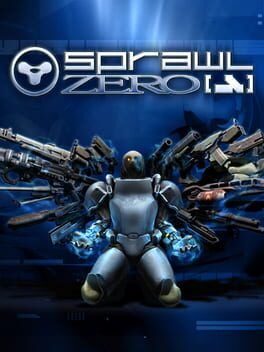
Image: IGDB
Store links: Sprawl Zero on Steam
Sprawl Zero lands in a crowded 2026 shooter lane with one clear pitch
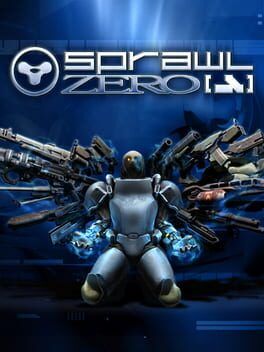
SPRAWL zero arrives with a specific promise: take the direct, aggressive structure of early-2000s shooters and rebuild it with modern movement, fast weapon handling, and physics-driven combat. Push Square reported that the PS5 version was confirmed for 8 September 2026, while Checkpoint Gaming lists the game as released on 9 September 2026 for PC, PS5, and Xbox Series X|S, with Kwalee Gaming as publisher and MAETH as developer. That one-day timing difference is worth noting rather than smoothing over, because the available sources do not present one single platform schedule in identical terms.
The bigger tension is clearer. This is a retro FPS 2026 release selling PS2 shooter nostalgia to players who now expect snappy inputs, readable encounter design, and combat systems that can survive comparison with DOOM, Ghostrunner, and the last decade of movement shooters. Across the available PC and PS5 coverage, SPRAWL zero largely clears that bar. It does not appear to be chasing scale, live-service retention, or RPG layering. Push Square describes a roughly 10-hour linear campaign with no side quest bloat, while GamingBoulevard frames it as a throwback to shooters that handed you a weapon, pointed you down a corridor, and trusted the shooting to carry the experience.
That approach gives SPRAWL zero a strong identity, but it also defines its ceiling. If you want a giant campaign, deep buildcraft, competitive multiplayer, or loot progression, the provided review material does not support expecting any of that. If you want a focused Sprawl Zero PS5 or Sprawl Zero PC shooter that prizes speed, weapon churn, and violent improvisation, the evidence points to a much stronger fit.
The gun loop is the real star, and it is built around never settling down
The most important thing in any throwback shooter is whether the weapons make you push forward or hide behind the design. SPRAWL zero’s answer, as described by Push Square and Checkpoint Gaming, is to remove traditional reloading from the core loop. Each gun has one magazine. Once it is empty, you throw it as a projectile, then use gravity-based tools to pull a fresh weapon from the battlefield. Checkpoint breaks the rhythm down cleanly: grab gun, shoot gun, throw gun, grab another gun. That loop is the game’s best modern idea because it turns ammo pressure into movement pressure.
Push Square compares the slickness of play to Ghostrunner and calls out deflecting shields, bullet time, Gravity Gloves, and on-the-fly weapon pickup. The same review connects the weapon swapping rhythm to DOOM-style aggression, while Checkpoint says the systems can take some warming up before producing a strong flow state. That warning matters. This is not a pure comfort shooter where you keep one favorite rifle and clear rooms from midrange. The design wants you to consume guns, reposition, punish enemies, and keep the fight unstable.
For FPS players, that is the strongest reason to take SPRAWL zero seriously. The old-school influence is visible, but the combat is not stuck in old input expectations. Push Square says the PS5 version controls brilliantly, and the available PC reviews describe fast, reactive combat rather than a museum piece. The likely tradeoff is fatigue. A shooter this dependent on constant swapping and gravity manipulation asks more from the player than a standard corridor blaster. For competitive-minded players who care about uptime, tempo, and efficient kills, that is a plus. For players looking to relax with low-friction shooting, it may be a little too demanding in bursts.
Its PS2-era tone works because the campaign stays lean
SPRAWL zero is a prequel to MAETH’s 2023 SPRAWL, according to 8Bit/Digi and GamingBoulevard. The original followed SEVEN, while SPRAWL zero places players in the role of FIVE, a cybernetically enhanced soldier operating in a dystopian city ruled by the Junta and sent against the techno-religious group IMAGO-DEI. 8Bit/Digi says the setup is understandable even without playing the first game, and GamingBoulevard likewise reports that it did not feel lost coming in without prior series experience.
That accessibility is important because the game’s appeal is not built on lore homework. 8Bit/Digi connects the world to cyberpunk dystopia and shadow-government influences, while Push Square describes the story as having some cool moments without trying to become a heavy horror narrative. This matches the campaign structure described across sources: linear, combat-forward, and concise. Push Square’s estimate of roughly 10 hours is a practical buying detail. It suggests a campaign long enough to establish its mechanics and mood, but short enough to avoid the padding that often weakens retro revival projects.
The PS2 shooter nostalgia angle lands strongest here. Push Square specifically says the de-rezzed graphical style would not look out of place on PS2 and that the broader level and story vibe recalled renting or buying early-2000s console shooters. The key distinction is that SPRAWL zero seems to understand the era as pacing, texture, and attitude, rather than simply low-res visuals. It is not chasing modern open-world sprawl or progression menus. It wants room-to-room escalation, quick gimmicks, and a campaign that ends before the core loop curdles.
Level design sells experimentation, but repetition and backtracking hold it back
The strongest description of SPRAWL zero’s level ambitions comes from the press release quoted by Push Square, which says the handcrafted levels feature multiple paths, verticality, and alternate approaches that reward experimentation and replayability. That matches what the combat system needs. A shooter built around gravity pulls, thrown guns, shields, bullet time, and melee pressure needs arenas that let the player rotate, improvise, and create angles.
The available reviews suggest SPRAWL zero often gets there, but not cleanly all the way through. Push Square praises enemy variety and says levels frequently introduce small gimmicks that keep the campaign entertaining. At the same time, it criticizes some environments as copy-and-paste and points to several annoying backtracking sections. GamingBoulevard also says the game brings some habits from the era it is referencing, which is the diplomatic way of saying the old design language is not always frictionless in 2026.
That is the main weakness in this Sprawl Zero review calculus. The combat sounds sharp enough for modern FPS players, but the surrounding spaces sometimes lean into the exact baggage that older shooters carried: repeated visual layouts, route retracing, and level beats that can slow the kill chain. Because Push Square says the game does not overstay its welcome, these issues appear to be contained rather than deal-breaking. Still, if your tolerance for backtracking is low, or if you need every arena to feel authored at the level of the best modern arena shooters, SPRAWL zero may feel uneven.
Presentation nails the era, with audio doing heavy lifting
SPRAWL zero’s visual pitch is deliberate. Push Square describes a de-rezzed graphical style aimed squarely at early-2000s console memory, and says the game can still be pretty despite that understated look. Checkpoint Gaming frames the aesthetic as an elevated version of the brown palette associated with the 2000s shooter era, with references to Halo, Half-Life 2, Call of Duty Zombies, and other recognizable touchstones appearing through weapons, vending machines, and crates.
Those references could have become cheap imitation, but the available coverage suggests they work because they are integrated into combat and world texture. Checkpoint calls the references charming and says they do not overstay their welcome. The examples are specific: a Gravity Hammer-style weapon, a Halo 1 Pistol-style reference, vending machines reminiscent of Dr. Breen’s Private Reserve from Half-Life 2, and randomizing weapon crates that echo Call of Duty Zombies’ Mystery Box. These are nostalgia triggers, but they also serve the broader loop of grabbing, spending, and replacing weapons.
Audio appears to be one of the surprise strengths. Checkpoint calls the soundtrack phenomenal and describes quiet moments being emphasized through the music before combat ramps back up. The provided sources do not give enough technical audio detail to judge mix quality, positional clarity, or platform-specific output, so buyers should treat the soundtrack praise as a strong artistic signal rather than a full technical audio evaluation. Even so, for a shooter trying to sell momentum and aggression, strong music matters. It keeps the forward pressure alive between fights.
PC, PS5, Xbox, and the details still missing before purchase
Platform information is clear in broad strokes but messy in the details. Checkpoint Gaming lists PC, PS5, and Xbox Series X|S as platforms, and says it reviewed the game on PC. Push Square’s review covers PS5, and its earlier news post reported a PS5 release date of 8 September 2026. Checkpoint lists 9 September 2026 as the release date. The supplied Steam material is for a SPRAWL zero Demo page, not a full store listing with final price, system requirements, or launch build details in the excerpt provided.
That leaves several practical gaps. None of the supplied sources establishes a final PC price, console price, PC requirements, upgrade path, physical edition, or exact performance targets. Push Square’s comments section includes a reader saying $24.99 USD appeared on the Nintendo Store, but that is a user comment tied to a platform not otherwise established in the provided platform list, so it should not be treated as confirmed pricing here. For buyers, the sensible move is to check the live storefront for your platform before purchase, especially if price sensitivity is part of the decision.
Performance reporting is also limited. Push Square praises the controls on PS5, and PC reviews from 8Bit/Digi, GamingBoulevard, and Checkpoint focus on combat feel, structure, and presentation, but the excerpts do not provide frame-rate measurements, graphics modes, Steam Deck verification, or console resolution data. That means our performance score is conservative. There are no major technical red flags in the supplied material, but there also is not enough hard data to call this a benchmark-clean release across all platforms.
Verdict: a sharp throwback for players who want speed over sprawl
SPRAWL zero succeeds where this kind of project usually fails: the nostalgia is not carrying weak shooting. The reported combat loop has a real hook, and the one-magazine weapon economy forces aggression in a way that feels built for modern FPS habits. Push Square’s PS5 review highlights slick controls and satisfying weapon swapping, Checkpoint’s PC review praises the flow of combat and soundtrack, 8Bit/Digi credits the prequel setup as approachable, and GamingBoulevard sees the early-2000s shooter formula still working in 2026.
The limitations are just as clear. This is a focused linear campaign, not a platform for endless play. The sources point to repeated environments, backtracking, and old-school design habits that will grate on some players. Platform and performance specifics are also thinner than I would like for a full buyer’s guide, especially on PC, where requirements and verified handheld behavior matter.
As a Sprawl Zero review verdict, the recommendation is positive with a defined audience. Buy it if you want PS2 shooter nostalgia filtered through fast modern gun handling, gravity abilities, bullet time, and constant weapon turnover. Wait for a sale or demo impressions if you need flawless level variety, deep systems, confirmed technical metrics, or a longer campaign. SPRAWL zero may not rewrite the FPS rulebook, but it understands the best rule from that era: keep the player moving, keep the weapon hot, and make every empty gun useful.
Final Verdict
A solid gaming experience that delivers on its promises and provides hours of entertainment.