
Review

By Pixel Perfect
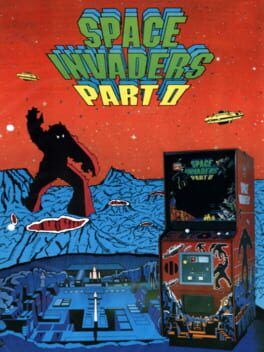
Hamster is wasting no time working through Taito’s history. One week after dropping the original Space Invaders on Switch and Switch 2 as part of the Arcade Archives line, they have followed it up with 1979’s sequel, Space Invaders Part 2. On paper, it looks like a minor iteration, but in the context of this modern re-release, those small changes make a bigger difference than you might expect.
A Smarter, Meaner Wave Of Invaders
If you played last week’s Arcade Archives Space Invaders, the basic structure is identical. You slide a cannon along the bottom of the screen, fire one shot at a time, and slowly peel rows of aliens out of a rigid formation before they descend to the ground. The tension still comes from that push and pull between your sluggish rate of fire and their relentless march.
Part 2 tweaks that formula just enough to make you sit up and pay attention. Enemies can now split into additional invaders when hit, suddenly turning what looked like a clean column into a small mess of targets. UFOs do more than float by as bonus fodder. At times they act like reinforcements, repopulating gaps in the formation and punishing sloppy shooting.
The biggest visual hook is the Rainbow Bonus effect. Nail certain enemies and the game flashes a cascade of color across the screen, pairing the score bump with a little spectacle. It sounds minor, but in a stark black and white game, those rainbow bursts become a rhythm. You begin timing shots to chase that payoff, nudging the core loop away from pure survival toward calculated risk taking.
Compared to the original’s very plain waves, Part 2 feels more mischievous. Patterns evolve more rapidly, and the possibility of enemies multiplying or being replenished means clearing a screen is less of a solved puzzle and more of an ongoing scramble. It is still stripped back even by early arcade standards, but it has a sharper edge that translates well for modern score play.
Relevance For High Score Chasers
Whether this sequel feels relevant today comes down to what you want out of a high score game. If you need depth on the level of a modern bullet hell, this is far too simple. You are still dealing with one button, one lane of movement, and a handful of wave types.
Where it earns its keep is in the way those slightly more dynamic enemies keep you from fully scripting a run. In the original Space Invaders, once you learn the safe patterns, a lot of it becomes rote execution. Part 2 can still be routed, but splitters and UFO reinforcements introduce just enough variance to keep your palms sweating late into a credit.
The Rainbow Bonus further grounds the experience in score strategy. It is not just “shoot everything as fast as possible.” To climb leaderboards you start thinking about which invaders you prioritize, how to herd the formation so that the risky targets can be safely tagged, and when to sacrifice short term safety for a long term points boost.
In that sense, Space Invaders Part 2 feels more aligned with what modern score chasers appreciate. Runs are short, skill expression is visible, and there is a layer of decision making just beneath the surface. It is absolutely an antique, but as a minimalist score attack, it still has bite.
Hamster’s Emulation And Display Options
Hamster’s treatment of the game is consistent with the rest of the Arcade Archives line. The emulation on Switch and Switch 2 is rock solid. Input latency is low and consistent in both handheld and docked modes, which is crucial when you are trying to thread shots between a descending column.
Audio fares well too. The iconic thump of the invader march and the sharp chirp of your cannon are intact and free of distortion. This is not a flashy soundscape, but it is a faithful one, and it matters because those sounds are part of how you track the pace of each wave.
Where the package quietly shines is in its display options. Hamster again gives you multiple filters and screen modes to play with. A clean pixel perfect view preserves the sharpness of the original sprite work if you like your classics pristine. For players chasing nostalgia, the CRT style filters add curvature, scanlines, and a touch of softness that mimics the old cabinets without turning the image into a smeared mess.
There are also several aspect and border configurations, including rotated display support for those who want to get creative with monitors, and the usual Arcade Archives bezel art. On a portable screen, especially on Switch 2’s sharper display, the aliens look crisp and the subtle color accents of the Rainbow Bonus really pop.
None of this is revolutionary, but it is the kind of thoughtful toolkit that lets you tune the game to your taste and hardware, and it does help Space Invaders Part 2 feel less like a museum piece and more like a small custom cabinet in your bag.
Online Leaderboards And The Double Dip Question
If you grabbed last week’s Space Invaders, the obvious question is whether Part 2 is worth another purchase. Mechanically, this is not a reinvention. It is the original game with a few more tricks and a bit more personality. From a historical lens that is important, but history alone is rarely a reason to double dip.
What tips the scales for shooter fans is the online infrastructure. Hamster’s online leaderboards are, again, fully supported here. Separate boards for the main mode and caravan style score attacks give high score chasers a defined space to compete. Uploads are quick, rankings refresh cleanly, and the small pool of dedicated players that tends to form around each Arcade Archives release makes it surprisingly engaging to check in daily and see who has edged you out overnight.
In a game this simple, shaving a few extra points through smarter Rainbow Bonus routing or tighter UFO sniping feels meaningful, and the leaderboards give that effort a clear outlet. If you are the type to lose a weekend to chasing a top 10 slot, Space Invaders Part 2 offers just enough mechanical nuance over the original to justify having both in your rotation.
If you are more of a casual nostalgia player who just wants to hear that iconic march and shoot a few waves, the differences may not be enough to warrant another purchase so soon after the first release. You will see the new tricks in a single sitting, and while they do make the game more interesting, they may not transform the experience in the way you are hoping.
Verdict
Space Invaders Part 2 on Arcade Archives is a careful step forward rather than a bold leap. The new enemy tactics and Rainbow Bonus do not rewrite the book on fixed shooters, but they meaningfully tighten the core loop and add a dash of showmanship that keeps the game from feeling like a dry historical artifact.
Hamster’s emulation, flexible display filters, and sturdy online leaderboards round it out into a strong package for modern high score chasers. If you live for score attacks and already enjoy the original, this sequel earns its place as the slightly nastier, more expressive sibling. If your interest in Space Invaders is purely nostalgic, owning both might feel redundant.
As part of the growing Arcade Archives catalogue on Switch and Switch 2, though, Space Invaders Part 2 is a worthy inclusion and a reminder that even small iterations can keep a 1979 shooter relevant nearly half a century later.
Final Verdict
A solid gaming experience that delivers on its promises and provides hours of entertainment.