
Review
By Headshot
A fresh spin for an already sharp racer
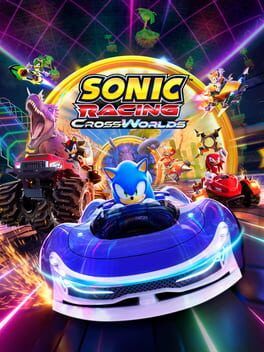
Sonic Racing: CrossWorlds launched in a surprisingly strong place for a licensed kart racer, but the new free Super Monkey Ball update is the first real test of whether Sega can support this as a long‑term F2P platform on Switch and mobile. Thankfully, the answer is mostly yes. AiAi and his banana‑yellow ride don’t just pad out the roster, they meaningfully broaden the handling spectrum, add a clever new track type, and show Sega understands how to do live service without strangling the fun.
Handling: AiAi is more than a novelty
The standout here is AiAi’s Banana Cruiser. Instead of simply reskinning an existing Sonic chassis, Sega has tuned it to feel like a midpoint between the twitchy lightweights and the heavier boost monsters. Acceleration is snappy, drift angles are forgiving, and the top speed sits just below the game’s true meta picks.
Where AiAi really shines is corner stability. On tight hairpins and the new tilting segments, you can commit to longer drifts without hemorrhaging control. It feels intentionally approachable for newer players on mobile touch controls, yet still responsive enough that skilled players can chain boosts cleanly on Switch with a traditional pad.
Compared with KartRider’s wildly swingy handling model and Mario Kart Tour’s mushy auto‑steer, CrossWorlds continues to land in a sweet spot. Input latency on Switch is negligible, and the mobile version remains one of the few F2P racers where you feel like you’re driving, not nudging a suggestion system.
If there is a gripe, it’s that AiAi is slightly too safe. His default loadout doesn’t disrupt the existing meta in ranked play, so you will still see a sea of top‑tier Sonic and Shadow builds at higher ranks. AiAi is a fantastic main for casual and mid‑tier lobbies, but serious grinders may treat him as a side dish rather than a new main course.
Track design: Monkey Ball DNA in a Sonic framework
The new Super Monkey Ball course is the most confident crossover track CrossWorlds has added yet. Rather than bolting banana decals onto a generic loop, Sega leans into Monkey Ball’s identity: tilting platforms, narrow rails, and big‑swing shortcuts that dare you to risk everything.
Early laps feel deceptively simple. The first sector has wide corners and obvious boost pads, mirroring the friendlier Banana Rumble stages. As you climb the course, everything tightens. One mid‑lap section introduces a gently banking tube that subtly pulls you toward item hazards, and the final sector hides a high‑risk upper route behind a precise launch off a bumper ramp. Miss it and you tumble into a slower, safer lower lane.
It is a clever balance of spectacle and readability. Visual signaling is strong, with checkerboard tiles and neon rails guiding your eye, and performance holds up on both Switch and mid‑range phones. Compared to some of CrossWorlds’ earlier Crossworlds‑warp tracks, which occasionally overdid the clutter, this one is clean and focused.
What it does not do is completely redefine how the game feels. It is a single course folded into the existing rotation rather than a new cup or themed series. Players coming from KartRider might wish for a handful of Monkey Ball variants that escalate in difficulty, but as a free drop, it is a strong, replayable addition.
Monetization: smart restraint, but watch the creep
The best part of this update is that Super Monkey Ball content is properly free. AiAi, the Banana Cruiser, and the new track are unlocked via a short in‑game event chain rather than a gacha banner or premium pass tier. On both Switch and mobile, you can reasonably grab everything within a couple of evenings of play without touching your wallet.
That said, CrossWorlds is still a live service racer, and the usual seams show. Limited‑time cosmetics themed around bananas and checkerboard patterns are locked behind the current season pass, which leans heavily on FOMO. The grind for the free track of the pass remains long, especially on mobile where race payouts are slightly lower.
Compared to Mario Kart Tour’s infamous pipes and KartRider’s aggressive lootbox systems, Sonic Racing: CrossWorlds is friendlier and more transparent. There are no stat‑gated premium karts exclusive to paid tiers, and the Super Monkey Ball gear is cosmetic rather than pay‑to‑win. The risk is more about psychological pressure than raw power creep.
So far Sega is threading the needle: marquee crossover characters like AiAi are earnable in‑game, while the cash asks are focused on costumes and banners. If they keep this model and avoid selling stat monsters, CrossWorlds has a real chance to remain a trustworthy F2P staple.
Roster growth: AiAi and the platform play
On paper, adding yet another crossover character might seem like simple fan service. In practice, the expanding roster explains exactly what Sega is doing with this game. With NiGHTS, Ichiban, SpongeBob, and now AiAi in the mix, Sonic Racing: CrossWorlds is becoming a rolling Sega (and friends) theme park, closer in spirit to Fortnite’s crossover chaos than a one‑and‑done kart racer.
From a design standpoint, AiAi fills a valuable niche. He provides an accessible handling profile for new and returning players, a clear on‑ramp into the deeper systems that doesn’t feel condescending. For lapsed players checking back in because of the Monkey Ball branding, he makes those first races feel smooth, which is crucial in a F2P ecosystem where churn is brutal.
This long‑tail strategy compares favorably with Mario Kart Tour, which buried some of its most interesting drivers behind short, expensive spotlight runs. KartRider has breadth, but its banner churn can feel predatory. CrossWorlds, by contrast, offers a curated drip‑feed of recognizable icons, often free, that invite you to pop back in every month or two.
If there is a concern, it is roster bloat. The character select screen is beginning to feel crowded, and new players may struggle to parse who offers what at a glance. Better filtering and clearer stat summaries would help keep the expanding cast approachable over the long term.
Long‑term F2P prospects on Switch and mobile
What makes Sonic Racing: CrossWorlds stand out in 2026 is that it is genuinely fun before you think about passes, banners, or events. Handling feels crisp on controllers and competent on touch, track design keeps evolving with experiments like the Monkey Ball course, and the post‑launch updates have been substantive rather than cynical.
On Switch, it occupies a niche Mario Kart 8 Deluxe never aimed for: a continuously evolving racer that encourages daily sessions without feeling like a second job. On mobile, it is one of the few kart racers where you can climb ranked without a spreadsheet and a credit card.
The Super Monkey Ball update does not rewrite the foundations, but it reinforces all the right ones. A free, mechanically distinct character, a thoughtfully built crossover track, and monetization that stays largely out of the way together make a strong case that Sonic Racing: CrossWorlds is built for the long haul.
If Sega can continue to deliver crossovers with this level of mechanical identity, keep the gacha temptations in check, and tidy up roster navigation as the cast balloons, CrossWorlds will remain the F2P racer to beat on both Switch and mobile.
For now, AiAi’s arrival is exactly what you want from a mid‑life update: a reason to reinstall, a reason to stay, and a reminder that Sonic’s latest racer is not just coasting on nostalgia.
Final Verdict
A solid gaming experience that delivers on its promises and provides hours of entertainment.