
Review

By Pixel Perfect
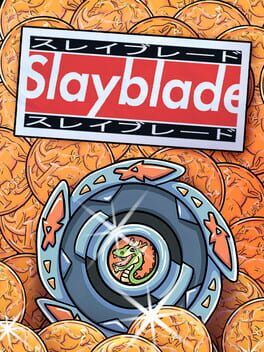
Image: IGDB
Store links: Slayblade on Steam
A sharp hook arrives with a short runway
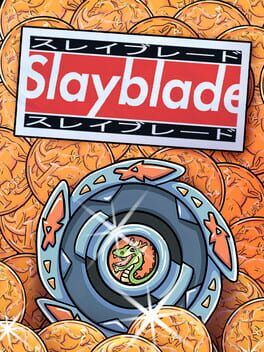
Slayblade launched on PC on Aug. 20, 2026, according to Metacritic’s public listing, and its Steam page is already pushing the game with a 15% discount at the time of the captured listing. That gives Henry’s House’s battle-top roguelite a clean pitch: build a customizable spinning blade, earn cash and upgrades in a Y2K-styled city, then climb toward the title of King of the Streets.
The tension is equally clear. Slayblade has the kind of tiny-game idea that can make an indie discovery feel instantly special, but the question is whether the blade combat, progression, and arena twists can keep repeat runs alive once the toy-store thrill wears off. Across available source material, including GamingOnLinux, DualShockers, The Punished Backlog, Metacritic, and Steam, the same pattern emerges: Slayblade is charming, physical, and immediately understandable, then it starts showing its walls sooner than a roguelike really wants to.
That does not make it disposable. Small games can thrive on focus, and Slayblade’s focus is wonderfully easy to grasp. You fire a spinning top into an arena, scrape for momentum, smash the opponent’s RPM down, and hope your build turns a chaotic collision into a planned victory. At its best, Slayblade feels like a playground argument resolved by physics. At its weakest, it feels like the argument is being settled by whichever power cube spawned in the better spot.
Combat feels best before the optimal habits settle in
The heart of Slayblade is its blade-on-blade combat, and this is where the game earns its first burst of goodwill. GamingOnLinux describes battles as short, direct encounters where you launch your top into a small arena and then drag the mouse around the screen to keep speed up through the physics system. DualShockers similarly describes the fights as circular arena clashes where both tops ram into each other until one runs out of RPM, with power-up boxes periodically appearing to activate part-based abilities.
That setup has a pleasing toy logic. You are never memorizing long combo strings or reading dense card text. You are trying to understand weight, angle, speed, and timing through impact. When the mouse-drag movement behaves, there is a tactile satisfaction to steering a wobbling little menace back into the fight, shaving off an opponent’s spin, and watching a near-loss become a ring-out or stamina win.
The issue is that Slayblade’s physics are more charming than fully legible. GamingOnLinux notes that victories can sometimes feel unclear, with wins simply happening amid repeated collisions and power cube grabs. That matches the broader risk of a physics-first combat system: unpredictability is funny in the opening stretch, but repeat play asks for a sharper relationship between choice and result. When I can tell that a decision saved me, I want another run. When I suspect the game’s small arena and random pickups did most of the talking, the appetite fades.
Power cubes are the biggest culprit. GamingOnLinux argues that players quickly learn battles revolve around picking up these drops for a major edge, while DualShockers explains that they trigger abilities tied to your blade parts, from RPM gains to explosive effects that may harm an enemy or even yourself. That is an amusing premise, but it also means arena control can collapse into pickup control. Instead of a rich duel of momentum management, some fights become a race to boxes. Slayblade is still fun in those moments, but the skill ceiling feels lower than the premise suggests.
Progression has good texture, but fewer hard choices than expected
On paper, Slayblade understands roguelite rhythm. The Metacritic summary says the game includes more than 60 parts, lets players merge powers, and sends them through a city where cash and upgrades support the run. DualShockers gives the clearest structure: each attempt gives you 20 days to become champion, tournament play opens from the fifth day onward, and players spend the early stretch earning money and XP through battles before buying parts from a shop that refreshes daily.
That structure does important work. The daily clock gives the run a light push. The shop refresh means every build begins with a little improvisation. Cash matters because, as The Punished Backlog reports, you need to preserve the money required for tournament entry, cited there as a $40 buy-in. GamingOnLinux adds another important pressure point: running out of money causes a game over, pushing you back to the start.
The problem is that Slayblade’s buildcraft appears broader in the listing than it feels in practice. Metacritic’s summary advertises 60-plus parts, but GamingOnLinux found that there was “not a whole lot” of items in actual use and reported falling into familiar customization patterns, especially builds aimed at reducing the opponent’s spin speed. That is the exact place where a roguelike either blooms or shrinks. A limited campaign can work if the build space keeps throwing surprising decisions at you. If one or two strategies feel obviously efficient, repeat runs become housekeeping.
There is still pleasure in the upgrade loop. Buying a part, testing the ability, and watching a goofy little blade become nastier has the warm tinkering appeal that indie roguelites often live on. The issue is depth. Slayblade’s progression is approachable, but it rarely seems to force painful tradeoffs. Cash, XP, shop refreshes, and part merging create the outline of a sticky roguelite. The run-to-run identity is softer than it needs to be.
The city is cute, but its scale works against repeat play
Slayblade’s overworld is one of its sweetest ideas. GamingOnLinux compares its casual town layout to classic Pokemon, with players walking around, choosing opponents, visiting a shop, and doing small activities such as mowing a lawn with the top for cash. The Punished Backlog describes a circular city where players skate between random events, shops, and battles, while also noting that moving around involves dragging the mouse to rotate the world and pull the character along.
That framing gives Slayblade a distinct flavor. It could have been a menu-driven arena game, and it would have lost some of its handmade charm. Cruising around a bright, retro-styled city between duels gives the run a little breathing room, like checking your pockets before the next schoolyard challenge. The music helps, too. GamingOnLinux points to low-fi styled tunes, while The Punished Backlog praises the soundtrack. Metacritic user impressions also mention pleasant art, design, music, and nostalgic retro feel, though user reviews should be read as individual reactions rather than broad consensus.
Yet the city is also one of Slayblade’s clearest repeat-run bottlenecks. GamingOnLinux says the town is tiny and quickly becomes samey. The Punished Backlog found the skating enjoyable at first but tedious once precision was required for entering shops or activities. This matters because roguelites lean heavily on between-fight pacing. If traversal is delightful, it turns preparation into part of the hook. If traversal is slightly fussy inside a small map, every reset makes the same loop feel thinner.
Slayblade’s arena variety follows a similar path. The standard fights are brisk and readable, and that is good for a pick-up-and-play game. But small circular arenas, repeated power cube chases, and familiar opponent patterns cannot carry the whole roguelike promise alone. The game does add modifiers, including big head-style larger blades and bomb-filled play spaces as described by GamingOnLinux, and DualShockers notes that winning unlocks new episodes and modifiers. Those extras add spice, but they feel like seasoning on a compact dish rather than a second course.
Its best moments are playful, its weakest moments are abrupt
Slayblade does not appear to chase a heavy narrative. The Punished Backlog says it provides little story beyond the goal of winning a tournament, while GamingOnLinux describes the opening as abrupt. In a game about street top battles, that minimalism is not inherently a flaw. The fantasy is already legible: start with a blade, scrape together cash, upgrade parts, beat rivals, become champion.
Still, a thin setup places extra pressure on the systems. If there is no substantial story ramp, no broad city to uncover, and no deep roster drama, then combat clarity and progression variety have to do the long-term lifting. Slayblade’s trouble is that it seems to run out of new angles quickly. GamingOnLinux says that after an hour or so, players have largely seen what it offers. DualShockers reports that it took only a handful of hours to see everything and that fatigue began around five hours, even with modifiers. The difference between those two accounts is important: some players may feel satisfied quickly, while others may squeeze a few cheerful evenings from it before the repetition lands.
Metacritic’s gathered critic blurbs reflect that split. DualShockers is quoted there as saying the game does not have everything figured out and that there “isn’t enough game,” while still recommending it for those who want something simple. Checkpoint Gaming, also quoted by Metacritic, calls out repetition but says the different modes add whackiness, challenge, and unpredictability. That is a fair map of Slayblade’s audience. If you want a compact toybox, it has personality. If you want a roguelike that keeps deepening after each clear, it will likely feel underfed.
The most generous reading is that Slayblade is a good first spin. The harsher reading is that its first spin is most of the game. Both can be true depending on your tolerance for repetition and your affection for the central toy.
Steam, platform notes, and buyer guidance
The confirmed availability from the supplied material is PC via Steam. The Steam listing captured for the assignment shows Slayblade at app ID 4117730 and advertises a 15% discount, while Metacritic lists the developer as Henry’s House and the release date as Aug. 20, 2026. Metacritic’s page does not yet show a full Metascore because it requires four critic reviews, and the captured listing shows only two critic reviews counted. That means the public critical picture is still thin.
The provided Steam text does not include system requirements, controller support details, Steam Deck status, or a full current price. One Metacritic user review refers to it as a five-dollar game, but that is an individual user statement rather than a store listing in the supplied material, so it should not be treated as confirmed pricing here. For practical purposes, check the Slayblade Steam page before buying, especially while the launch discount is active.
Performance concerns are not prominent in the supplied reviews. GamingOnLinux covered the game and did not foreground technical problems in the provided excerpt, while the other review excerpts focus on content volume, repetition, traversal, and progression. That does not equal a comprehensive hardware verdict, but it suggests the main buying risk is design depth rather than stability.
My recommendation is simple: buy Slayblade if the fantasy of a short, cheerful, physics-driven battle-top roguelike is already enough to make you grin. Wait if you need roguelike longevity, sharp build variety, or arena design that meaningfully changes how you play. Slayblade’s novelty is real, and its craft has warmth. The repeat-play case is shakier.
Score rationale
Slayblade’s strongest score is audio because the supplied impressions consistently point toward a pleasant, nostalgic soundscape, with GamingOnLinux citing low-fi tunes and The Punished Backlog praising the soundtrack. Its visual score is also healthy thanks to the vibrant Y2K city framing and inviting retro style described across listings and reviews.
Gameplay lands in the middle. The core combat concept works, battles are short, and the physics hook has immediate appeal. It loses points for unclear outcomes, power cube dominance, and limited evidence that the combat matures past its opening thrill. Progression is promising but uneven: the Steam and Metacritic materials sell customization and 60-plus parts, while review sources report that practical build variety narrows quickly.
Story scores low because Slayblade is deliberately sparse, with The Punished Backlog reporting little narrative beyond tournament ambition. That is acceptable for the game’s scale, but it does not add much staying power. Performance receives a cautious positive score because the supplied material does not flag major technical issues, though the sources do not provide enough detail for a stronger hardware-based claim.
Overall, this Slayblade game review lands at 6.3. It is an inventive small game with an excellent hook, a friendly tone, and enough mechanical sparkle for a short visit. As a Slayblade roguelike, it needs stronger arena variety, clearer combat feedback, and more meaningful progression paths to turn that first delighted launch into a habit.
Final Verdict
A solid gaming experience that delivers on its promises and provides hours of entertainment.