
Review

By Pixel Perfect
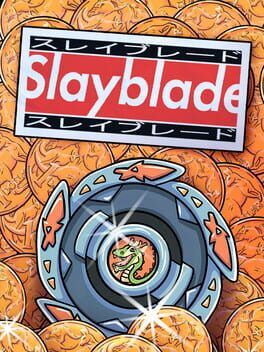
Image: IGDB
Store links: Slayblade on Steam
Slayblade has the hook, but the sources agree on the catch
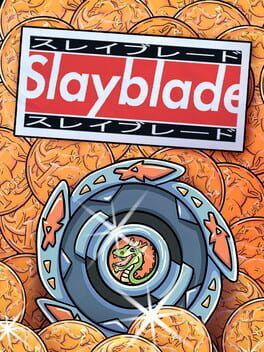
Slayblade launched on PC on Aug. 20, 2026, according to Metacritic’s listing, and its Steam page is currently advertising a 15% discount. The concrete pitch is immediately attractive: Henry’s House describes it on Metacritic as a chill roguelite about building a battle-top, collecting 60-plus parts, merging powers, and skating through a vibrant Y2K city on the way to becoming King of the Streets.
That setup gives Slayblade a rare mechanical identity. GamingOnLinux called spinning-top battlers “somewhat rare,” and several reviews naturally compare the premise to childhood top-battling toys, while also noting that Slayblade is trying to be its own compact roguelite rather than a direct licensed-style clone. The tension in this Slayblade review is simple: the core combat idea works, but nearly every available critic impression points to the same limitation. Slayblade makes a strong first impression, then struggles to build enough variety, mastery, and long-term pressure around that idea.
Metacritic currently lists only two critic reviews, split between one positive and one mixed, with no Metascore available until four critic reviews are counted. That small sample matters. The current public picture is not a consensus verdict from a wide field, but the available reporting is unusually aligned on the shape of the experience: charming, inexpensive-feeling, kinetic, and short-lived.
The best part of Slayblade gameplay is the launch, scrape, and collision
The battle system is Slayblade’s strongest argument for attention. GamingOnLinux describes fights as short arena clashes where you fire your spinning top with a gun, then drag the mouse around the screen to keep the top moving through the physics system. The goal is to repeatedly smash into the opponent until their spin runs down or they are knocked out of the arena. On paper, that is exactly the kind of tactile indie mechanic that can make a small game feel hand-built rather than template-driven.
At its best, Slayblade gameplay seems to understand the fun of messy contact. The Punished Backlog described it as a kinetic roguelite where tops slam into each other, while DualShockers said active play was “a ton of fun” before the issues became harder to ignore. The arenas are brief, physical, and readable enough to deliver quick gratification. That makes Slayblade easy to recommend as a curiosity for players who value feel over feature count.
The problem is that the combat’s physics-driven spectacle can blur cause and effect. GamingOnLinux said victories sometimes felt unclear, especially once random power cubes entered the arena and became a decisive advantage. When a game is built around collisions, uncertainty can be part of the charm. When uncertainty becomes the dominant sensation, the skill ceiling starts to feel lower than the concept deserves.
The roguelite structure gives each run shape, but not enough surprise
Slayblade wraps its battles in a small city loop. GamingOnLinux compared the overworld’s inviting town feel to classic Pokémon, with players walking around, choosing opponents, visiting shops, doing small money-making activities like mowing a lawn with the top, and preparing for bigger league battles. The Punished Backlog adds that players skate around a circular city, collect loose change, find random events, buy parts, and keep enough money for tournament entry. DualShockers says each run gives players 20 days to become Slayblade Champion by winning three rounds of tournament play, with those tournament rounds becoming available from the fifth day onward.
That framework is smart in miniature. Money, XP, parts, bets, and calendar pressure should create a push-pull between risk and preparation. If you bet too aggressively or run out of cash, GamingOnLinux reports that it is game over and you restart. The structure gives Slayblade a roguelite skeleton without burying its simple arcade appeal under too many menus.
Where the loop falters is repetition. GamingOnLinux said that after roughly an hour, players have effectively seen the shape of what Slayblade offers, with the small town becoming samey and build choices narrowing around familiar priorities. The Punished Backlog also found the skating fun initially before it became tedious, specifically criticizing the mouse-drag map movement and the precision required to line up with small interaction icons while the world rotates. DualShockers was more forgiving overall, but still reported fatigue after about five hours, even with modifiers unlocked. That range gives buyers a useful expectation: Slayblade is built for short bursts, not a long roguelite obsession.
Customization sounds broad, but the meta appears to collapse early
The Steam and Metacritic-facing pitch leans heavily on construction. Metacritic’s summary says Slayblade includes 60-plus parts, power merging, cash, upgrades, and buildcraft. That is the piece that could have turned the spinning blade combat into a deeper action loop. A top battler lives or dies on whether its parts change how you think, not merely how you win.
The reporting suggests Slayblade gets part of the way there. DualShockers highlights building your Slayblade as one of the game’s cooler ideas, and Checkpoint Gaming’s Metacritic excerpt says victory is determined by how you build your tops based on the parts you obtain. The unlockable modifiers also add welcome chaos. GamingOnLinux mentions big head mode, larger blades, bombs around play areas, and different episodes, while Checkpoint Gaming’s listed blurb credits those modes with adding whackiness, challenge, and unpredictability.
Even so, the build space appears thinner in practice than in the feature pitch. GamingOnLinux said players quickly learn to prioritize power cubes and parts that reduce the opponent’s spin speed, then fall into using the same items because there are not many meaningful alternatives. That is the central weakness for a Slayblade game review focused on depth. A roguelite can be short if its decisions stay sharp. Slayblade’s issue is that the novelty of assembling a top seems to outpace the strategic texture of actually doing it.
The style carries a lot of goodwill
Slayblade’s presentation is doing meaningful work. GamingOnLinux praised its casual, inviting style and low-fi music, while The Punished Backlog called out a fantastic soundtrack. Metacritic’s user excerpts also echo the pleasant retro feel, with one user describing the art, design, and music as nostalgic. None of the supplied sources report Slayblade as a technical showcase, and that is not the point. Its value is in mood, readability, and a cozy Y2K street-toy fantasy.
The lack of story is clearer. The Punished Backlog says Slayblade provides no story beyond wanting to win a tournament, and frames that minimalism as acceptable because the focus is battling. For players who need character arcs, lore, or strong narrative motivation, this is not the indie to prioritize. For players who like a game that gets straight to the toybox, the absence of exposition may be a strength.
Performance is harder to assess from the provided material. The game is listed for PC on Metacritic and sold through Steam, but the supplied sources do not give hardware requirements, Steam Deck verification status, frame-rate testing, or a technical breakdown. GamingOnLinux covered the game, which will naturally interest Linux and Steam Deck readers, but the supplied excerpt does not provide a firm compatibility verdict. Treat performance as an unanswered practical question unless you can test it on your own setup or verify current Steam user reports.
Value depends on whether two to five hours sounds satisfying
The most practical question around Slayblade Steam buyers is not whether the idea is fun. The sources broadly say it is. The better question is whether its scale matches your expectations. DualShockers says it took only a handful of hours to see everything Slayblade had to offer and still considered it worth the price of admission for the right mindset. A Metacritic user review calls it a “little roguelike for $5” and says they got at least two solid hours of fun, though user reviews are anecdotal and pricing can vary by region, discount, and storefront timing. Steam’s page, as supplied, confirms a 15% sale but does not include the base price in the excerpt.
That makes Slayblade easiest to recommend to players who enjoy small, mechanical experiments: physics toy fans, roguelite dabblers, and indie players who are happy to buy a compact game for a few evenings. It is a weaker fit for players looking for the escalating mastery of a major roguelite, a thick upgrade economy, or a campaign that keeps revealing new wrinkles after the first sessions.
As a buyer’s guide verdict, Slayblade turns its spinning blade combat into a likable novelty with real craft, but not into a fully durable action game. The first hour has snap. The collision model has character. The city has warmth. Then the loop starts showing its seams: a tiny overworld, a dominant battle approach, limited meaningful build diversity, and modifiers that spice the run rather than transform it. If the Steam discount puts it in impulse-buy territory for you, Slayblade is a charming pickup. If you are waiting for a deep roguelite you can keep in rotation, let this one spin past for now.
Final Verdict
A solid gaming experience that delivers on its promises and provides hours of entertainment.