
Review

By Pixel Perfect
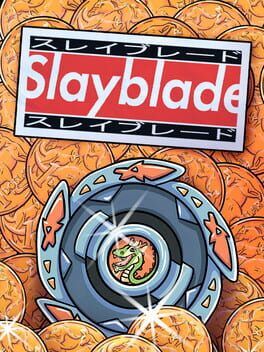
Image: IGDB
Store links: Slayblade on Steam
A sharp hook, a smaller game than its spin suggests
Slayblade arrives on PC with one of the cleanest indie pitches of the year: build a battle top, fire it into a compact arena, and become King of the Streets through physics-driven duels. Metacritic lists Henry’s House as the developer and gives the PC release date as August 20, 2026, while Checkpoint Gaming’s review page lists a PC release of August 21, 2026 and credits Henry’s House and Oscar Brittain as developers. The date discrepancy is small, but it is worth noting because the available source material is otherwise consistent on the broad shape of the game: this is a compact PC roguelite about spinning tops, cash management, part upgrades, and short arena fights.
The immediate tension in any Slayblade review is obvious. The Beyblade-style game fantasy is strong. Multiple outlets describe the core premise as battling tops in small arenas, with players trying to outspin, eject, burst, or drain the opponent’s RPM. The problem is that the hook may be stronger than the long-term structure wrapped around it. GamingOnLinux, The Punished Backlog, DualShockers, and Checkpoint Gaming all land near the same place from different angles: Slayblade is fun, charming, and easy to like in the first hour, but it struggles to keep revealing new layers once the novelty settles.
The battle system has bite when physics takes over
The best argument for Slayblade is the battle feel. GamingOnLinux describes firing the top into a small arena with a gun, then dragging the mouse around the screen to keep speed up, smash into the opponent, and either drain their spin or knock them out. Checkpoint Gaming similarly says the player moves the battle top with the mouse, with smooth cursor following and enough physics emphasis that big hits reward motion rather than sitting still. That matters because a spinning-top battler lives or dies on contact. If the collisions feel mushy, the whole thing collapses.
Here, the collision fantasy mostly works. Matches are short, readable in broad strokes, and kinetic. DualShockers says battles revolve around depleting the enemy’s RPM after both tops launch into a circular arena, with power-up boxes spawning during the fight. Checkpoint Gaming notes that these cubes activate top abilities for a short time and add strategy by tying arena pickups to the parts you equipped. GamingOnLinux also identifies those power cubes as a major factor in winning, though its review frames that as a balance issue once players realize how decisive they are.
That is Slayblade’s central design tradeoff. At a basic level, the smashing and orbiting are satisfying. As an indie arena battler, it understands the physical comedy of ricocheting two tiny weapons around a bowl. But several reviews suggest the player’s authorship over wins can feel blurry. GamingOnLinux says wins sometimes seem to happen without the player fully understanding why, largely because grabbing random power cubes can swing the result. That uncertainty can be funny in a party-toy way, but in a roguelite, where each run asks you to make better decisions, it weakens the learning curve.
Customization gives you direction, then runs out of surprises
Slayblade’s progression is built around parts. Metacritic’s listing summarizes the game as a chill roguelite where players collect 60-plus parts, merge powers, skate around a vibrant Y2K city, and earn cash and upgrades on the way to the top. DualShockers says money can be spent at shops to buy different parts, with the shop refreshing each day, while XP and cash from battles help shape your build. The Punished Backlog also describes the loop as searching for events, upgrading your top, and diving into fights.
On paper, that sounds like enough structure to support repeat runs. In practice, the source reviews point to a thinner decision space. GamingOnLinux says players quickly learn to prioritize power cubes, reduce the opponent’s spin speed, and settle into the same items because there are not many compelling alternatives. DualShockers is more forgiving, arguing that different modifiers and build options create several ways to play, but even that review says fatigue sets in after roughly five hours. The Punished Backlog is bluntest about the ceiling: players looking for deeper mechanics are likely to want more.
The result is a customization system that is pleasant rather than transformative. It gives each run a reason to continue, especially when a shop refresh offers a better part or an ability synergy. It does not, based on the available reviews, create the kind of cascading build drama that defines stronger roguelites. Slayblade has the vocabulary of a buildcraft game, but its most reliable strategies appear to arrive quickly.
The city is cute, cramped, and strangely frictional
Outside the arenas, Slayblade places players in a small retro-styled city. GamingOnLinux compares the overworld mood to a classic Pokémon town, with people to battle, shops to visit, a lawn-mowing minigame for cash, and a casual rhythm of earning money before bigger league fights. Checkpoint Gaming calls out a 90s pixel-street vibe rather than an anime look, which helps separate Slayblade from the obvious Beyblade comparison. The same review says the pixel avatars can still evoke Pokémon, and that the map is small enough to leave little to explore.
The city is doing several jobs at once. It is a menu disguised as a neighborhood, a place to pick fights, find loose cash, take odd jobs, and prepare for tournament progression. That is a smart fit for a tiny roguelite because it keeps the player moving without burying the main attraction under UI screens. It also gives Slayblade warmth. A battle-top game about street status should have corners, shops, and odd locals. Even when the writing is light, the setting makes the premise feel handmade.
The issue is friction. The Punished Backlog says skating around is initially fun but becomes tedious, especially because rotating the world involves dragging the mouse toward the map edges while the character follows. That review also notes that entering shops or activities requires positioning the character inside small circular icons, which can be awkward when the map is spinning as you move. For a game built around short runs and repeated routing, those small annoyances matter. The arena controls seem to benefit from mouse-driven momentum; the overworld control scheme sounds less elegant.
Roguelite pacing makes the short length feel even shorter
Slayblade’s run structure varies slightly across the reviews as described, but the shared idea is clear: make money, build your blade, enter league or tournament battles, and try not to go broke. GamingOnLinux says players can choose optional battles outside the big league fight, place bets, win money and XP, and hit a game over state if they run out of money. The Punished Backlog says the player needs to maintain the $40 required for tournament entry and has four days before the tournament starts. DualShockers describes runs as having 20 days to become champion by winning three tournament rounds, with tournament play available from the fifth day onward. These accounts may reflect different terminology, builds, or review emphasis, but they agree that cash management and tournament entry form the backbone of progression.
The bigger problem is duration. GamingOnLinux says that after an hour or so, players have effectively seen what Slayblade offers. Checkpoint Gaming says the story can be finished in an hour or two depending on settings and unlocks. DualShockers says it took only a handful of hours to see everything the game had to offer, and that weariness arrived after about five hours even with modifiers. The Punished Backlog says the game is exactly as advertised, but that may be all it is.
There are unlockable episodes and modifiers. GamingOnLinux mentions big head mode, larger blades, bombs around play areas, and different episodes. DualShockers also says winning the tournament unlocks new episodes and modifiers for later runs. Checkpoint Gaming’s Metacritic excerpt says different game modes add whackiness, challenge, and unpredictability. Those are welcome, especially in a small indie release, but they sound like remix tools rather than a solution to repetition. If the base combat has already flattened into cube-chasing and familiar builds, modifiers can add spice without fixing the meal.
Style carries a lot of the early goodwill
Slayblade’s presentation appears to be one of its steadier strengths. GamingOnLinux praises its chill tone, low-fi styled tunes, and casual inviting style. The Punished Backlog calls the soundtrack fantastic. Checkpoint Gaming says the art goes for a 90s pixel-street feel and that the sound effects are subtle enough not to overpower the music, especially during clashes. Across the source material, the aesthetic is framed as nostalgic without simply copying the anime-toy energy that the Beyblade-style premise invites.
That distinction helps. Slayblade does not seem to be chasing a licensed-toy fantasy with serial numbers filed off. Checkpoint Gaming explicitly cautions against treating it as a Beyblade clone, noting that spinning tops predate the toy line even if Beyblade popularized the concept for many players. The game’s Y2K city, lo-fi sound, and roguelite cash loop give it a street-corner identity of its own.
Story, however, is barely a factor. The Punished Backlog says Slayblade drops players into the streets with no meaningful story beyond wanting to win a tournament. Checkpoint Gaming calls the story short, cheesy, and mostly ignorable because it does not affect the main battle-top gameplay. That is not a fatal flaw for a compact arena roguelite, but it leaves the game leaning heavily on mechanical variety. When that variety runs thin, there is not much narrative momentum to carry a player into another run.
Who should buy Slayblade on Steam, and who should wait
Based on the available reviews and public listings, Slayblade is easiest to recommend to players who want a small, tactile novelty: a PC indie arena battler with charming pixel style, breezy music, and quick physics fights. If your main question is whether the spinning-top combat works at all, the answer is yes. The collisions have personality, the mouse-driven movement gives battles a hands-on feel, and the parts system creates enough early experimentation to make the first stretch enjoyable.
If your question is whether Slayblade has enough depth beyond the Beyblade-style hook, the answer is more cautious. The game appears thin as a roguelite, with a small overworld, light story, limited strategic discovery after the opening hours, and a reliance on power cubes that can make victories feel less intentional than they should. The modifiers and episodes help, but the critical consensus in the provided material points toward a short, likable game rather than a long-term obsession.
For players searching Slayblade Steam before buying, the practical advice is simple: go in expecting a compact toybox, not a deep competitive battler. If the idea of slamming customized tops around a pixel arena already makes you smile, Slayblade likely has enough spark to justify a look. If you need roguelite progression with durable build variety, clean skill expression, and dozens of hours of meaningful mastery, wait for updates, a discount, or clearer word on post-launch support.
Final Verdict
A solid gaming experience that delivers on its promises and provides hours of entertainment.