
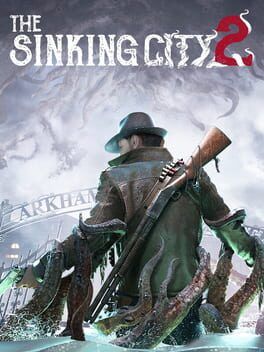
Review

By Night Owl
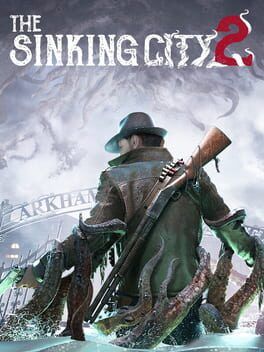
Image: IGDB
Store links: The Sinking City 2 on Steam
Frogwares trades detective sprawl for survival horror pressure
The clearest fact about The Sinking City 2 is also the tension at the center of this review: Frogwares has made a standalone sequel that largely steps away from the investigative open-world identity that defined The Sinking City and its Sherlock Holmes work. Push Square reports that the Ukrainian studio has thrown out most of the Mind Palace-led detective framework for a more linear survival horror structure built around combat, puzzles, resource management, and save rooms. PC Gamer frames the shift even more sharply, arguing that the first game’s open world outstayed its welcome, while the sequel moves on from the city sooner than expected.
That is a risky change for a studio whose recent reputation is tied to clue-gathering, deduction, and the friction of piecing together a case. The first Sinking City was remembered as ambitious and uneven, with Bloody Disgusting pointing to budget limits, overreach, and a prolonged legal battle with the original publisher as part of its troubled history. The sequel arrives with Frogwares listed as both developer and publisher by PC Gamer and CGMagazine, and the available reviews describe a game that has chosen focus over breadth.
The result, based on the supplied critical material, is a much stronger horror game than the first Sinking City, although not a flawless one. The Sinking City 2 gameplay is closer to a Resident Evil and Silent Hill template than a freeform detective RPG. Push Square calls it an “admirable” lighter version of that formula, with sound combat, exploration, and puzzles. GamesRadar+ goes further, saying the Lovecraftian elements add well to survival horror and that the game can stand alongside modern genre peers when its shocks and spatial pressure click.
For buyers searching for a The Sinking City 2 review, the practical answer is this: the sequel succeeds most when judged as a focused Lovecraft horror game rather than as a direct continuation of the first game’s investigative promise. If you wanted a denser Mind Palace sequel, this may feel like Frogwares abandoning its most recognizable tool. If you wanted flooded streets, strained supplies, uncertain rooms, and eldritch rot pressing in from every doorway, the pivot appears to have paid off.
Arkham gives the sequel its strongest horror identity
The city is the star here, and several outlets agree on that point even when they differ on the sequel’s rough edges. The Sinking City 2 is set in 1920s Arkham, Massachusetts, where a supernatural flood has forced evacuations and left Calvin Rafferty moving through storm-wrecked spaces in search of a way to save Faye. Push Square notes that boat travel remains, but is far less pronounced than in the first game, serving mainly as transport between locations rather than the backbone of an open-world loop. CGMagazine similarly describes Arkham as having a large open feel while breaking the game into smaller, more digestible areas with some connectivity.
That structural decision is vital to the atmosphere. Horror often suffers when a world becomes too familiar or too padded. PC Gamer’s criticism of the first game was that repeated open-world patterns drained its mystery. The sequel’s smaller locations, as described by CGMagazine, avoid overstaying their welcome and preserve a feeling of dread before each new area. GamingBolt says Arkham’s desolation is handled well, presenting a city where danger feels close at all times.
The art direction supports that pressure. GamingBolt describes flooded streets, abandonment, limited color, and strong lighting and reflections, adding that even Performance Mode keeps reflections and lighting consistent enough to sell Arkham as a survival horror setting. That is one of the more concrete technical notes in the supplied material, and it matters for a horror game built around wet stone, black water, and the uncertainty of what is moving just outside the beam of safety.
The sequel’s Lovecraftian atmosphere appears less dependent on abstract cosmic dread than on immediate physical threat. Bloody Disgusting mentions dead bodies reanimated by eel-like creatures and waterlogged monsters. GamingBolt points to the Slither, parasitic beings that inhabit the dead and feed on nearby living people. The horror is fleshy, damp, and invasive. It is the kind of setting where a safe room matters because the rest of the city feels metabolized by something older and hungrier than its streets.
Combat works because resources make every shot feel expensive
The Sinking City 2’s combat does not sound revolutionary, and that may be the correct call. Push Square says the actual feel of combat is serviceable, neither impressive nor disappointing, but effective enough to support the survival horror loop. That same review emphasizes a small weapon selection and limited ammunition, repeatedly forcing the player to decide whether a shotgun shell is worth spending or whether retreat is the better survival tool.
GamesRadar+ gives the clearest picture of how that pressure feels in motion, describing a run back toward a safe room with a full inventory, dwindling ammunition, and more bloated undead appearing in half-flooded spaces than expected. That is classic survival horror arithmetic: space, bullets, healing, backtracking, and the awful knowledge that the route you cleared may not stay clear. Console Creatures also notes the addition of safe rooms and light inventory management, placing The Sinking City 2 firmly in the genre’s resource-pressure tradition.
As Raven “Night Owl” Cross would put it, the gun in a good horror game is rarely a power fantasy. It is a question with a muzzle. The sources suggest Frogwares understands that better here than it did in the first game’s more diluted structure. Calvin Rafferty is repeatedly described as less capable than a typical action-horror hero. GamingBolt contrasts him with Bloodborne’s Hunter, saying Calvin must rely on firearms and his limbs rather than agility or combat mastery. That vulnerability seems central to the sequel’s mood.
The weaknesses are equally important. Push Square cites poor enemy variety, and GamesRadar+ says gauntlets and bosses struggle to land. Those are meaningful caveats for anyone coming to The Sinking City 2 expecting combat to carry the whole experience. A limited bestiary can flatten fear once attack patterns become legible, and survival horror boss fights often expose combat systems that feel better in corridors than in arenas. Based on the source material, combat is a functional source of tension rather than the sequel’s standout craft. It works because ammo is scarce, rooms are hostile, and Calvin is no superhuman. It falters when the game asks its enemies to remain surprising for too long.
Investigation survives as puzzles, but the detective game is gone
The biggest tradeoff in this Frogwares horror sequel is investigation. Push Square states plainly that The Sinking City 2 is almost the reverse of the original: more linear, more combat and puzzle-focused, and without player actions affecting the story. For a studio long associated with Sherlock Holmes and deduction systems, that is a major identity shift. The Mind Palace, described by Push Square as a mechanic that connects clues and forms conclusions across Frogwares’ recent work, is no longer the organizing principle.
That does not mean the sequel has abandoned thinking. Push Square calls the puzzles a highlight, praising safe solutions, environmental searching, files, clue connection, and secrets that require probing the surroundings. Console Creatures says the game is not a detective title per se, but that an overarching mystery still keeps the player intrigued. GamingBolt describes Calvin as “no detective,” while still smart and tenacious enough to progress through Arkham’s threats.
This is where the sequel most cleanly separates itself from The Sinking City. The first game asked players to inhabit an investigator moving through a broad, flawed city. The sequel asks players to survive locations that contain investigative residue: notes, mechanisms, occult traces, locked paths, and environmental riddles. It is less about choosing conclusions and more about reading a room before the room kills you.
For some players, that will be a loss. If your favorite part of Frogwares’ design is weighing evidence and living with interpretive uncertainty, The Sinking City 2 sounds thinner in agency. Push Square’s note that actions do not affect the story is especially relevant. But within the survival horror frame, the change appears to strengthen pacing. The puzzle layer gives Arkham texture without pulling the game back into the first title’s wider, more repetitive open-world demands. The investigation has become tactile rather than procedural. You are still examining horror, but now with one eye on the door and the other on your remaining ammunition.
Calvin and Faye give the cosmic threat a human pulse
The story is described across sources as straightforward, but effective because of its central relationship. The Sinking City 2 follows Calvin Rafferty as he tries to save Faye after an occult ritual goes wrong. CGMagazine identifies Faye as Faye Bennet and says her soul becomes separated from her body, trapped in the Sleeping World. Console Creatures describes her consciousness as residing in an enchanted mask Calvin carries. GamingBolt names the artifact the Night Shade Mask and says flashbacks help sell the bond between Calvin and Faye.
That relationship seems to be the sequel’s emotional anchor. Console Creatures calls the game a Lovecraftian love story and says the pacing is strong, even if the ending left the reviewer somewhat baffled. CGMagazine says Calvin and Faye’s relationship has heart and playfulness, helping their occult-romantic premise feel genuine. GamingBolt says Faye is largely out of the picture after the ritual, but the flashbacks give Calvin’s motivation enough weight to keep him from feeling like a rogue without a cause.
This matters because Lovecraftian games often drown their characters beneath lore. The Sinking City 2 appears to avoid that by letting the cosmic catastrophe press against a simple personal motive: save Faye, escape Arkham, survive what the flood has brought in. Bloody Disgusting also frames the sequel as a standalone adventure rather than a direct continuation of the first game, which should help new players enter without studying the original’s cases.
There are presentation issues. Push Square reports stiff facial and voice performances, which could undercut a story so dependent on intimacy and dread. But the broader source consensus suggests the writing and relationship work better than the animation and delivery. For a Lovecraft horror game, that is a survivable flaw. Cosmic horror needs scale, but playable horror needs a pulse. Calvin’s attachment to Faye gives the sequel a reason to keep walking into Arkham’s flooded dark.
Performance, price, platforms, and whether to wait
The confirmed practical details in the supplied sources are useful but incomplete. PC Gamer lists The Sinking City 2 as out on August 18, with Frogwares as developer and publisher, single-player only, and an expected price of £41.35 or $50. CGMagazine lists the PS5 MSRP at $49.99 and the release date as 08/18/2026. The review coverage provided includes PS5 via Push Square and CGMagazine, Windows PC via PC Gamer, and Xbox Series X via TheXboxHub’s review category. Steam Deck support is listed by PC Gamer as unknown.
On performance, the strongest specific claim comes from GamingBolt, which says Performance Mode preserves consistent lighting and reflections. PC Gamer lists its review hardware as Windows 11 with an Intel Core i9, 32GB RAM, and an Nvidia RTX 4060, but the supplied excerpt does not include a broader technical verdict. Because the source material does not provide detailed frame-rate measurements, PC requirements, or console mode targets, those should be treated as unanswered at this stage rather than assumed.
The buying advice is clearer on audience fit. If you are searching for a Sinking City 2 PS5 review because you liked the first game’s detective scaffolding, expect a leaner, more directed sequel with less systemic investigation. If you want a Lovecraftian survival horror game with flooded environments, safe-room relief, limited resources, occult puzzles, and a more vulnerable protagonist, the available reviews strongly indicate that Frogwares has made its most confident horror release to date.
The wait-or-buy question depends on tolerance for mid-budget roughness. Push Square flags stiff performances and weak enemy variety. GamesRadar+ points to bosses, gauntlets, disconnected areas, and a duller final stretch as drawbacks. Those are not tiny concerns, especially in a genre where repetition can poison fear. Still, the critical throughline is positive: atmosphere, pacing, puzzles, and resource pressure carry the experience. Our source-grounded score reflects that balance. The Sinking City 2 succeeds as a full horror pivot, even if its monsters and combat encounters do not always match the strength of Arkham itself.
Final Verdict
A solid gaming experience that delivers on its promises and provides hours of entertainment.