
Review

By Story Mode
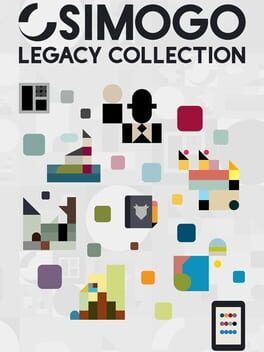
For most people who discovered Simogo through Sayonara Wild Hearts or Lorelei and the Laser Eyes, the studio’s earlier work has been more rumor than reality. Out‑of‑date iOS builds, missing from storefronts, awkward on modern phones: the games that built Simogo’s reputation became harder to actually play. Simogo Legacy Collection fixes that, bundling seven of those early titles on Switch, Switch 2, and PC, with careful ports that respect both their touch‑centric origins and their oddball spirit.
This is less a “remaster” compilation and more a preservation project with smart modern touches. The visual refresh is tasteful, loading is snappy across all platforms, and the new control schemes mostly walk the thin line between honoring the original feel and not making you reach for phantom touchscreens. As an anthology, it is uneven in that very Simogo way, but when it hits, it still feels startlingly modern in 2025.
The Lineup and What Holds Up Best
The collection gathers seven games spanning Simogo’s pre‑Sayonara years. The headliners are still Device 6, Year Walk, and The Sailor’s Dream, flanked by smaller curios like The Sensational December Machine and Simogo’s more traditional, score‑chasing arcade experiments.
Device 6 is the clear standout in 2025. On mobile it was a revelation; on a big screen it feels like an interactive thriller novel has exploded across your monitor. Text wraps and curls around the environment as you walk, turning pages into corridors and typography into level design. On Switch and PC, that trick still works beautifully. The new stick‑based navigation is sharp and surprisingly natural, with shoulder buttons letting you snap between branches of text. Gyro aiming for certain puzzles is optional and best left on. Reading on a television is never ideal, but the developers have added larger text size options and higher contrast modes that keep long sessions comfortable. It remains the most essential game in the collection, a connective tissue between the structural experiments of these early titles and the layered puzzle boxes of Lorelei and the Laser Eyes.
Year Walk is the one that gains the most from the new platforms. Its bleak Scandinavian forests and folkloric horror felt cramped on a phone. Dock a Switch or sit at a PC in a dark room and the game’s quiet becomes oppressive. The higher resolution and stable framerate clean up the original’s slightly muddy look without sanding off its lo‑fi charm. Movement on a stick is smoother than the old swipe navigation and the developers added a gentle snap when aligning with interactive objects that makes some of the fiddlier puzzles more bearable. The companion “encyclopedia” that originally lived as a separate app is now integrated into the main package, which makes research puzzles significantly less clunky. As a mood piece and as a straightforward puzzle adventure, Year Walk holds up astonishingly well.
The Sailor’s Dream remains divisive, but time has been kind. It is more interactive collage than game, about drifting through story fragments and songs on a sea of melancholia. There is very little “gameplay” in the traditional sense, yet the Switch and PC ports make the act of drifting feel easier to inhabit. Analog movement and subtle rumble as waves lap against the shore give it a delicate physicality it never had on glass. The widescreen presentation also does wonders for the hand‑drawn environments. For anyone who fell for Sayonara’s lyrical side or Lorelei’s bruised sentimentality beneath the logic, The Sailor’s Dream is worth the time, provided you meet it on its own terms.
The Sensational December Machine is a quieter gem that benefits from being rescued from mobile limbo. It plays like a short interactive storybook about a village, a machine, and belief in impossible things. Mechanically it is slight, but the port’s crisp typography and gentle controller rumble elevate what was already a smart, self‑contained narrative trick. In 2025, its earnestness and brevity are almost refreshing.
The remaining arcade‑leaning titles are the least essential, but they are not dead weight. Their chunky art and simple mechanics feel a bit like prototypes for the rhythm and motion instincts that would blossom in Sayonara Wild Hearts. They play fine with a stick or D‑pad, and the higher resolution graphics keep them from feeling like blown‑up phone toys, but they do not linger in the mind the way the narrative experiments do.
Controls and Port Quality on Modern Hardware
Across all three platforms, the collection is handled with more care than many prestige compilations.
On Switch, portable play is the sweet spot. The entire package supports both button controls and touchscreen. Device 6 in particular feels excellent here. You can snap text along with the stick, then instinctively reach out to spin a dial or drag a slider. Touch precision is tight and loads are nearly instant. Docked, the games read well enough on a TV, but the intimacy of these stories naturally leans toward handheld play.
Switch 2 does not reinvent the experience, but the extra horsepower cuts what few loading hitches remain. The sharper screen and improved color reproduction make Year Walk’s whites harsher and its blacks deeper, which amps up the horror. The new system’s rumble is also used tastefully, giving you subtle feedback during key discoveries rather than constant buzzing.
On PC, mouse and keyboard are the default and often the best way to play. Scrolling through Device 6’s twisting text or pointing at environmental details in Year Walk mimics the old touch controls more directly than a controller ever could. Wide monitors let Simogo’s meticulous layouts breathe, and the collection supports ultrawide without ugly stretching. Controller support is robust and fully remappable, but you can tell the PC version was built with pointer input in mind. That said, the team thankfully resisted the urge to cram in UI chrome or tutorial noise. The interfaces stay clean and focused, just scaled to modern resolutions.
Technically, the ports are sound. I ran into no crashes, no save corruption, and no catastrophic audio issues. Fonts scale well across handheld and desktop, and the audio mix has been tuned so that whispers and ambient creaks are audible without blowing out the haunting music. The only real misstep is that some of the earliest, score‑chasing games still feel a bit floaty on a stick compared with the hard, digital feel of raw touch taps, and there is no option to tweak input response curves beyond basic sensitivity. It is a minor complaint in an otherwise strong preservation effort.
Why These Games Matter After Sayonara and Lorelei
If you loved Sayonara Wild Hearts or Lorelei and the Laser Eyes, the Legacy Collection is essentially the missing chapter of Simogo’s story. You can see the seeds of both games scattered everywhere.
Device 6 experiments with spatial narrative in a way that directly anticipates Lorelei’s layered mansion and its puzzles about reading spaces as texts. It is playful, meta, and occasionally cruel, but never smug. There is the same interest in how you, the player, move through information and how the act of looking becomes part of the puzzle. Lorelei refined those ideas into a dense, systemic labyrinth. Device 6 is the raw, showier draft.
Year Walk and The Sailor’s Dream, meanwhile, sketch out the emotional arc that runs through Sayonara Wild Hearts. Both are obsessed with loss, ritual, and the ghosts we carry, even if they express that through slow exploration rather than high‑velocity rhythm. The way Sayonara cuts from setpiece to setpiece like a greatest hits album of feelings suddenly makes more sense after you wander through Sailor’s overlapping timelines or piece together Year Walk’s cyclical tragedy.
Viewed together in 2025, these seven games make a case for Simogo as one of the most consistent experimenters in interactive storytelling. Not every trick lands, and not every relic here will grab you if you come in expecting the neon spectacle of Sayonara or the dense puzzle‑box of Lorelei. But even the weaker entries are interesting failures, the sort of rough drafts most studios would never let anyone see. The anthology format invites you to trace motifs, obsessions, and formal gambles across half a decade of work.
Verdict
As a package, Simogo Legacy Collection is much more than a dusted‑off set of mobile ports. It is a thoughtfully curated archive that finally makes some of the most influential indie experiments of the early 2010s easily playable again, and it does so without compromising their character.
Device 6 and Year Walk remain essential in 2025 and are worth the price of admission on their own. The Sailor’s Dream and The Sensational December Machine are smaller, stranger pieces that land harder now that they are no longer stranded on aging phones. The arcade‑style titles are curios, but they round out a portrait of a studio teaching itself how to play with form.
If you bounced off Sayonara Wild Hearts or Lorelei and the Laser Eyes, this collection will not change your mind about Simogo. But if you were captivated by either game and wondered where that sensibility came from, this anthology is a quiet triumph, and one of the most important preservation‑minded releases on Switch, Switch 2, and PC this decade.
Final Verdict
A solid gaming experience that delivers on its promises and provides hours of entertainment.