
Review

By Night Owl
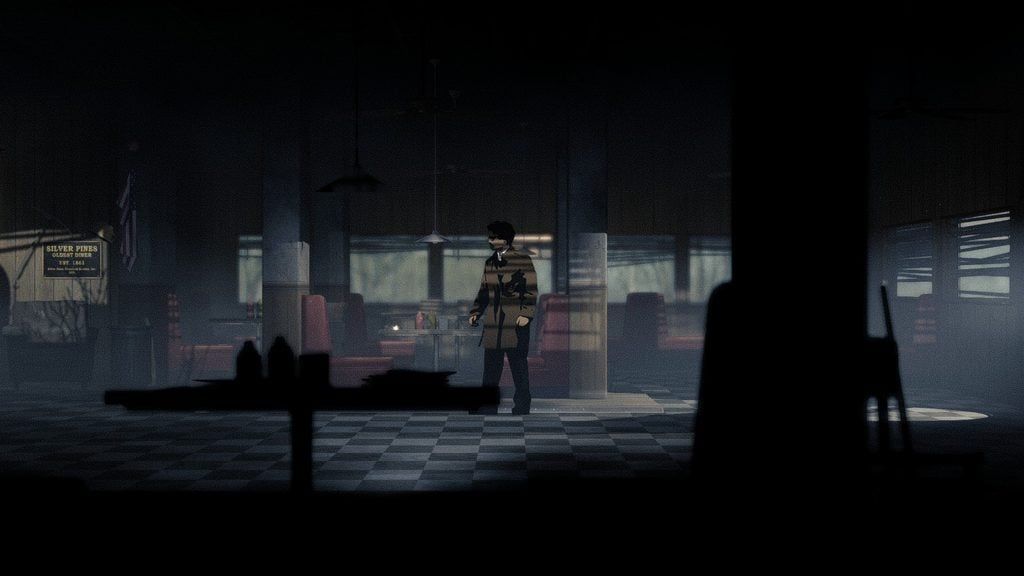
Image: checkpointgaming.net
A strong debut with a difficult ascent
Silver Pines arrived on Oct. 8, 2026, according to Metacritic and OpenCritic listings, and the early critical picture is unusually clear for a debut horror game: Wych Elm's first release has landed as a broadly liked survival horror hybrid, while still carrying enough rough edges to make the climb uneven. Metacritic lists the PC version as “Generally Favorable” based on 18 critic reviews, while OpenCritic shows 29 critic reviews and highlights scores ranging from GamingBolt's 8 out of 10 to CGMagazine's 10 out of 10.
That consensus creates the central tension of this Silver Pines review. The game has been praised across outlets for its atmosphere, mystery, and exploration, but the same source material repeatedly flags frictions that matter in horror: obtuse clue chains, boss fights that can feel janky, enemy designs that do not always linger in the mind, and a story that some reviewers say withholds more than it resolves.
The result is a game that earns its reputation as one of 2026's notable indie horror releases, especially for players drawn to Silent Hill, Resident Evil, Twin Peaks, and David Lynch comparisons. It also asks for patience. Silver Pines is at its best when it lets the town breathe, when a locked door, a scrawled clue, and a distant threat all point you deeper into the rot. It is weaker when the machinery of backtracking and encounter design becomes visible.
The case of Red Walker and Eddie Velvet gives the town its hook
The confirmed premise is clean and effective. As summarized by Metacritic and expanded by GamingBolt, Silver Pines follows private investigator Red Walker after he finds himself in the half-abandoned, half-forgotten town of Silver Pines while tracking Eddie Velvet, a vanished musician. GamingBolt adds a sharper early detail: Red wakes with only the knowledge that his job is to find and kill Eddie Velvet, even though he does not know what Velvet looks like, and his only outside contact appears to come through payphones with the suspicious man who hired him.
That setup gives Silver Pines the right kind of horror pressure. Red is not entering the town as a prepared exorcist or a heavily armed cleanup crew. He is a detective with a fractured mission, a missing target, and a setting that seems to know more about him than he knows about it. Insider Gaming describes him as a grizzled detective sent into town amid a region-wide evacuation, while also noting that the game quickly introduces increasingly delirious scenes that call Red's sanity into question.
The Lynch comparisons made by TheXboxHub, DualShockers via OpenCritic, and GamesRadar+ are easy to understand from the cited material: strange Americana, dream logic, an abandoned town, a musician at the center of the case, and a detective narrative that bends inward. The story's issue is not the premise. It is momentum. GamingBolt says the story does not quite hit the “third gear” common in the genre, and GamesRadar+ lists “I need answers” as a reason to avoid. For some players, that lingering uncertainty will feel like the proper residue of a nightmare. For others, it may feel like the summit disappears into fog just when the climb should pay off.
Silver Pines gameplay is strongest when the town becomes the puzzle
The best argument for Silver Pines is its structure. Multiple sources describe it as a survival horror Metroidvania, with GamingBolt also pointing to old-school adventure-game puzzle design. That combination is the game's identity. Streets, buildings, alleys, locked doors, codes, keys, shortcuts, and sealed paths form a town that is meant to be read as much as traversed.
GamingBolt's account of the level design is especially useful for buyers wondering how the Silver Pines gameplay loop actually works. The outlet describes interconnected buildings, streets, and alleyways divided by locked doors, key gates, and codes. Clues are scattered through the world, sometimes in handwritten notes and sometimes in background art. One early apartment puzzle, according to GamingBolt, uses room numbers in place of digits for a four-digit lock, requiring players to connect clues from around the building before the answer clicks.
That kind of puzzle design is exactly where Silver Pines sounds most confident. Horror is often at its most effective when the player is forced to slow down, look closely, and become anxious about what they missed. The risk, and GamingBolt calls this out directly, is that the clues can be obtuse and that the game allows players to wander too much too quickly. That is a meaningful criticism, because survival horror backtracking only works when uncertainty feels authored rather than accidental.
Still, the balance appears to land more often than it slips. The Games Machine, quoted on Metacritic, praises exploration through shortcuts, secret passages, and tools that open routes in previously visited areas. TheSixthAxis, via OpenCritic, says the town is full of hidden secrets and enigmatic mysteries. If you want a horror game that rewards taking notes, rechecking rooms, and treating a map like a crime scene, Silver Pines is built for that appetite.
Survival pressure is present, though the monsters are not the whole fear
As a horror game, Silver Pines seems more interested in pressure than spectacle. The Games Machine's Metacritic excerpt highlights the survival layer clearly: few resources, limited inventory, slow reloads, aiming without a crosshair, and combat where mistakes count. Those details matter. Limited inventory turns every pickup into a question. Slow reloads make distance feel precious. Removing a crosshair forces uncertainty into each shot rather than letting combat become clean routine.
This is where Silver Pines most directly follows the survival horror lineage that GamingBolt connects to Silent Hill and that Metacritic's Meristation excerpt connects to early Silent Hill and Resident Evil. Scarcity and awkwardness are not flaws by default in this genre. They are part of the design language, provided the game keeps encounters readable and fair.
The concern is consistency. GamesRadar+ praises the game as compelling and hard to put down, but lists boss fights as “a little janky.” The Games Machine also says some scripted encounters are less successful and that enemy designs are not always memorable. PlayStation Universe's OpenCritic excerpt adds another angle, saying the horror elements may not weigh very heavily on the experience, even though they help build intrigue for exploration.
That paints a specific picture: Silver Pines is unlikely to satisfy players who judge horror primarily by enemy roster, combat depth, or boss polish. Its fear appears to come from vulnerability, town layout, audiovisual unease, and the detective's mental collapse. When combat supports that mood, the game tightens. When it asks bosses or scripted encounters to carry the pressure, the spell can thin.
Style, sound, and performance help sell the unease
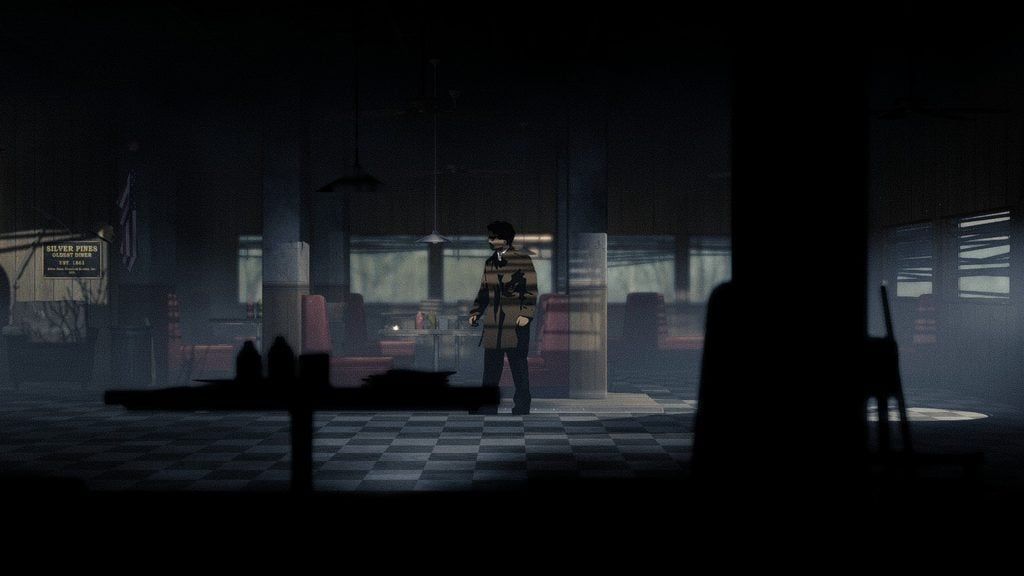
The most consistent praise across the source material is atmospheric. GamesRadar+ calls Silver Pines stylish from top to bottom and points to painterly visuals that contrast with the grim setting. Insider Gaming describes retro-themed presentation and animation that feels almost rotoscoped. TheXboxHub praises the game's visuals, sound design, atmosphere, storytelling, and performances in its review summary, framing it as a 4 out of 5 Xbox Series X review.
Those are not cosmetic details for a game like this. In a mountain-town mystery built around abandonment and disorientation, visual identity and audio restraint are part of the survival toolset. The town needs to feel coherent enough to navigate and wrong enough to distrust. The cited reviews suggest Silver Pines understands that balance, especially when the camera, art, and audio are working with the puzzle structure rather than against it.
Performance reporting is more limited in the provided material, so the confirmed claim is narrow: GamesRadar+ says Silver Pines runs great on Steam Deck. Metacritic lists critic coverage across PC, Xbox Series X, PlayStation 5, and Nintendo Switch 2, while TheXboxHub specifically reviewed the Xbox Series X version. That makes the game broadly available according to aggregator listings, but the provided sources do not include official technical specifications, resolution targets, frame-rate modes, or patch notes.
There is also a small pricing wrinkle. Metacritic's “Where to Buy” box shows Fanatical selling the game at $18.74 with a $24.99 crossed-out price, while Insider Gaming describes it as having “decent meat on the bones for $30.” Those figures may reflect storefront differences, regional pricing, discount timing, or rounded language. Without an official store listing in the supplied material, the safest buyer guidance is to check your platform storefront before purchase rather than assume one universal MSRP.
Verdict: a memorable mystery with fog around the peak
Silver Pines succeeds because its strongest pieces pull in the same direction. Red Walker's case gives the game a clean noir hook. The abandoned town gives that case a hostile geography. The Metroidvania structure turns locked doors and blocked paths into dread rather than simple errands. The survival systems, as described by The Games Machine, add enough friction to make movement and combat feel hazardous. The visual and audio praise from GamesRadar+ and TheXboxHub suggests Wych Elm knows how to hold an uneasy mood.
The weaknesses are real, and they cluster around momentum. If you have little patience for obscure clues, Silver Pines may frustrate you before it frightens you. If you want horror driven by iconic monsters and polished boss fights, the cited criticism from GamesRadar+ and The Games Machine should give you pause. If you need clean narrative closure, the comments from GamingBolt and GamesRadar+ suggest the ending stretch may leave some doors emotionally unlocked.
For the right player, though, those caveats are survivable. Silver Pines is an easy recommendation for fans of atmospheric survival horror, detective mysteries, and exploration-heavy horror games that trust the player to connect clues. It is a more cautious recommendation for action-first players, completionists who dislike getting lost, or anyone allergic to backtracking.
GameLoop score: 8.2 out of 10. Silver Pines does turn its mountain-town mystery and uneasy atmosphere into a memorable narrative horror experience, even if the route to the peak sometimes loses footing in clue clarity, encounter design, and unresolved story tension.
Final Verdict
A solid gaming experience that delivers on its promises and provides hours of entertainment.