
Review

By Night Owl
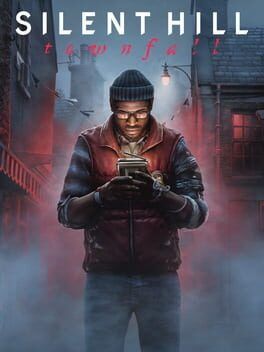
Image: IGDB
Store links: Silent Hill: Townfall on Steam
A full Silent Hill in first person changes the room temperature
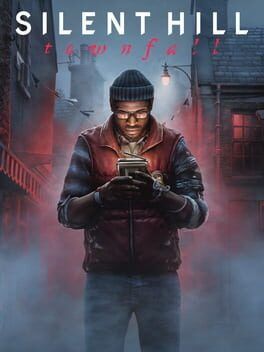
The most consequential change in Silent Hill: Townfall is confirmed by PlayStation Blog’s launch coverage: this is the first full Silent Hill experience built around seeing the horror through its protagonist’s eyes. Silent Hill 4: The Room and Silent Hill: The Short Message experimented with first-person sequences, but Townfall commits to the perspective across its broader structure, placing Simon Ordell inside the fog-choked Scottish coastal town of St. Amelia on PS5.
That single shift changes the practical feel of Silent Hill more than its premise does. The sources agree on the broad setup: Simon arrives, or wakes, in St. Amelia with little clarity about why he is there, while protest material, healthcare references, and signs of corporate pressure around Chapman Energy Group suggest a town damaged before the monsters ever enter the frame. PlayStation LifeStyle describes an American Simon Ordell arriving at the docks after being summoned to “put things right,” while Console Creatures says he wakes on a pier with an IV in his hand and no memory of how he got there. Those are slightly different phrasings of the same disorienting opening, and that uncertainty suits the game.
The first-person view makes that uncertainty physical. You cannot see Simon’s body language from a safe remove, and you cannot use a pulled-back camera to read a hallway before committing to it. PlayStation Blog notes that Townfall also uses a 2.35:1 aspect ratio, widening the image while reducing vertical visibility. In practice, that gives the game a squeezed, cinematic unease. It is useful for dread and occasionally hostile to comfort, because threats from the side or behind gain power simply because the player cannot survey the room the way older Silent Hill games often allowed.
This Silent Hill Townfall PS5 review comes down to whether that trade works. For most of the journey, it does. Townfall feels like a deliberate survival horror game rather than a novelty camera experiment. Its early reception across the supplied reviews is broadly positive, with Game Rant calling the first-person transition a success, Push Square describing it as a solid entry with familiar Silent Hill hallmarks, and CGMagazine landing lower at a 7 due to late-game friction. That spread captures the game’s shape: immediate, atmospheric, and often frightening, but less clean once its systems start repeating under pressure.
St. Amelia is the game’s strongest monster
Townfall’s move away from the American Silent Hill setting is not treated as a vacation. St. Amelia is reported across the sources as a Scottish seaside or fishing community, emptied out and smothered in fog. Push Square’s review highlights the beachfront, town square, housing estate, and lived-in homes, while PlayStation LifeStyle praises the compact apartments, alleys, side streets, and mixed-use zoning as a convincing portrait of a seaside Scottish town. Creative Bloq frames the place as grounded by Silent Hill standards, which is exactly why it bites.
This is where Screen Burn’s background becomes important. Push Square identifies the developer as Screen Burn, formerly No Code, the Scottish studio associated with Observation. Other supplied sources use Screen Burn Interactive. The attribution is consistent enough on the creative lead even if the full company phrasing varies. The town’s texture, according to multiple reviews, comes from mundane objects left in convincing places: shops, telephone boxes, cupboards, drawers, kitchens, notes, emails, regulatory notices, protest signs, and local displays.
That density gives Townfall’s exploration a stronger purpose than simple item hunting. The story is not fed primarily through long exposition scenes in the early hours. PlayStation LifeStyle specifically says the game drip-feeds information through environmental material, while Console Creatures describes the revelations as jarring and disjointed enough to keep players unsettled. The result is a town that asks you to investigate without ever letting you feel like a tourist.
Silent Hill’s best spaces have always made ordinary architecture feel contaminated by private guilt or public rot. Townfall’s best trick is that St. Amelia’s public story and Simon’s private confusion overlap without instantly solving each other. The protest signs and healthcare strain suggest a civic disaster. Simon’s memory gaps suggest a personal one. The fog sits between them. That gives the game an effective psychological spine even before combat starts.
The CRTV is a smart answer to the missing radio
Townfall’s most distinctive tool is the CRTV, a handheld television that functions partly like the classic Silent Hill radio and partly like an investigative device. PlayStation Blog says players can hold it up with L1, tune to frequencies, see nearby enemy positions, and receive a DualSense haptic pulse when a new enemy is near. PlayStation LifeStyle describes it as a handheld TV that also doubles as a radio, showing fuzzy but usable video for progress and danger avoidance. Push Square adds that it displays plot-centric videos, guidance clues, and enemy locations.
That is a strong mechanical fit for the Silent Hill Townfall first person angle. A radio’s static can warn you while you keep looking ahead. The CRTV asks for attention. You are holding a little screen in the middle of a larger nightmare, trying to interpret a signal while St. Amelia presses in from the edges. In first person, that creates a dangerous rhythm: look at the device, look through the fog, check the map, listen, move, second-guess yourself.
The best use of the CRTV is navigational pressure. It supports puzzles through frequency clues, directs Simon through distorted video, and gives players a reason to slow down in spaces they would rather sprint through. It also helps Townfall avoid feeling like a passive horror walk. Game Rant pushes back directly on concerns that Townfall would be a walking simulator, citing melee weapons, guns, limited resources, stealth, puzzles, and combat encounters. Based on the source material, that concern can be put aside.
The device is less successful when it starts to feel like a keyring for every problem. Push Square notes that the more Townfall goes on, the less important some of its distinctive features become. Creative Bloq and CGMagazine both raise puzzle or design frustrations, with Creative Bloq citing puzzle and visual annoyances and CGMagazine pointing to late-game friction. The CRTV remains a clever horror object, but the game occasionally asks it to carry too much of the player’s mental workload.
Combat has teeth because survival is rarely clean
Townfall’s first-person combat is not built around empowerment. PlayStation Blog describes melee encounters where monsters throw themselves toward the player’s face and the player blocks with flimsy objects before striking back. Game Rant reports that Simon can find boards, metal pipes, and eventually guns, but warns that even weaker enemies can kill him quickly, weapons can break, healing supplies are scarce, and ammunition is hard to come by.
That resource pressure is the right kind of ugly. Silent Hill protagonists should feel capable enough to survive a room, not capable enough to own it. Townfall appears to understand that balance. Creative Bloq even argues that its combat feels among the best the series has had in recent memory, while still criticizing enemy variety. That combination tracks: the act of fighting can be satisfying even when the roster loses surprise.
Stealth is the more divisive layer. PlayStation Blog explains that players can crouch behind fences, signs, parked cars, and other cover with Circle, then lean or peek using R1 and the right stick. Game Rant calls the stealth mechanics hit or miss, saying they can rely on familiar distraction and crouch-walking routines, though they sometimes raise the stakes effectively. That is the tension at the heart of Townfall’s survival design. Hiding works because first person narrows awareness. Hiding frustrates when enemy behavior or encounter layouts become too legible.
The monsters themselves seem to leave a mixed impression across reviews. Game Rant describes relentless enemies, including one that opens a door after the player thinks they have escaped. Creative Bloq, by contrast, lists lack of enemy variety among its main negatives and calls some enemy design boring. I land between those readings. Townfall’s enemies are threatening in motion, especially when heard before seen, but early fear depends heavily on uncertainty. Once the game has shown too much of its hand, repetition dulls the blade.
The horror works best when it lets the town breathe
The strongest sections of Townfall are reported as exploratory rather than purely combative. Push Square singles out the beginning, when Simon moves through deserted streets, local shops, and homes that feel recently occupied. Console Creatures describes hearing the town creak and groan in the absence of people. Those details matter in a first-person horror game because the camera turns every doorway into a choice and every domestic object into possible evidence.
Audio appears to be one of the quiet winners. The supplied material does not offer a full technical audio breakdown, but the recurring details are strong: the CRTV’s cues, the traditional radio-like warning function, DualSense haptics noted by PlayStation Blog, and environmental sound described by Console Creatures. Townfall’s fear is not limited to jump timing. It lives in the gap between a signal and an encounter, between a groan in the building and the moment you decide whether to keep searching drawers for healing supplies.
The first-person perspective also changes the Otherworld. Console Creatures says entering the Otherworld is creepier in first person because players cannot look around by tilting a detached camera. That is a simple observation, but it gets to the core of this game’s identity. Townfall removes a familiar buffer. The player does not watch Simon suffer from three feet behind him. The player absorbs the distortion at eye level.
Story clarity seems stronger than recent series experiments for some critics. Creative Bloq says Townfall’s story is easier to follow than Silent Hill f, while CGMagazine describes it as a story of grief, loss, and regret rather than an obvious return to cult mythology. CGMagazine also notes that, from its reviewer’s playthrough, Townfall does not appear connected to the titular town on the surface. That could bother players who want every Silent Hill entry lashed tightly to the old map. It did not bother me. The brand’s psychological language survives the relocation, and St. Amelia has enough specific damage to justify the journey.
Practical buying advice: platforms, price, length, and source conflicts
For players deciding whether to buy Silent Hill: Townfall on PS5, the confirmed practical picture in the supplied material is mostly clear, with a few conflicts worth flagging. Creative Bloq lists the formats as PS5 and Xbox Series X|S, with PS5 reviewed. CGMagazine lists PS5 as the played platform and gives an MSRP of $49.99. Creative Bloq says the game was made in Unreal Engine 5.
Release timing is less clean across the provided reviews. CGMagazine lists a release date of 09/20/2026, while Creative Bloq lists 24 September. The reviews themselves are dated September 21, 2026. Because those source dates conflict, buyers should confirm the current PlayStation Store listing in their region before making plans around a specific availability date.
Publisher attribution also conflicts in the supplied source material. CGMagazine lists Annapurna Interactive as publisher, while Creative Bloq lists Konami. Other coverage frames Townfall within Konami’s Silent Hill revival and identifies Screen Burn as the developer. The safest sourced statement is that Silent Hill: Townfall is a Konami franchise entry developed by Screen Burn, with supplied outlets disagreeing on the publisher credit.
Length estimates vary sharply. Push Square says the structure carries the game through roughly 10 hours, while Console Creatures describes a mostly chilling experience spanning 20 hours. CGMagazine says its reviewer finished the game and spent time with New Game+. Those differences likely depend on difficulty, optional exploration, puzzle friction, and post-game play, but the available sources do not give enough detail to reconcile them. Expect a focused horror game rather than an open-ended one, and expect your time to stretch if you comb homes and side spaces for clues.
Performance is not the recurring concern in the provided reviews. The repeated criticisms are puzzle frustration, visual annoyances, lack of enemy variety, stealth unevenness, and late-game friction. If you are waiting for technical warnings, the supplied material does not identify PS5 instability as the central issue. If you are sensitive to first-person horror, restricted aspect ratios, or stealth repetition, those are the concerns to weigh.
Verdict: a strong reception earned with caveats
Silent Hill: Townfall earns much of its early praise because it understands what the first-person shift should do. It does not simply place the camera behind Simon’s eyes and call that intimacy. It builds around restricted sightlines, a signal-based CRTV, close-range melee panic, stealth routes, scarce resources, and a town that tells on itself through paperwork, protest signs, abandoned homes, and bad civic memory.
Its weaknesses are equally clear. The stealth can feel overused. Enemy variety does not appear to match the strength of the atmosphere. Puzzle and late-game design friction show up in multiple reviews, especially from CGMagazine and Creative Bloq. Townfall is at its best when it lets St. Amelia rot slowly around you; it is less persuasive when it leans too hard on repeated systems.
For Silent Hill fans, this is an easy recommendation with expectations set correctly. It is a proper Silent Hill horror game in first person, not a side experiment disguised as a main course. For newcomers searching Silent Hill Townfall horror game before buying, the pitch is also clean: play it if you want oppressive exploration, resource anxiety, and psychological unease over action spectacle. Wait for a sale if puzzle frustration, limited enemy variety, or first-person stealth are deal breakers.
Townfall does not replace the older camera language of Silent Hill. It proves the series can survive without it.
Final Verdict
A solid gaming experience that delivers on its promises and provides hours of entertainment.