
Review

By Headshot
A promising desert mirage, not yet a true oasis
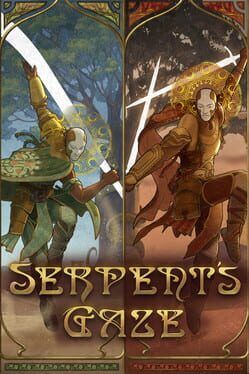
Serpent’s Gaze bills itself as a co-op Souls-like with roguelike build-crafting, all set in a cursed desert ruled by an ancient serpent deity. After several hours with the Steam demo on PC, it’s clear the team understands the surface-level appeal of FromSoftware’s design: brutal melee, weighty animations, and a hostile world. What is less clear is whether the underlying systems can support that pitch for dozens of hours.
The demo is a vertical slice that runs about two to four hours depending on your learning curve. I ran it multiple times solo and in co-op, trying different weapon types and passive “aspects” to test how deep the build-crafting and roguelike loops really go.
Combat feel: closer to AA indie Souls-like than FromSoft
If you come straight from Elden Ring or Lies of P, Serpent’s Gaze will feel rough around the edges, but it does land a few key fundamentals. Attacks have clear wind-up and recovery, dodge rolls cost a meaningful chunk of stamina, and enemies hit hard enough that two mistakes can erase your health bar. The tempo sits somewhere between Dark Souls 3 and Remnant 2, slightly slower, with more animation commitment on heavy swings.
Input buffering is present but not perfectly tuned. On mouse and keyboard, I could occasionally feel the game queue an extra light attack I did not want after a panic click, which can be fatal in early encounters. On controller, the timing felt more predictable, though the default dead zone on the right stick is too generous, making camera adjustments imprecise during tense fights. The options menu does allow you to tweak sensitivity and a few assists, but not dead zones yet in this demo.
Where Serpent’s Gaze pleasantly surprised me is in hit feedback. Light weapons carve thin, bright arcs through the air, and a successful stagger produces a sharp, bassy crack of metal meeting bone. Enemies flinch convincingly, and critical follow-ups to exposed weak spots feel satisfying, if not quite up to the surgical precision of FromSoft’s ripostes. On the other hand, collision can be inconsistent when attacking on uneven terrain, especially around broken dunes and half-buried ruins. I had several swings clip through enemy ankles with no hit registered.
Enemy design in this slice is serviceable but not yet memorable. You mostly fight twisted desert cultists, skeletal guardians, and a few larger beast-like constructs. Their attack patterns are readable, and the game clearly wants you to learn spacing and timing instead of face-tanking. Still, they lack the psychological threat and layered patterns that define top-tier Souls-likes. The mini-boss at the end of the demo, a sand-swimming serpent knight, shows flashes of better design, with a multi-phase pattern that pushes you to swap between ranged and melee, but it wraps just as things start to get interesting.
Roguelike build-crafting: smart ideas, shallow pool
Serpent’s Gaze leans on roguelike structure to differentiate itself. Runs are framed as descents into a shifting desert tomb, with each expedition granting you serpentine “boons” and cursed relics that reshape your build. In practice, this means you choose between two or three buffs at certain altars, spend earned essences at short-term vendors, and unlock longer-term account-wide upgrades that subtly tweak your starting kit.
The good news is that the design intent is sound. Boons are not just bland percentage bumps. You get interesting conditional perks like extra bleed damage if you dodge through attacks, or temporary damage spikes when standing on corrupted sand patches. Some relics drastically alter playstyle, for example converting a slow two-handed mace into a life-stealing bruiser or turning your dodge into a short, risky blink that leaves a venom cloud.
The problem, at least in this demo, is repetition. After three or four full clears, I had seen nearly every boon and relic available in the slice. The synergies are there, but the pool is too small to encourage a lot of experimentation. Compared to Hades or even smaller-scale roguelites like Curse of the Dead Gods, the demo’s build variety feels more like a teasing proof of concept than a system you can lose a weekend to.
The underlying stats are also a little opaque. The game borrows Souls-style Strength, Dexterity, and Occult scaling, but tooltips are terse, and the demo does not give you a robust training area or enemy dummies to test breakpoints. Damage numbers can be toggled, yet without clearer explanations, crafting a precise status-heavy or crit-focused build is more guesswork than mastery.
Co-op systems: fun with friends, friction in the details
Serpent’s Gaze supports up to four players in co-op, clearly taking notes from both Dark Souls and modern indie co-op Souls-likes. The demo allows you to either host a run or join a friend’s, with progress carrying back some currency and unlocks to your own profile. In theory, that is the best of both worlds: you are helping your team, but your time always advances your own account.
In practice, the setup flow is clunky. There is no quick matchmaking in the demo, only direct invites via Steam. Once connected, latency was acceptable for me on a wired connection, with only occasional rubber-banding on enemy positions. Hit registration seemed fully server-authoritative: a blessing for cheater resistance, but it led to a few frustrating whiffs where my local client swore I had connected.
The co-op combat balance leans slightly too far in favor of zerging enemies. Health does scale with additional players, yet stagger and poise values do not appear to, which means two aggressive melee characters can stunlock many foes before they get their more interesting attacks off. Bosses are better tuned, with wider swings and more area denial tools, though friendly fire is disabled, so you never get that thrilling terror of accidentally clipping an ally in tight quarters the way you might in a more hardcore design.
On the positive side, roles emerge naturally from the build system. One of my more enjoyable runs paired a heavy shield user with a venom wizard leaning on damage-over-time, while a third player stacked healing boons and support auras. When the game stops throwing trash mobs at you and instead serves up mixed groups of elites, this loose trinity begins to shine. It is a strong foundation that would benefit from clearer communication tools and a few co-op specific boons that reference ally positioning or shared resources.
Comparing to FromSoft and the better indie Souls-likes
It is unrealistic to expect a small team to match FromSoftware’s combat refinement and encounter design. Still, it is fair to ask whether Serpent’s Gaze belongs in the same broad conversation as quality indies like Mortal Shell, Salt and Sanctuary, or the more recent Lies of P from a bigger AA perspective.
At least in this demo, Serpent’s Gaze is a tier below those names. It has the posture of a Souls-like but not yet the precision. Equipped attacks occasionally slide past enemy hitboxes, parry timing is vague, and invincibility frames on the dodge feel inconsistent at the very tail end of the roll. None of these problems make the game unplayable, but they collectively erode trust in the systems. In a genre built on learning through repetition, players need to believe that every death is their fault, not the engine’s.
What the game does get right compared to many pretenders is tone and pacing. The trek across the dunes to each new tomb entrance feels oppressive and lonely, and the ambient chanting and rattling gourd percussion sell a strong sense of place. Checkpoints are spaced so that you always have a few meaningful encounters between rests. The level design in the demo favors looping paths back to central hubs, echoing Dark Souls more than the open sprawl of Elden Ring, which suits the co-op roguelike structure well.
Performance and PC-specific notes
On a mid-range PC with a Ryzen 5 CPU, 16 GB of RAM, and an RTX 3060, the demo ran mostly between 70 and 90 fps at 1440p on high settings, dipping into the 50s during heavy particle effects when three players were spamming abilities. There is a respectable suite of graphics options, including shadow quality, foliage density, and post-processing toggles, though the demo lacks FSR / DLSS upscaling and a proper frame-time graph.
Mouse and keyboard controls are passable but feel like a second-class citizen compared to controller. Remapping works, but some prompts stubbornly display controller icons even when they should not. There is also no option to fully separate sprint and dodge, which more serious PC Souls players often prefer.
Stability was acceptable. Across about eight hours total, I had one hard crash in co-op and a few moments where textures streamed in late, leaving blurry sand for a second or two before snapping to full resolution.
Long-term depth or just a strong first impression?
As a vertical slice, the Serpent’s Gaze demo is undeniably compelling. The art direction is cohesive, the atmosphere is thick, and the core loop of pushing a little deeper into the serpent’s domain with each run is immediately readable. There is enough friction in the combat to scratch that familiar Souls-like itch, especially if you bring a friend or two.
Whether that appeal can last for dozens of hours is an open question. The roguelike systems are conceptually strong, but the current pool of boons and relics is shallow. Enemy and boss variety in the demo is modest, and some of the combat fundamentals need another pass to earn the kind of player trust that FromSoft and the best indies enjoy. If the full game dramatically expands the build pool, doubles down on co-op synergies, and tightens hit detection and dodge iframes, Serpent’s Gaze could become a confident entry in the crowded Souls-like space.
Right now, it is more of an enticing mirage on the horizon than a fully formed oasis. The Steam demo suggests there is something here worth watching, especially if you already burned through Elden Ring’s DLC and are craving another punishing co-op pilgrimage. Just temper your expectations and understand that, at least in this early showing, Serpent’s Gaze is learning from the greats rather than standing among them.
Final Verdict
A solid gaming experience that delivers on its promises and provides hours of entertainment.