
Review

By Headshot
A new kami on the roguelike block
Sengodai arrives on Android as a tactical roguelike deckbuilder that leans hard into Japanese mythology. You lead an elemental god and a squad of little yokai-style monsters, the Gokai, across corrupted lands in short, node-based runs where every fight, event and merchant visit nudges your deck into a new shape.
Structurally, this will feel instantly familiar if you have spent any time with Slay the Spire or Death Howl. You pick a path through branching nodes, fight turn-based battles, collect cards and relic-like spells, and hope your build comes together before the next boss wipes you. Sengodai’s twist is that your core cards are monsters rather than abstract attacks, and those monsters can be evolved and fused into stronger, more specialized forms.
It is a smart idea, delivered with striking art and a welcome absence of gacha clutter, but it also exposes how light Sengodai can feel once you peel back the aesthetic.
Japanese-mythology style that actually sells the world
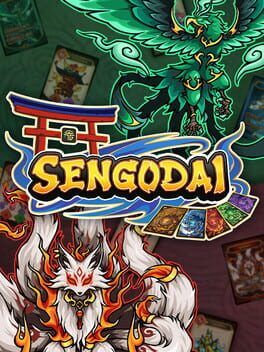
Sengodai’s biggest win on mobile is its presentation. The entire game is framed as a journey through cursed Japanese landscapes, guided by one of five elemental gods. Each god shifts the color palette and tone of a run. Fire brings vivid reds and aggressive, attack-focused cards, while Water leans into blues, healing and control. The Gokai themselves look like a hybrid between classic yokai and Pokémon: stubby, expressive creatures tied to elements and status effects.
The UI is clean, readable and surprisingly finger-friendly for a new mobile deckbuilder. Cards are big enough to read without squinting, animations are snappy without dragging turns out, and the soundtrack mixes gentle shrine-like ambience with heavier battle tracks. PocketGamer called out the strong theming, and that matches the Android version here. It absolutely looks like something that belongs next to the genre’s heavyweights on your home screen.
What it does not have is the same sense of narrative layering you get from the best roguelikes. Events are mostly functional text boxes that offer a small trade-off or a freebie. The cursed gods you fight are striking visually, but the story dressing around them is thin. You are definitely in a Japanese-mythology-flavored world; you are just not going to get much more than flavor text from it.
Node-based runs that are brisk and approachable
Runs play out across an overland map built from branching nodes. You tap forward from standard battles to elites, merchants, random events and rest points. On Android, this feels responsive and quick to navigate. There is almost no loading hitching between encounters, which helps Sengodai slide nicely into short play sessions.
Compared with Slay the Spire, pathing decisions are more relaxed. There are fewer node types and fewer brutal combinations that can brick a run before the second biome. The upside is that Sengodai is very approachable, particularly for players who might find the genre intimidating. The downside is that your routing choices do not feel agonizing very often. With Death Howl, swapping paths and managing risk is half the thrill; in Sengodai, it is more like nudging difficulty rather than wrestling with it.
On the plus side, the game’s pacing is tuned well for mobile. A full run is short enough to finish during a commute or a lunch break, and the difficulty curve during the first few hours is forgiving without becoming dull. That said, experienced deckbuilder fans will probably start autopiloting paths before long.
Roguelike deckbuilding with Gokai fusion
The heart of Sengodai lies in assembling and evolving your Gokai team. At the start of a run you pick an elemental god and a small starter deck of monster and spell cards. Combat is lane-based and turn-based. You play Gokai cards to summon monsters onto the board, then direct them to attack enemies, defend or trigger abilities that apply debuffs like burn, frost or shock.
What makes it interesting is the way Gokai evolve. Many monsters have upgrade paths where you can invest resources to evolve them into more specialized variants. Some can be fused, combining traits so that a tanky frontliner gains a burn aura, or a glass cannon picks up lifesteal. This system gives Sengodai a light monster-collecting feel without resorting to external gacha pulls.
The spell cards act as your traditional deckbuilder tools, providing bursts of damage, area effects, buffs and curses. You unlock new spells over time and can purchase them from merchants mid-run, chasing synergies with your evolving Gokai.
It is a compelling core loop, but it does not quite reach the experimentation highs of Slay the Spire’s wild relic and card combos, nor the hardcore pacing of Death Howl’s relentless curve. Sengodai offers clever builds, yet many runs start to feel similar once you figure out a couple of strong Gokai fusion lines per god. Diversity is present, just not deep enough to keep veterans obsessing.
Card balance and difficulty
Card balance is where Sengodai lands squarely in the middle of the pack. The game clearly wants to be accessible, and that means avoiding the razor’s-edge balance you see in the genre’s most demanding titles.
Several early Gokai and spells are simply more efficient than their peers, making it very tempting to default to the same handful of cards every run. Sustain and block-oriented builds, especially under the Water and Earth gods, can trivialize whole stretches of a run once your core pieces are in place. On the flip side, some riskier high-variance cards do not seem to offer rewards large enough to justify their inclusion; when a random effect can undo careful planning, you want the ceiling to be spectacular, and Sengodai often stops at mildly impressive.
Enemy design is solid but not standout. Status effects like burn and poison stack in predictable ways, and elite enemies telegraph their big swings clearly. This gives the game a fair, learnable feel, which is great for newer players but makes it less interesting once you have internalized the patterns. After a dozen runs, I was still enjoying the animations but very rarely surprised by what the enemies were doing.
The difficulty curve spikes mostly at boss encounters, and even then feels more forgiving than punishing. You will lose runs while you are learning, but this is not Death Howl, where misplays are ruthlessly punished and small mistakes can snowball instantly.
Monetization on Android
Tsunoa Games has been upfront about keeping Sengodai a traditional premium experience, and that shows on Android. You buy the game on Google Play, you get the full package. There are no energy systems, gacha banners or card packs locked behind microtransactions.
During testing, there were no intrusive ads, no forced online connection and no aggressive prompts to spend more money. If there are future cosmetic additions or expansions, they are not embedded in the launch build as dangling shop hooks. In a genre that is often abused by card-pack monetization on mobile, Sengodai feels refreshingly restrained.
That said, the absence of monetization tricks does not compensate for the relatively shallow long-term progression. You unlock new gods and spells over time, which is satisfying for a while, but there is not a deep meta layer of permanent upgrades, alternate modes or challenge modifiers to grind towards. Once you have seen what each god can do and cleared a few full runs, the incentive to keep playing tails off quickly.
How it stacks up against mobile heavyweights
Compared directly with Slay the Spire on mobile, Sengodai trails on almost every systemic front. Slay the Spire’s relic economy, deck-thinning tension and enemy variety still set the bar for the genre. Death Howl, on the other hand, beats Sengodai in raw intensity and difficulty, offering a much more demanding experience for players who want to be pushed.
Where Sengodai does compete is in style, clarity and friendliness. It is one of the more approachable roguelike deckbuilders on Android right now, with a lower learning curve, a strong visual identity grounded in Japanese mythology and a tactile Gokai fusion system that is fun to tinker with. If Slay the Spire is a grueling pilgrimage up a hostile mountain, Sengodai is a pleasant shrine visit with some mild danger along the path.
For seasoned genre fans, that may not be enough. The moment-to-moment decision-making is rarely as agonizing, the card pool is smaller and more conservative, and the meta-progression does not have the hooks to keep you coming back for weeks. But for new players or anyone who values thematic cohesion and a clean mobile implementation over extreme depth, Sengodai is an easy recommendation.
Verdict
Sengodai’s Android debut is a stylish, mechanically solid roguelike deckbuilder that understands what makes the genre tick, then sands down the rough edges to create a friendlier, more approachable experience. Its Japanese-mythology theming is excellent, the Gokai monster fusion is satisfying, and the node-based runs feel well suited to short mobile sessions.
At the same time, it lacks the systems depth and card-balance sharpness that keep games like Slay the Spire and Death Howl in permanent rotation. For deckbuilding veterans, Sengodai will likely be a charming weekend fling rather than a new obsession.
If you are new to roguelike deckbuilders or simply want a pretty, premium, ad-free card crawler on Android that treats your time and wallet with respect, Sengodai is well worth a look. Just do not expect it to rewrite the genre’s rulebook.
Final Verdict
A solid gaming experience that delivers on its promises and provides hours of entertainment.