
Review

By Story Mode
Scott Pilgrim vs. The World: The Game became a legend for two reasons: it disappeared, and its vibe was immaculate. Underneath the pixel art worship and Anamanaguchi’s all-timer soundtrack, though, the original was a pretty limited brawler with rough difficulty spikes, paper-thin progression, and co-op that often felt like four people flailing in the same lane.
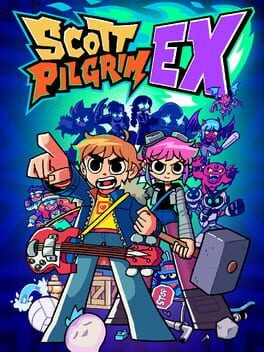
Scott Pilgrim EX on Switch is Tribute Games’ attempt to fix all of that without losing the scrappy charm that made the 2010 game a cult favorite. Rather than a simple remaster, EX reframes Scott’s universe as an “adventure brawler,” stitching together connected city zones, quests, and flexible character builds on top of a combat system that finally has some teeth.
It is absolutely not just "Scott Pilgrim vs. The World with a new menu." It is also not the slam-dunk reinvention it occasionally threatens to be.
A New Timeline, A New Structure
Where the original game marched you through a linear world map, EX drops you into a fractured Toronto you can explore. Levels now connect as districts, with alleys, rooftops, venues, and side streets feeding into one another. You pick up quests from familiar faces, backtrack to unlock shortcuts, and stumble into optional brawls that spill out of the panel borders.
This alone helps EX stand apart from the earlier game. Instead of replaying the same stage purely to grind cash for shop stats, you bounce between objectives, side missions, and hidden routes. Tribute has taken years of genre evolution and folded it into Scott’s world, leaning closer to Streets of Rage 4 and TMNT: Shredder’s Revenge than to the old 360-era tie-in.
What keeps it from feeling like busywork is the way quests plug into progression. Timed horde encounters, escort scraps, and weapon-specific challenges all pay out experience and items that feed directly into your build, so you are not just grinding for its own sake. It is a meaningful shift from the original’s repetition-heavy design.
Combat With Actual Bite
The original Scott Pilgrim looked like a combo-heavy brawler but played more like a stiff belt scroller with a few fun juggles. EX finally catches the gameplay up to the fantasy.
Every character has a light and heavy chain, launchers, air strings, crowd-control specials, and a dodge or mobility tool that feels tuned to their personality. Scott leans into straightforward, chunky brawling and easy-to-time juggles. Ramona has trickier spacing and mobility, weaving in teleports and hammer arcs. Wallace and Knives lean heavier into setplay, using projectiles or status-style effects to control the screen.
Hit-stop, enemy reactions, and knockback all feel dramatically better than they did in the 2010 game. You can pop an enemy into the air, tag in a teammate’s special mid-juggle, then spike them into a crowd and extend the string with improvised weapon throws. Tribute’s experience from TMNT: Shredder’s Revenge shows in the way encounters layer different enemy types that force you to constantly adjust spacing and priorities.
The combat is still chaotic, sometimes intentionally to a fault. On four-player co-op runs, the screen can devolve into a blur of hit sparks and floating numbers. That chaos is clearly part of the pitch, but even with color-coded outlines and name tags, it can be hard to track your character when the action peaks. On the original game this felt sloppy; here it feels more like a stylistic choice that occasionally goes too far.
Boss fights benefit the most from EX’s rework. The Evil Exes and new villains use patterns and phases that respect your expanded toolset. Instead of damage sponges with cheap crowd spam, bosses telegraph attacks you can dodge, parry, or counter, and their weak points reward players who understand spacing and juggle routes. It is not a pure character-action depth dive, but it is miles ahead of the old game’s clumsy brawls.
Progression That Finally Matters
The biggest mechanical gulf between Scott Pilgrim EX and Scott Pilgrim vs. The World is progression. The original hid most of its depth behind shop items and raw stat upgrades, which meant the optimal way to play was to grind money and break the difficulty curve early.
EX replaces that with a cleaner, more readable system. Each of the seven playable characters earns experience, unlocks new moves, and gains modest stat bumps across health, strength, speed, and special meter. Gear and accessories add a layer of customization, but they no longer trivialize the campaign in the first hour.
Instead of buying a random plate of food and hoping it secretly contained +4 Strength, you make clear choices. Do you equip an item that boosts crowd-control specials for big room clears, or a trinket that extends juggle time at the cost of raw damage? Builds are simple compared to some modern brawlers, yet there is enough nuance to give each run a slightly different flavor, especially in co-op.
Crucially, EX softens the grind without removing the sense of growth. If you bounce between characters, side quests and optional encounters reward your whole roster via shared unlocks and account-wide bonuses. This keeps experimentation viable, a welcome shift from the original game’s punishment for swapping off your main.
Not every choice lands, though. Some late-game gear feels underwhelming, acting more like marginal buffs than game-changers. The game is clearly wary of repeating the original’s stat-bloat problem, but the pendulum may have swung a bit too far toward caution.
Co-op: From Flailing To Collaboration
Co-op is where Scott Pilgrim EX most clearly outgrows its roots. Drop-in, drop-out co-op works locally and online, supporting up to four players across the full campaign. In an ideal world this is where EX would completely demolish its predecessor, and for chunks of the experience it does.
Revives are faster and more readable, with generous windows and clear UI. Shared resources are less punishing; you are not constantly arguing over who gets a health item because one player’s build is miles ahead. Tag-team specials and situational assists encourage players to watch each other’s positioning instead of mashing in parallel.
There is still some frustration. Online, the Switch version occasionally struggles to keep up when all four players trigger screen-filling supers simultaneously. Minor lag spikes can break long combo strings in a way that feels deflating. Hit registration in crowded scenes remains slightly inconsistent, particularly when latency is involved.
It is a better co-op game in every respect than the original, but in a world where Shredder’s Revenge set a very high bar for online stability and readability, EX does not quite reach that standard on Switch. For couch co-op, though, it is exactly the kind of messy, shouty fun the branding promises.
A Nostalgia Trip That Mostly Earns Its Ticket
Visually, Scott Pilgrim EX walks a fine line between reverence and revision. Tribute’s expanded pixel art leans harder into the comic’s surreal side, playing with broken panels, time loops, and visual gags that were only hinted at in the older game.
Animations are smoother, palettes are richer, and background detail sells the “fractured Toronto” concept better than any exposition could. Environmental storytelling, from posters referencing alternate timelines to background NPCs caught in looping glitches, does a lot of heavy lifting in making the world feel new rather than reheated.
The soundtrack, once again by Anamanaguchi, is the most dangerous nostalgia hook in the whole package. New tracks remix motifs from the original game and film while throwing in enough fresh material to stop this feeling like a cover band. The music is still so strong that it can make mediocre encounters feel better than they are.
The trap for EX was always going to be whether it leans too much on that goodwill. At its worst, the game indulges in winking references and aesthetic callbacks that do little to move the experience forward. A few sequences feel constructed first as a memeable screenshot and second as a satisfying level to play.
Thankfully, those moments are the exception rather than the rule. For most of its runtime, EX feels like a modern beat em up that happens to be drenched in Scott Pilgrim iconography, not a museum exhibit dedicated to the original game.
Switch Performance And Port Quality
On Switch, Scott Pilgrim EX holds up well. Handheld performance targets 60 frames per second, and in solo or two-player sessions it hits that mark consistently. In docked mode with four players, the frame rate can hitch during the busiest sequences, especially in effects-heavy boss fights.
Load times between districts are respectable, and quick restarts after a wipe mean failed attempts never feel like a slog. The pixel art scales cleanly both docked and portable. Text size is readable on a Switch Lite, which is more than can be said for plenty of modern brawlers that assume a big TV.
Online performance is the one blemish. While not unplayable, bouts of delay and rollback-style corrections can undercut the precision of EX’s improved combat. Given Tribute’s track record, a patch or two may smooth this out post-launch, but at release it is a notch below the best-in-class co-op experiences on the platform.
Verdict: More Than A Victory Lap
Scott Pilgrim EX does what it needed to do. It escapes the long shadow of Scott Pilgrim vs. The World: The Game by reframing the series as a more ambitious adventure brawler instead of a straight arcade clear. Combat is sharper, progression finally respects your time, and co-op has been rebuilt into something that feels collaborative rather than chaotic mashing.
It does not completely outrun its lineage. The obsession with on-screen chaos can still sabotage clarity, some gear and late-game rewards play it too safe, and online co-op on Switch is a step below where it should be in 2026.
But taken as a modern beat em up, not a nostalgia artifact, Scott Pilgrim EX holds its own. It will not dethrone the absolute best in the genre, yet it is no longer just “that game with the amazing soundtrack that got delisted.” It is a confident, frequently thrilling brawler that earns its place on the Switch alongside the modern greats.
If you loved the original but bounced off its grind, EX is the version you were waiting for. If you are new to Scott’s world and just want a satisfying co-op beat em up, this finally qualifies as a recommendation on its mechanics, not just its memories.
Final Verdict
A solid gaming experience that delivers on its promises and provides hours of entertainment.