
Review
By Story Mode
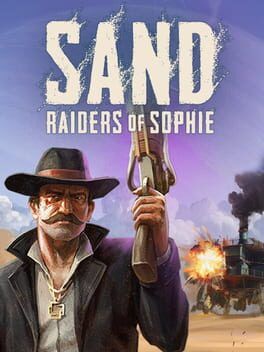
Image: IGDB
Store links: Sand: Raiders Of Sophie on Steam
A strong mech premise runs into a platform problem
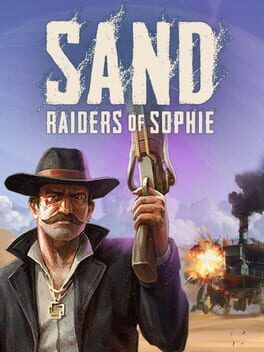
SAND: Raiders of Sophie entered Steam Early Access on June 22, 2026, according to the dedicated SAND Raiders of Sophie guide site, with a listed early-access price of $19.99. That is the first practical detail any Nintendo reader needs, because the provided platform and review sources identify the game as a PC early-access release rather than a currently playable Switch game. NoobFeed lists the platform as PC and the release state as Early Access, while Insider Gaming’s platform guide frames the game as recently entering early access and unavailable on PS5 and Xbox Series X|S at the time of its report. The supplied excerpt does not confirm a Nintendo Switch version.
That makes this Sand Raiders of Sophie Switch review a buyer’s guide with a hard caveat: there is no sourced Switch build here to assess. There are no provided Nintendo eShop details, no Switch performance notes, no handheld impressions, and no confirmation of feature parity on Nintendo hardware. The review that can be written today is a grounded evaluation of the early-access game’s design, as reported across available reviews and listings, and a recommendation for Switch players watching from the dunes.
The tension is simple. SAND has a hook that sounds tailor-made for spectacle: a PvPvE extraction shooter where crews stalk a desert planet in walking mechanical fortresses called Tramplers. But the version described by the sources is an early-access PC game with promising systems, thin narrative support, uneven solo viability, and missing live-service connective tissue. For Nintendo players, the answer is not whether it runs well on Switch. The answer is that there is not enough sourced evidence to say it exists there at all.
The adventure loop lives and dies by the Trampler
The best reason to care about Sand Raiders of Sophie gameplay is the Trampler. Nintendo Smash, Game8, GamingBolt, and NoobFeed all describe the game as a first-person PvPvE extraction shooter built around giant walking machines rather than a standard backpack-and-rifle scavenger fantasy. You enter raids on the sand-covered Planet Sophie, search ruins and structures for resources, avoid or fight AI threats and rival players, then try to extract with enough loot to upgrade your gear and machine.
That core loop has a clean dramatic shape. The Trampler is transportation, base, target, and liability at once. GamingBolt notes that the machine is loud and bulky, and that leaving its engine running can give away your position through visible black smoke. That single detail changes the rhythm of exploration. Movement is not quiet traversal between loot rooms. It is a decision to announce yourself across the horizon, shut down and risk vulnerability, or keep stomping toward a better haul before another crew spots you.
The customization layer gives that loop its spine. Nintendo Smash says every player gets a Trampler and can customize it through an editor, with improved components unlocked through a tech tree using Crowns and raid resources. The dedicated guide site describes chassis choices such as Light, Medium, and Heavy, plus components including power cores, armor plating, weapon hardpoints, and storage bays. Treat those specifics cautiously because they come from a guide site rather than a storefront, but they align with the broader review consensus that machine building is the game’s strongest identity.
As an adventure structure, SAND works best when it turns planning into pressure. You are not simply asking whether you have room for another stack of materials. You are asking whether your walker can survive the trip home, whether its weapons are mounted for the fight you are about to pick, and whether a better haul is worth becoming a taller silhouette in an empty desert.
Combat has scale, but the infantry feel sounds rougher
The combat fantasy is strongest at Trampler scale. Game8 describes vehicle warfare through quadrupedal machines equipped with makeshift cannons, while Nintendo Smash highlights the sound of blazing cannon shots as part of the game’s tension. The idea of crews trading fire across dunes gives SAND a distinct silhouette in a crowded extraction field. It is closer to managing a fragile moving outpost than sprinting through a corridor with a meta rifle.
The problem is that SAND also has to work when the player leaves the grand machine behind. Nintendo Smash reports close-range gunfights can feel jarring because of slow reload times, and that the two-weapon carry limitation can slow players down during a raid. That does not automatically make the gunplay bad. Slower weapons can create stress, especially in a setting inspired by early twentieth-century firearms. But in an extraction shooter, friction has to feel deliberate. If reloads and weapon limits create tactical commitment, they help the loop. If they leave players feeling clumsy during sudden encounters, they turn risk into irritation.
The available reviews suggest the most satisfying combat rhythm comes from crew coordination rather than lone heroics. GamingBolt says SAND encourages bringing friends because a Trampler is difficult to operate alone, with players taking responsibility for driving, navigation, weapon use, reloading, and maintenance. That is an excellent setup for emergent set pieces. One player keeps the walker moving, another calls targets, someone else scrambles to repair damage, and the entire raid becomes a rolling crisis.
Solo players should be wary. GamingBolt is blunt that the game is not built around solo play, even if matchmaking and later builds can reduce some friction. In a Switch context, where portable sessions often favor short solo bursts, that is a significant mismatch unless a future Nintendo version arrives with strong matchmaking, clear onboarding, and systems tuned for one-player survival.
Exploration has atmosphere, but the world needs more reasons to breathe
The setting gives SAND immediate texture. Nintendo Smash places it on Planet Sophie, a former Austro-Hungarian colony in an alternate 1910 that was abandoned after an environmental disaster and became covered in sand. Game8 similarly describes an alternate 1910 gold rush across a hostile planet filled with sandstorms, undead hordes, hostile players, and treasure. NoobFeed expands the premise into a fallen frontier of dried seabeds, ruined cities, lost technology, weapons, artifacts, and precious materials.
That is fertile ground for action-adventure pacing. The dunes can make distance feel dangerous. Ruins can break the horizon and pull players into risk. Sandstorms can act like a closing curtain, transforming a quiet salvage run into a desperate escape. Game8 says the world is procedurally generated and that resources are used to upgrade a base, improve Tramplers, and craft better gear. Nintendo Smash identifies two current modes: Voyage Mode, described as a more casual extraction experience without a time limit, and Storm Dive, a more chaotic mode built around a closing sandstorm and end-of-match extraction.
The structure sounds smart on paper. Voyage gives players room to farm and learn, while Storm Dive adds the pressure that extraction games need. The issue is content density. Nintendo Smash reports there are no in-game merchants or quests for lore or extra resources in the current state, and says bosses and events are among the missing pieces. Game8 also says there is no story mode. That leaves the world carrying mood without much directed adventure.
For some players, that will be enough. A lonely ruin, a visible smoke trail, and the possibility of another crew cresting the ridge can create better stories than a quest log. For others, especially action-adventure fans who want authored escalation, SAND may feel bare between its best confrontations. Its exploration currently appears to be more about route choice, resource extraction, and threat management than discovery driven by characters, puzzles, or bespoke set pieces.
Presentation sells the desert, but Switch performance is unknown
The sources are broadly positive on atmosphere. Nintendo Smash praises the sound quality, citing eerie silence, cannon fire, and strong effects for the 1910s-inspired firearms. The guide site points to dieselpunk art direction, ancient ruins emerging from dunes, dried ocean beds, and visually distinct Trampler chassis as strengths. NoobFeed also emphasizes the alternate-history science-fiction setting as a major part of the game’s identity.
That matters because SAND’s best scenes depend on distance and silhouette. A walking fortress needs room to feel massive. Smoke trails need long sightlines. A sandstorm needs to swallow the world slowly enough that players can read the danger before it becomes fatal. If a future Nintendo version ever arrives, these are the elements that would need careful preservation, especially in handheld mode.
Performance is the area where no responsible Switch recommendation can be made. The provided SAND Raiders guide states that performance issues were a significant early-access drawback at launch, but the excerpt does not include enough detail to identify frame-rate targets, hardware configuration, crash frequency, server issues, or settings. None of the supplied material provides Switch footage, Switch specifications, or Nintendo-specific optimization notes.
That absence is not a minor footnote. Extraction shooters live on readability and responsiveness. A low frame rate can make infantry fights feel worse. Network instability can turn a successful extraction into a loss that feels unfair. Reduced draw distance can damage the whole Trampler fantasy, because spotting smoke, machines, and movement across the horizon is part of the hunt. Until a publisher, developer, storefront, or credible technical source confirms a Nintendo version and shows how it runs, Switch players should treat performance as unproven.
Verdict: a compelling PC early-access extraction game, not a Switch buy yet
SAND: Raiders of Sophie has the kind of central idea that cuts through noise. The Trampler gives the extraction loop weight, personality, and social friction. It turns travel into exposure, customization into survival planning, and combat into a mixture of machine management and desperate firefights. When the game is described at its best, it sounds like a desert expedition where every cannon blast echoes across a map full of crews making the same bad decisions you are.
The weaknesses are equally clear from the current reporting. The narrative is atmospheric rather than substantial. Nintendo Smash and Game8 both indicate there is no deep story mode, while Nintendo Smash reports the absence of merchants, quests, bosses, and events in the current state. Infantry combat may struggle with slow reloads and restrictive weapon carrying. Solo players face a design built around crews. Performance has launch concerns in at least one supplied source, and there is no Switch data.
So the recommendation depends on platform and tolerance for early access. On PC, based on the sourced coverage, this looks like a cautiously interesting extraction shooter for groups who want a vehicle-centered twist and can accept rough edges while systems mature. For Switch players, the verdict is simpler: wait. There is no confirmed Nintendo version in the provided source material, no Sand Raiders of Sophie Nintendo store listing, and no Sand Raiders of Sophie Switch review evidence that would justify a purchase decision.
If SAND comes to Nintendo hardware later, the key questions will be matchmaking quality, solo tuning, handheld readability, frame-rate stability, content expansion, and whether the Trampler’s scale survives the port. Until those are answered by public listings and technical testing, this sand-swept journey is worth watching rather than buying on Switch.
Final Verdict
A solid gaming experience that delivers on its promises and provides hours of entertainment.