
Review

By Pixel Perfect
Image: IGDB
Store links: Sand: Raiders Of Sophie on Steam
A striking Early Access pitch runs into an identity test
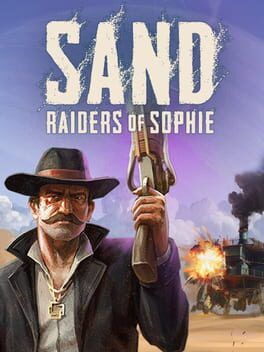
SAND: Raiders of Sophie is now being covered as a PC Early Access extraction shooter, with NoobFeed listing the platform as PC and Steam hosting the game’s store page. The concrete hook is easy to grasp: Hologryph and TowerHaus, with tinyBuild as publisher according to NintendoSmash and NoobFeed, have built a PvPvE raiding game around a giant walking machine called a Trampler. That is the reason this Sand Raiders of Sophie review exists, because the premise cuts through a crowded genre immediately.
The harder question is whether the Sand Raiders of Sophie game has enough craft around that premise to hold players after the novelty settles. Across the provided reviews and previews, the pattern is consistent. The Trampler gives the game its best personality. The surrounding shooter, progression, onboarding, and world design do not always rise to meet it. NintendoSmash framed the project as something tinyBuild revealed in 2023, after which it went through multiple closed and open playtests. That context matters because this is not a surprise prototype appearing from nowhere. The current Early Access build arrives with expectations attached.
My read, based strictly on the supplied review material, is that SAND has an idea worth protecting and a game loop that still feels underbuilt. It is at its best when a crew is scrambling across a mechanical fortress, repairing damage, handling weapons, and deciding whether to risk another haul before extraction. It is weakest when you are on foot, solo, or looking for authored reasons to care about Planet Sophie beyond the loot table.
The Trampler is the game’s best argument
The Trampler is SAND’s clearest identity marker. NintendoSmash describes it as every player’s walking mech, a mobile fortress and base that can be customized through an editor, with stronger components unlocked through a Tech Tree by spending Crowns and raid resources. Game8 also describes the Trampler as a quadrupedal machine used to explore the dunes, with makeshift cannons that can be attached for vehicle warfare. NoobFeed calls it the center of the experience, comparing the broad feeling to Sea of Thieves moved from ocean to desert, with ships replaced by towering walkers.
That comparison appears in GamingBolt’s assessment too, but with an important caveat. GamingBolt says the Trampler creates a strong group dynamic because one player cannot comfortably do everything at once. Driving, navigating, reloading, maintaining weapons, and repairing damage are separate pressures. In a coordinated squad, that division of labor gives Sand Raiders of Sophie gameplay a rare rhythm for an extraction shooter. You are not only peeking corners and checking inventory weight. You are managing a noisy, visible, damageable machine that broadcasts your intentions across open terrain.
The cleverest detail reported by GamingBolt is the engine smoke. Leaving the Trampler’s engine running sends black smoke into the sky, visible to other players with binoculars. That turns basic movement into a stealth decision. Push fast and be seen, or power down and accept the risk of being caught slow. Those are the moments where SAND feels like it has a design spine rather than a gimmick. The machine changes how you move, how you fight, and how you read the horizon.
The weakness is that the Trampler seems to be doing a lot of the game’s identity work by itself. COGconnected’s preview praises the concept as genuinely clever, but says interesting on paper and interesting to play are very different results. That tension defines the current build. The Trampler is memorable. The question is whether players will enjoy the hours wrapped around its best moments.
Combat has spectacle, but the feel is uneven
The strongest combat encounters appear to come when Tramplers clash in the open. COGconnected says Trampler combat has moments, particularly when two crews collide in the desert. NintendoSmash also emphasizes the need to keep the machine repaired after player or AI Trampler encounters, which suggests fights are as much about recovery and maintenance as aim. That fits the fantasy well. A walking fortress should feel vulnerable, messy, and expensive to keep alive.
On-foot combat is where the reported feel becomes less convincing. NintendoSmash says close-range gunfights can be jarring because of slow reload times, and notes that carrying only two weapons can slow the player down in a raid. Those limits may be intentional friction, since extraction shooters often live on scarcity and commitment. The problem is that friction has to feel dramatic rather than clumsy. Based on the supplied material, SAND does not always cross that line.
The lack of surrounding combat variety also hurts. NintendoSmash specifically calls out missing bosses and events, and also says there are no in-game merchants or quests to follow for lore or extra resources. That leaves a lot of weight on other players to create drama. In a PvPvE game, that is risky. Player encounters can be electric, but quiet stretches need structure, especially when a match can run long.
Storm Dive, described by NintendoSmash as the more chaotic battle royale-style extraction mode, sounds like the place where the design has the sharpest edge. The closing sandstorm creates pressure, and the outlet says matches can run for around an hour before ending in survivor-on-survivor violence near extraction. Voyage Mode, by contrast, is described as a more casual extraction option with no time limit where players can join and leave freely. That split is sensible. The issue is that combat needs to satisfy in both contexts. Right now, the Trampler battles seem to carry the excitement, while the first-person shooting reads as serviceable at best.
Planet Sophie has a vivid premise and thin storytelling
The setting is one of SAND’s better ideas, even if the game does not appear to tell much story with it yet. NintendoSmash says Planet Sophie was once colonized by the Austro-Hungarian Empire in an alternate history version of 1910, then abandoned after an environmental disaster. Game8 similarly describes an alternate 1910 gold-rush setup, with humanity plundering treasures on Sophie while sandstorms, hostile players, and enemy creatures threaten every run. NoobFeed expands that fiction into a fallen colony where oceans became dunes and ruins now hide technology, weapons, artifacts, and materials.
The lore sounds distinct on paper. Diesel-era weapons, imperial ruins, walking machines, and a desert planet are flavorful ingredients. NintendoSmash also praises the audio direction, citing eerie silence, blazing cannon shots, and strong firearm sound effects tied to the 1910s weapon aesthetic. That is the kind of texture small games need. Sound can make a sparse world feel dangerous long before the map itself catches up.
The storytelling is still clearly background material. Game8 states that SAND has no story mode, while NintendoSmash says there is no in-depth narrative or deep lore delivered directly to the player. NoobFeed reaches a similar conclusion, saying the story exists mainly to support the gameplay rather than drive character scenes or dialogue. That is not automatically a flaw for an extraction shooter, but it does change who should buy in now. If you want environmental storytelling to pull you through the dunes, the sources suggest there is not enough of it yet.
There is also a small source-language wrinkle worth keeping visible. NintendoSmash names the hostile creatures as Upiors, while Game8 refers to undead hordes. Those descriptions may be compatible if the enemies are undead-like Upiors, but the supplied excerpts do not fully clarify the distinction. What is confirmed across sources is simpler: Sophie is hostile, sandy, and populated by PvE threats as well as other players. What remains less convincing is whether exploration reveals enough surprise between encounters.
Exploration and progression need clearer reasons to keep raiding
Extraction games survive on the feeling that one more run could change your build. SAND has the basics. Game8 says players collect resources, escape before the land is engulfed by a raging sandstorm, then use those resources to upgrade a base, improve Tramplers, and craft better gear. NintendoSmash points to the Tech Tree and component unlocks. NoobFeed describes a loop built around searching abandoned places, taking resources, and escaping with enough value to justify the risk.
The reported problem is momentum. COGconnected says expeditions quickly feel routine and that the core loop of scavenging, surviving, and extracting did not generate enough tension or pace during its time with the game. That criticism cuts directly into the Sand Raiders of Sophie worth it question. A giant mech can make the first few outings feel fresh, but extraction games need escalation. They need strange finds, scary detours, clever landmarks, optional dangers, and practical goals beyond filling bags.
Onboarding appears to be another major drag. COGconnected says SAND drops players into layered systems with almost no guidance, making Trampler construction, looting routes, and extraction mechanics a matter of trial and error. For a discovery-driven indie, some friction can be charming. Here, the reports make it sound like the game often withholds the foundation rather than inviting experimentation. That is a serious issue for a title built around complex vehicles and raid stakes.
Solo players should be especially cautious. GamingBolt says SAND is not really built for solo play, even if matchmaking exists and even if a player can eventually construct a more solo-friendly Trampler. The outlet’s concern is that reaching that point requires resources, meaning early expeditions may force solo players into machines better suited to crews of three or more. That makes the game’s best idea less accessible to anyone who prefers self-directed extraction runs. If you have a regular group, the rough edges may be easier to laugh through. If you play alone, those same systems may feel like busywork.
Visuals, audio, performance, and platform guidance
The visual direction has a split reception in the supplied material. NoobFeed finds the alternate-history science-fiction setting distinctive within the extraction shooter space, and COGconnected gives credit to some Trampler designs for having personality. COGconnected is far colder on the environments, saying the dunes blur together, ruins feel generic, and the world rarely invites the player to stop and look. That is a meaningful criticism because desert games live or die on silhouette, weather, landmarking, and navigation drama. If the horizon is your battlefield, the horizon has to say something.
Audio appears stronger. NintendoSmash calls the sound quality great, highlighting eerie silence, cannon fire, and period-styled firearm effects. That matters for Sand Raiders of Sophie gameplay because sound is a tactical language in extraction games. Engines, cannons, reloads, and distant movement all create readable danger. The supplied sources give audio the clearest praise outside the Trampler concept itself.
Performance is harder to judge from the provided excerpts. COGconnected begins to mention performance positively, but the supplied source text cuts off before details. GamingBolt’s headline characterizes the Early Access build as rough, and COGconnected says the game needs more time, but the excerpts do not provide frame-rate figures, PC specifications, crash counts, server metrics, or detailed technical benchmarks. The fairest judgment is that performance is not the best-documented problem in the supplied material. The larger confirmed concerns are design clarity, content density, solo support, and the feel of infantry combat. Because the game is in Early Access, buyers should still treat technical stability as an open question unless they can verify current Steam user reports and system requirements directly.
For anyone searching Sand Raiders of Sophie Switch, the supplied sources do not confirm a Nintendo Switch version. NoobFeed lists PC, and the provided storefront source is Steam. The Steam page title in the supplied material says “Save 21% on SAND: Raiders of Sophie on Steam,” but the excerpt does not include a base price, sale end date, or regional pricing. Practically, this review can only recommend the PC Early Access version as the confirmed path in the provided source set.
Verdict: a great machine waiting for a stronger game
SAND: Raiders of Sophie has enough identity to be noticed, but not enough surrounding strength to be an easy recommendation for every extraction fan. The Trampler is a genuinely strong centerpiece. It affects visibility, crew roles, repairs, storage, navigation, and combat in ways that separate the game from standard loot-and-leave shooters. When the machine is under fire and everyone has a job, SAND’s promise is obvious.
The rest of the experience is less secure. Reported close-range gunplay sounds stiff, exploration can feel routine, the worldbuilding is atmospheric but thinly delivered, and the lack of bosses, events, merchants, quests, or clearer tutorialization leaves too many gaps for an Early Access game asking players to invest in a demanding multiplayer loop. The Sand Raiders of Sophie Switch question also has a simple answer for now: the supplied sources support PC and Steam, not Switch.
SAND is best for coordinated groups who like PvPvE extraction games, enjoy vehicle management, and are comfortable learning rough systems before they are fully explained. It is a tougher sell for solo players, story-first explorers, or anyone who wants a polished shooter feel from the first raid. My recommendation is cautious: buy now only if the Trampler fantasy is exactly your thing and you have friends ready to crew it. Otherwise, wait for clearer onboarding, richer events, and stronger reasons to roam Sophie’s dunes.
Final Verdict
A solid gaming experience that delivers on its promises and provides hours of entertainment.