
Review
By Story Mode
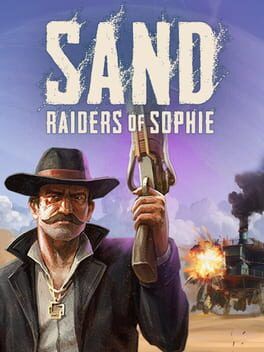
Image: IGDB
Store links: Sand: Raiders Of Sophie on Steam
A strong premise walks into Early Access with a heavy load
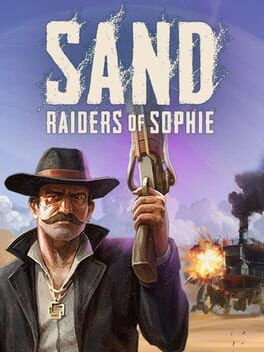
SAND: Raiders of Sophie is confirmed across the provided review coverage as a PC Early Access PvPvE extraction shooter from Hologryph and TowerHaus, published by tinyBuild, built around giant walking machines called Tramplers. That is the concrete hook, and it is also the tension at the center of this Sand Raiders of Sophie review: the game has a silhouette most extraction shooters would kill for, but its current Early Access shape leaves large stretches of desert feeling underwritten, under-varied, and technically uneven.
Nintendo Smash reports that tinyBuild first revealed the project in 2023 and that it arrived after multiple closed and open playtests. NoobFeed lists the reviewed platform as PC and identifies the build as Early Access. A public guide on sandraidersofsophie.xyz describes the Steam Early Access launch as June 22, 2026 with a $19.99 price, but the supplied material does not include an official Steam store URL or publisher pricing page, so that price should be treated as a public listing claim rather than direct storefront confirmation here.
The immediate appeal is easy to understand. Most extraction games ask you to risk a kit, a backpack, and maybe a few rare weapons. SAND asks you to risk a walking home. The Trampler is transportation, storage, weapon platform, workshop, target, and identity. GamingBolt argues that this single addition changes the rhythm of the formula because the machine is loud, bulky, and visible from a distance, especially when its engine throws smoke into the horizon. That one idea gives the Sand Raiders of Sophie game a clean identity. The question is whether enough game has been built around it.
Sophie is evocative scenery before it is a story
The Sophie-led premise is striking in outline, but the current build does not treat Sophie as a dramatic character with much momentum of her own. Nintendo Smash describes the setting as Planet Sophie, an alternate-history colony of the Austro-Hungarian Empire in 1910, abandoned after an environmental disaster and left to sandstorms, ruins, resources, and hostile creatures called Upiors. Game8 similarly says the game has no story mode and frames the setting as an alternate 1910 gold rush across a hostile sand-swept planet. NoobFeed adds the broader color: oceans swallowed by dunes, former seabeds turned into frontier wasteland, and scavengers returning for profit rather than loyalty.
That is excellent adventure texture. It conjures stranded ships, rusted imperial machinery, and the loneliness of a frontier where every landmark might hide salvage or a predator. As an action-adventure premise, it has the bones of a strong campaign. As implemented in the reviewed Early Access coverage, however, it functions mostly as atmosphere for extraction runs. Nintendo Smash is blunt that there is no in-depth narrative or deep lore delivered directly through the game, while Game8 says there is no story mode.
That distinction matters for players searching for a distinctive indie adventure review rather than another multiplayer risk loop. SAND has a world worth looking at and a premise worth expanding, but its current storytelling appears to be environmental and implied rather than authored through characters, missions, or escalating narrative stakes. If your interest is the name Sophie, the alternate imperial history, or a desert expedition fantasy, the setting may pull you in. If you need quests, voiced arcs, or a guided campaign, the sources point to a sparse experience.
The Trampler gives the desert real weight
The Trampler is the best argument for SAND. Nintendo Smash calls it the feature that makes the game stand apart from other extraction shooters, while GamingBolt describes it as a major wrinkle in the loop because it demands crew coordination, route planning, and stealth awareness. NGOHQ’s review says the machine defines nearly everything about play, turning expeditions into moving sieges rather than quick scavenging sprints.
That design shift changes pacing in a way I value in action-adventure structure. A good set-piece needs approach, threat, impact, and aftermath. SAND’s Trampler loop naturally creates that cadence. You spot smoke. You decide whether it is worth closing the distance. You prepare guns, repairs, storage, and escape routes. Then the desert erupts into cannon fire and first-person skirmishing. Afterward, assuming you survive, the crew has to patch the machine, sort the haul, and decide whether greed gets one more stop.
The customization appears to support that fantasy with real mechanical texture. Nintendo Smash reports that players can customize their Trampler through an editor and unlock better components through a tech tree using Crowns and raid resources. GamingBolt says the build menu offers detailed placement choices for components. The public sandraidersofsophie.xyz guide goes further, describing light, medium, and heavy chassis and component categories such as power cores, armor plating, weapon hardpoints, and storage bays, though that level of build taxonomy is not corroborated by an official listing in the supplied material.
The result is an extraction loop with a body. In better moments, the Trampler is not a menu of upgrades. It is the thing your team climbs over, repairs, hides, arms, and fears losing. That is where SAND earns its distinction.
Combat rhythm favors crews and punishes lonely raiders
SAND’s strongest combat rhythm appears to come from group play. GamingBolt compares the Trampler dynamic to the cooperative responsibility split of Sea of Thieves, with one player driving, others navigating, repairing, reloading weapons, managing resources, or watching the horizon. NGOHQ makes a similar point, saying the game encourages teamwork naturally because everyone can fall into a role without the game needing to assign one.
That sounds like the right structure for a machine this large. It also creates the game’s harshest buyer warning. GamingBolt states that SAND simply is not built for solo players, even though matchmaking exists and solo-capable Trampler builds may be possible after enough progression. The problem is front-loaded friction: early machines are designed around several players running around to maintain and operate them. If you arrive alone, the fantasy of commanding a desert fortress can collapse into chores.
On foot, the sources are more cautious. Nintendo Smash says close-range gunfights can feel jarring because of slow reload times and the two-weapon carry limit. That may fit the 1910s-inspired firearm fantasy and slow the pace in a deliberate way, but it also risks making personal combat feel clumsy when a raid turns chaotic. The vehicle warfare is the draw, not the shooting model by itself.
Storm Dive seems to be where the pressure peaks. Nintendo Smash describes it as the more chaotic mode, built around a closing sandstorm and end-match extraction, with sessions that can run around an hour. Game8 also frames the objective around collecting resources and escaping before the land is engulfed. Those long arcs can create memorable finales, but they also ask for time, coordination, and tolerance for losing a lengthy run. SAND is better understood as a crew commitment than a quick solo shooter.
Modes, progression, and the danger of an empty horizon
The current mode structure is promising but thin. Nintendo Smash reports two modes: Voyage Mode, a more casual extraction experience with no time limit where players can join and extract freely, and Storm Dive, the more chaotic sandstorm-driven mode. The public sandraidersofsophie.xyz guide describes Voyage as PvE and Storm Dive as PvPvE with shared progression, but because the provided outlet reviews do not all define Voyage the same way, the exact PvE/PvP boundaries should be checked against the current build before buying.
Progression is tied to salvage and survival. Game8 says resources can be used to upgrade a base, improve Tramplers, and craft better gear. Nintendo Smash says better Trampler parts come through the tech tree and require Crowns and other raid resources. That is a sound loop for Early Access: raid, risk, extract, upgrade, repeat. The tension is whether the repeat has enough variation.
This is where the desert starts to thin out. NGOHQ says expeditions begin settling into a predictable rhythm after roughly ten to fifteen hours: explore a landmark, gather resources, fight AI, watch for rival crews, and extract. Nintendo Smash also notes the absence of in-game merchants, quests, bosses, and events. Those missing pieces are important because extraction games live on interruption. A boss changes the center of gravity. A merchant creates goals beyond raw materials. World events pull crews into contested spaces. Quests give players a reason to cross the map beyond habit.
SAND has a superb central toy, but Early Access content breadth appears behind the concept. For some players, the Trampler alone will carry the first dozen hours. For others, the lack of authored objectives and encounter variety will make the dunes feel bare sooner than the art direction deserves.
Atmosphere hits hard, performance remains a wait-and-see concern
The presentation is one of SAND’s clearer strengths. Nintendo Smash praises the sound quality, citing eerie silence, blazing cannon shots, and strong effects for 1910s-designed firearms. That matters in a game about distance. A desert extraction shooter needs quiet as much as noise. The long pause before a cannon report, the distant clank of machinery, or the sudden sight of smoke on the horizon can do more for tension than constant action.
Visually, the sources consistently point to a distinct dieselpunk desert identity. NoobFeed emphasizes the alternate early twentieth-century setting and towering mechanical walkers. The public guide praises the sight of mechs crossing dried ocean beds and ruins rising from dunes. Even allowing for Early Access limitations, the art direction gives SAND a shape that separates it from bunker-heavy, military-gray extraction competitors.
Technical confidence is weaker. NGOHQ says technical issues remain difficult to ignore, while the public sandraidersofsophie.xyz guide identifies performance issues at Early Access launch as a significant drawback. The supplied excerpts do not provide frame-rate data, PC specifications, crash frequency, server stability metrics, or graphics settings analysis, so a precise performance verdict is not possible from these materials alone. The safe practical guidance is simple: players sensitive to Early Access instability should wait for patches, especially if they intend to play Storm Dive sessions that can demand a long time investment.
On platform availability, the available material supports PC Early Access. NoobFeed lists PC, and the public guide describes Steam Early Access. No supplied source confirms Sand Raiders of Sophie Switch support. Anyone searching for Sand Raiders of Sophie Switch should treat a Nintendo version as unannounced based on the provided evidence.
Verdict: a distinctive machine in need of a fuller expedition
SAND: Raiders of Sophie is not a thin curiosity, but it is a thin adventure in its current Early Access form. The difference is important. The Trampler gives the game a genuine mechanical identity. It changes traversal, stealth, combat spacing, team roles, extraction pressure, and emotional attachment to your gear. When the machine is limping through a storm with loot in storage and enemies scanning the dunes, SAND can deliver the kind of emergent set-piece that multiplayer sandboxes chase for years.
The weaknesses are equally clear. The Sophie premise is atmospheric rather than narrative-driven. Solo play looks poorly served. Close-range gunplay has reported friction. Progression and expedition variety may lose force after the early hours. Missing quests, merchants, bosses, and events leave too much weight on the core loop. Performance concerns make a cautious recommendation easier than a full-throated one.
For coordinated crews who want a strange extraction shooter with a strong vehicle-management spine, SAND is worth watching and may already justify a discounted Early Access gamble if the reported $19.99 Steam price matches the live storefront. For solo players, story-first adventure fans, or Switch owners, the better move is to wait. The desert has a memorable walker. It still needs a richer reason to keep marching.
Final Verdict
A solid gaming experience that delivers on its promises and provides hours of entertainment.