
Review
By Story Mode
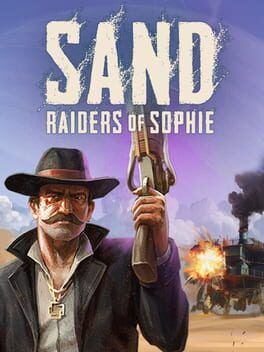
Image: IGDB
Store links: Sand: Raiders Of Sophie on Steam
A desert mech fantasy with a platform catch
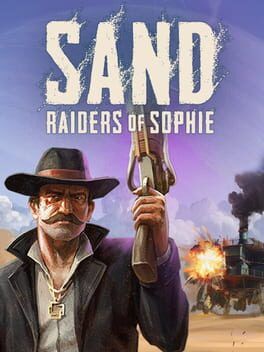
SAND: Raiders of Sophie is currently framed by its sources as a PC Early Access PvPvE extraction shooter, developed by Hologryph and TowerHaus and published by tinyBuild. NintendoSmash reports that tinyBuild first revealed the project in 2023, followed by three years of development and multiple closed and open playtests before this current release. Steam has a public store page for SAND: Raiders of Sophie, and the provided NoobFeed listing identifies the platform as PC and the state as Early Access.
That matters for this Sand Raiders of Sophie review because the assignment angle is aimed at Switch players looking for a smaller adventure. Based on the provided source material, a Nintendo Switch version is not confirmed. There is no supplied Nintendo eShop listing, publisher announcement, Switch release date, Switch performance target, or portable-specific build information. So this cannot honestly be a Sand Raiders of Sophie Switch review in the usual sense. It is a buyer’s guide for the game as described in current PC Early Access coverage, with a practical eye on whether its design would suit Switch players if they are considering it from afar.
The immediate tension is clear: SAND has a striking hook, giant walking fortresses crossing a dead desert planet, but its structure is built around online raids, long survival arcs, co-op labor, and PvPvE risk. That is a very different promise from a compact handheld adventure you can comfortably play in ten-minute bursts.
The Trampler gives exploration a strong silhouette, but not a traditional adventure shape
The central idea works because the Trampler is not treated as a cosmetic vehicle. NintendoSmash describes it as the player’s fortress and base, something controlled and managed throughout a raid. GamingBolt similarly says the Trampler acts as the major wrinkle in the extraction loop, noting that its engine emits black smoke visible from the horizon if left running. That single detail gives exploration a cinematic rhythm: the desert is wide, the machine is loud, and every movement can become a signal flare for other players.
The world itself has a strong premise. NoobFeed describes Sophie as an alternate-history colony tied to an expanded Austro-Hungarian Empire, a once-resource-rich planet devastated by an environmental catastrophe that left dunes, ruins, lost technology, and precious materials behind. NintendoSmash’s account is leaner, saying the game does not provide deep lore directly but establishes Planet Sophie as a sand-covered world populated by hostile Upiors after the Empire abandoned it. Game8 calls out a harsh alternate 1910 setting with sandstorms, undead hordes, hostile players, and treasure-hunting raiders using custom machines.
As exploration, this is atmospheric and readable. You scan dunes, raid structures, weigh the risk of distant movement, and decide whether the next ruin is worth the journey. As an adventure, it is thinner. The sources do not describe puzzle-led spaces, crafted dungeon progression, character arcs, or set-piece variety in the Zelda-like or compact indie adventure sense. Game8 refers to a procedurally generated world, while NintendoSmash notes the lack of in-game merchants or quests for lore or extra resources. That pushes SAND toward emergent survival stories rather than authored adventure pacing. The dunes can produce memorable scenes, but they do not appear built to deliver a steady sequence of bespoke discoveries.
Combat has two scales, and the larger one carries the game
SAND’s combat identity is strongest when the Trampler is involved. Game8 says players can attach makeshift cannons to destroy enemy Tramplers and can use smoke signals to communicate. NintendoSmash stresses the importance of keeping the Trampler repaired after player or AI encounters, which suggests fights are not only about aim but about damage control, positioning, and whether your machine can survive the return trip. NGOHQ describes expeditions as moving sieges, where one player might drive, another repair components, another organize resources, and another watch for enemies.
That crew-based rhythm is where the game seems closest to its best self. GamingBolt compares the feeling to Sea of Thieves in the sense that a large shared vehicle creates roles for a group. The desert becomes a stage for slow dread: a shape on the horizon, smoke over a ridge, the first cannon shot, then the scramble to reload, repair, steer, and decide whether to board or flee.
The smaller-scale gunplay appears less convincing. NintendoSmash reports that close-range gunfights can feel jarring because of slow reload times, and that the two-weapon carrying limit can slow players down in a raid. Those constraints may be deliberate pressure tools for an extraction shooter, but they also narrow combat variety if the firefights themselves do not feel sharp enough. The same NintendoSmash review identifies missing bosses and events as crucial absences in the current state. NGOHQ makes a related point, saying expeditions begin to settle into a predictable rhythm after ten or fifteen hours: explore a landmark, gather resources, fight AI enemies, watch for rival crews, and extract.
For players searching new Switch adventure games 2026 for compact combat variety, that is the main warning sign. SAND has a fresh battle format when machines collide, but its reported activity spread is still sparse. The strongest encounters come from other players and the Trampler systems, not from a deep catalog of enemy types, scripted bosses, or escalating adventure challenges.
Portable-session appeal is limited by raid length and co-op dependence
NintendoSmash reports two current game modes: Voyage Mode and Storm Dive. Voyage Mode is described as the more casual extraction option with no time limit, letting players join and extract as they please to gather resources for upgrades. That sounds like the closest fit for portable play, at least structurally, because the player can choose when to leave rather than being pushed through a fixed match timer.
Storm Dive is a different proposition. NintendoSmash describes it as a more chaotic battle royale extraction mode built around a closing sandstorm, with matches that can run for around an hour and often end in violent survivor clashes near extraction. That is a tough fit for handheld convenience. A one-hour online raid with escalating stakes asks for stable connectivity, attention, voice coordination if playing with friends, and enough uninterrupted time to make the risk worthwhile.
The solo question cuts even deeper. GamingBolt says SAND simply is not built for solo players, despite the existence of matchmaking and the theoretical possibility of building a more solo-friendly Trampler later. According to that review, early Tramplers are designed around three or more players handling maintenance and control tasks. NGOHQ echoes the group strength by describing natural crew roles inside the machine. If a Switch player’s ideal adventure is something they can suspend, resume, and chip away at alone on a commute or couch session, SAND’s current design does not line up neatly with that use case.
The fairest portable read is this: Voyage Mode has flexible extraction, but the game’s best ideas depend on time, tension, and teammates. Without a confirmed Switch version or portable-specific concessions, SAND looks like a PC-first online extraction game that would need careful adaptation to satisfy handheld adventure expectations.
Story is backdrop, but the soundscape helps sell the dunes
The game’s setting is richer than its narrative delivery. NintendoSmash says there is no in-depth narrative and no deep lore provided directly for the world and raiders. Game8 is even plainer, stating that SAND: Raiders of Sophie has no story mode. NoobFeed adds useful context by describing Sophie as a former colonial prize where cities were built, oceans vanished under dunes, and scavengers now return for profit rather than loyalty or nostalgia.
For an action-adventure player, that distinction matters. SAND has a strong world premise, but the sources do not support calling it a character-driven or story-led adventure. Its narrative stakes are environmental and economic: the dead colony, the ruined frontier, the loot you might bring home, and the rival crews who want the same haul. That can be enough for players who enjoy emergent stories, but it will disappoint anyone expecting authored drama, companions, dialogue, or campaign escalation.
The audio reporting is more positive. NintendoSmash praises the sound quality, citing eerie silence, blazing cannon shots, and 1910s-designed firearms with strong effects that complement the environment. In a game about visibility, distance, and dread, sound is a major part of pacing. The quiet before a Trampler appears over the dunes is the kind of moment SAND seems designed to create. Even when the content loop thins out, the presentation appears to understand the fantasy: old-world machinery, open desert, and violence echoing across sand.
Early Access ambition comes with technical and content caveats
The current review landscape consistently treats SAND as an Early Access game with a strong foundation and unfinished edges. NoobFeed identifies it as PC Early Access, Game8 labels its coverage as an Early Access review, and GamingBolt’s review is explicitly for the Early Access version. That status should shape any buying decision.
NGOHQ says the game delivers memorable moments but that its ambition outpaces execution, citing combat refinement needs, progression that loses momentum after extended play, and technical issues that remain difficult to ignore. NintendoSmash points to missing merchants, quests, bosses, and events. Those are not minor omissions for an extraction game built on repetition. Once players understand the danger of the dunes and the logistics of the Trampler, long-term engagement depends on new reasons to risk another run.
The provided Steam material confirms a public Steam page and shows the listing as “Save 21% on SAND: Raiders of Sophie on Steam,” but the source excerpt does not provide a base price, regional pricing, system requirements, Steam Deck verification, or a final 1.0 release window. None of the supplied sources provide Switch pricing, Switch file size, Nintendo Switch Online requirements, or handheld performance data because, again, a Switch version is not confirmed in the material.
If you are buying today on PC, the safer expectation is an experimental multiplayer extraction game with one excellent central machine and several areas still waiting for depth. If you are a Switch owner watching from the sidelines, the practical advice is to wait for an official platform announcement rather than treating PC Early Access impressions as proof of a portable release.
Verdict: a memorable machine in a sparse desert
SAND: Raiders of Sophie stands out because the Trampler changes the way extraction play feels. It slows the tempo, makes movement visible, turns travel into a tactical risk, and gives crews a shared object to fear for. The best version of this game is almost filmic: a machine groaning across a dead seabed, smoke in the distance, cannons waking the sand, everyone yelling from a different part of the walker as repairs fail and extraction slips away.
The current version also sounds narrow. Reported close-range gunplay issues, limited activity variety, missing bosses and events, thin narrative delivery, and technical concerns keep it from becoming an easy recommendation outside its target audience. It is especially hard to recommend as a substitute for a smaller Switch adventure, both because no Switch release is supported by the provided sources and because the design favors online crews, long raids, and emergent PvPvE pressure over portable campaign pacing.
As an indie adventure review, the verdict depends on what you are actually seeking. For PC players with friends who want a strange extraction sandbox built around a walking fortress, SAND has a distinct identity and real promise. For solo players, story-first adventure fans, or Switch owners searching for a confirmed handheld game, the best move is to wait.
Final Verdict
A solid gaming experience that delivers on its promises and provides hours of entertainment.