
Review
By Story Mode
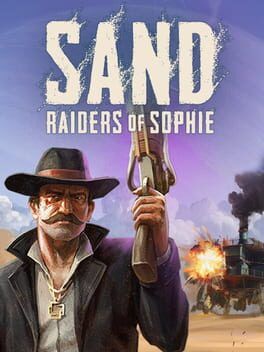
Image: IGDB
Store links: Sand: Raiders Of Sophie on Steam
A PC Early Access raid, not the Switch adventure the name may suggest
The clearest fact about SAND: Raiders of Sophie is also the one that cuts against some search expectations: the review material available for this assignment identifies it as a PC Early Access PvPvE extraction shooter, not a confirmed Nintendo Switch adventure game. NoobFeed lists the platform as PC and labels the build Early Access. NintendoSmash, GamingBolt, Game8, NoobFeed, and NGOHQ all describe the game as a multiplayer extraction shooter built around giant walking machines called Tramplers. None of the provided sources confirms a Sand Raiders of Sophie Switch version, a Nintendo eShop listing, handheld performance details, or a portable release window.
That matters for how this review should be read. If you arrived looking for a Nintendo indie review of a compact desert adventure, SAND: Raiders of Sophie is something else entirely. Developed by Hologryph and TowerHaus and published by tinyBuild, according to NintendoSmash and NGOHQ, it is a risk-and-reward multiplayer game about entering a hostile desert world, gathering resources, surviving AI threats and rival players, then extracting before the dunes claim your run.
The tension is immediate. SAND has one of the stronger elevator pitches in a crowded genre: extraction shooter, but with a towering customizable mech that operates as transport, fortress, and home base. Across the available reviews, that idea is consistently treated as the game’s identity. The weaker question is whether that identity carries a full Early Access game yet. Based on the source record, the answer is uneven. SAND produces memorable desert sieges and tense crew management, especially with friends, but its current structure is thin around the edges, with limited narrative delivery, uneven solo play, and missing systems that leave its world feeling less alive than its premise promises.
Planet Sophie has a great hook, then lets the players do the heavy lifting
SAND: Raiders of Sophie has a setting built for pulpy frontier danger. NintendoSmash describes Planet Sophie as an alternate-history colony once tied to the Austro-Hungarian Empire in 1910. After an environmental disaster, the Empire left, and the planet became a sand-covered ruin inhabited by hostile creatures called Upiors. Game8 similarly frames the world as an alternate 1910 gold rush, with players braving sandstorms, undead hordes, and rival raiders in custom machines. NoobFeed adds the broader image of oceans swallowed by dunes and former settlements reduced to valuable ruins.
As a backdrop, that is the game’s strongest piece of storytelling. It gives every expedition an immediate visual and thematic promise: imperial wreckage under a dead sun, forgotten technology half-buried in the sand, and players acting less like heroes than opportunists. In a genre often dominated by abandoned military zones and modern tactical grey, Sophie’s alternate-history desert fiction gives the game a distinct silhouette.
The problem is that the narrative seems to remain mostly environmental and conceptual. NintendoSmash says there is no in-depth narrative and no deep lore delivered directly through the game. Game8 says SAND has no story mode. NoobFeed also notes that the story sits in the background, providing atmosphere rather than characters, dialogue, or cinematic structure.
For an action-adventure audience, that distinction is important. The game has a world worth looking at and a premise worth imagining, but it does not appear to build dramatic stakes in the traditional adventure sense. The tension comes from whether another crew is watching your smoke trail, whether your Trampler will survive the next exchange, and whether greed keeps you in the raid too long. That can be potent, but it is player-authored drama rather than authored narrative. If you want a character-led desert odyssey, the current sources do not support that expectation.
The Trampler is the game’s best idea and its biggest demand
Every credible read on SAND circles back to the Trampler. NintendoSmash calls it the feature that makes the game unique among extraction shooters and describes it as a fortress and base that players control and manage throughout a raid. NGOHQ says it functions as transportation, mobile headquarters, crafting station, storage facility, and something worth protecting. GamingBolt emphasizes that the machine is loud and bulky, with an engine that emits black smoke visible on the horizon, which turns movement itself into a tactical decision.
That design changes the rhythm of Sand Raiders of Sophie gameplay. Instead of simply sprinting between loot spots, players are managing a moving set-piece. Someone has to drive. Someone has to watch the horizon. Someone has to repair components. Someone has to reload or operate mounted weapons. NGOHQ highlights how naturally those roles emerge in a crew, while GamingBolt and NoobFeed both draw comparisons to Sea of Thieves, replacing ships and oceans with mechanical walkers and dunes.
That comparison is useful because it exposes the tradeoff. SAND appears to sing loudest when a group treats the Trampler like a shared stage. The machine creates downtime, vulnerability, and payoff. A distant silhouette is a threat before it becomes a firefight. Smoke can betray ambition. Damage is not a minor inconvenience, since repairs and maintenance affect whether the crew gets home.
Solo players get the harsher version of that same design. GamingBolt is blunt that SAND is not really built for solo players, even if matchmaking exists and solo-capable Trampler builds may be possible later. The outlet argues that the early resource path pushes players into expeditions with Tramplers better suited to three or more people. That is a serious buyer’s-guide warning. The central mechanic is exciting because it asks for teamwork, but the same mechanic can become busywork or exposure when one player has to do every job under pressure.
Customization helps. NintendoSmash reports that players can customize their Trampler through an editor and unlock better components through a tech tree using Crowns and raid resources. GamingBolt also notes that the build menu offers detailed options for placing components. Still, the sources suggest the appeal is less about min-maxing a menu and more about the fantasy of owning a moving fortress that can turn any horizon line into a possible ambush.
Extraction pacing works best when silence gives way to cannon fire
SAND’s structure follows familiar extraction rules. Game8 describes the core loop as entering a procedurally generated world, encountering hostile AI and real players, collecting resources, then escaping before a raging sandstorm consumes the area. NGOHQ frames the same loop through risk: resources are only safely banked after successful extraction, and dying can mean losing equipment and supplies. That foundation will be instantly legible to players coming from other extraction shooters.
NintendoSmash identifies two current modes. Voyage Mode is described as the casual extraction option with no time limit, allowing players to join, extract, and gather resources at their own pace. Storm Dive is described as the more chaotic mode, closer to a battle royale extraction format, with a closing sandstorm and a final scramble to extract. NintendoSmash says Storm Dive can run for about an hour and often ends with surviving players trying to eliminate one another.
On paper, that split is smart. Voyage Mode gives crews room to learn the machinery, gather materials, and build confidence. Storm Dive pushes the game toward spectacle, with the environment tightening the map and turning every remaining Trampler into a potential finale. For a game whose best images are giant machines stalking sand flats, that escalation fits.
The pacing described by NGOHQ is one of SAND’s most convincing strengths. The outlet says the slower tempo works in the game’s favor because calmer stretches build anticipation before combat erupts. That is where the game’s cinematic quality seems to live. A raid is not constant noise. It is the long approach, the suspicious smoke column, the decision to kill the engine, the repair scramble after contact, and the question of whether one more landmark is worth the risk.
The catch is repetition. NGOHQ says expeditions begin to settle into a predictable rhythm after ten or fifteen hours: explore a landmark, gather resources, fight AI enemies, watch for rival crews, and repeat. That does not erase the strength of the Trampler concept, but it suggests the current Early Access build needs stronger encounter variety to keep the desert from becoming a route instead of a place.
The gunfights and progression do not always match the fantasy
The Trampler gives SAND scale. The moment-to-moment combat has a rougher report card. NintendoSmash notes that close-range gunfights can feel jarring because of slow reload times, and the outlet points to the limitation of carrying two weapons at a time as something that can slow players down during raids. That does not automatically make the combat bad, especially in a game aiming for tension and vulnerability, but it does suggest the infantry side lacks the elegance of the vehicle fantasy around it.
Vehicle combat sounds more distinctive. Game8 describes Tramplers as quadrupedal machines that can carry makeshift cannons for destroying enemy Tramplers and even send smoke signals to communicate. NintendoSmash praises the importance of keeping the Trampler repaired after encounters with players or AI-controlled Tramplers. The best combat, then, appears to be the layered kind: cannon fire from a moving fortress, damage control inside the machine, and close-range danger when the battle spills onto foot.
Progression is also promising but incomplete. Resources gathered in raids feed upgrades, base improvement, Trampler development, and better gear, according to Game8. NintendoSmash mentions Crowns and other resources as requirements for advanced Trampler parts through the tech tree. Those are the right incentives for an extraction game, because every successful return can visibly improve your next run.
The issue is what surrounds that loop. NintendoSmash says the current build lacks in-game merchants or quests for lore or extra resources, and specifically calls out missing bosses and events. NGOHQ similarly says the progression system begins to lose momentum after extended play. Put together, those criticisms point to a game with a strong mechanical spine but fewer connective tissues than it needs. The raid is compelling. The reason to keep raiding, beyond better parts and the thrill of other players, needs more support.
That is a common Early Access problem, but it still affects the purchasing decision today. SAND has a clear identity, yet identity is not a substitute for encounter design, progression cadence, and long-term goals. Players who enjoy making their own stories with friends may tolerate the gaps. Players who need authored objectives, boss targets, merchant economies, or quest chains should wait for those systems to become clearer.
Sound sells the desert, while technical caveats remain part of the deal
Presentation appears to be one of SAND’s more confident areas, especially in audio. NintendoSmash praises the sound quality, citing eerie silence, blazing cannon shots, and 1910s-inspired firearms with strong effects that fit the atmosphere. For this kind of game, that matters. A desert extraction shooter lives through distance and threat detection. Silence is information. A cannon report is a location marker. A firearm’s character helps sell the alternate-history hardware.
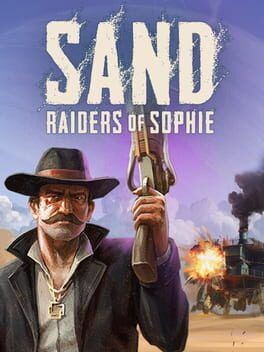
Visually, the sources emphasize concept more than technical breakdown. NGOHQ describes dried oceans, enormous ships stranded across deserts, and a world built around moving sieges. NoobFeed highlights the alternate early twentieth-century science-fiction identity as distinct from more familiar extraction shooter settings. The required cover art reinforces the same promise: this is a game about scale, machinery, and desolation.
Performance is harder to judge from the provided material because the sources do not give specific frame-rate numbers, hardware configurations, Steam Deck results, or graphics settings. NGOHQ does state that technical issues remain difficult to ignore and that the game’s ambition sometimes outpaces its execution. GamingBolt’s headline calls the Early Access build rough, though the excerpt provided focuses more on design friction than specific technical metrics.
That leaves practical advice rather than a definitive benchmark. Treat SAND as an Early Access PC game with reported technical rough edges, not as a polished multiplatform release. There is no supported evidence here for Nintendo Switch performance, handheld optimization, or portable play. If your interest is specifically Sand Raiders of Sophie Switch, the responsible answer is to wait for an official platform announcement or storefront listing before making plans around it.
Verdict: a memorable machine in a desert that still needs landmarks
SAND: Raiders of Sophie delivers a memorable premise, and the Trampler gives it a stronger identity than many extraction shooters chasing the same audience. When the game is working as described across the source material, it has a sharp rhythm: crew roles forming without a class menu, a visible smoke trail turning travel into risk, cannon fire breaking long desert silence, and extraction pressure making greed feel dangerous.
That is enough to make SAND interesting. It is not yet enough to make it easy to recommend to every adventure or shooter player. The current Early Access picture is a game with weak traditional storytelling, limited solo friendliness, reported technical issues, and missing content layers such as quests, merchants, bosses, and events. Its best moments seem to come from coordinated groups willing to accept friction for the sake of emergent spectacle.
For PC players with a regular crew and a taste for PvPvE extraction games, SAND is worth watching closely and may already be worth entering if the Trampler fantasy is the draw. For solo players, story-driven adventure fans, or anyone searching for a Nintendo indie review tied to a Switch release, waiting is the smarter call. The desert has a machine worth remembering, but the current build still needs more reasons to stay after the first few dramatic raids.
Final Verdict
A solid gaming experience that delivers on its promises and provides hours of entertainment.