
Review
By The Completionist
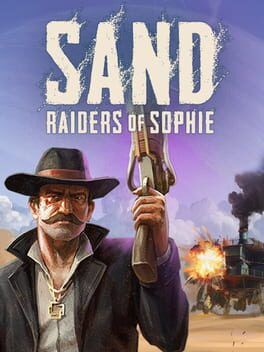
Image: IGDB
Store links: Sand: Raiders Of Sophie on Steam
A strong desert hook, but the Switch question is still unanswered
The most concrete practical point for Nintendo readers is also the most limiting one: the supplied public materials confirm SAND: Raiders of Sophie as a PC Early Access release through Steam, while no provided source confirms a Nintendo Switch version, release date, eShop listing, price, or performance target. Steam lists SAND: Raiders of Sophie at app 1431300 and, in the captured listing text, advertises a 21 percent discount. NoobFeed identifies the reviewed platform as PC and labels the game Early Access. GamingBolt also reviewed it as an Early Access title in June 2026.
That matters for any Sand Raiders of Sophie Switch search because this cannot honestly be treated as a Sand Raiders of Sophie Nintendo review. The game being assessed here is the PC Early Access version described by the cited reviews and store listing. If a Switch version is later announced, it will need a separate technical look, especially because SAND is built around large traversal machines, PvPvE encounters, storms, distant visibility, and multiplayer coordination. Those are exactly the systems that can make or break a smaller-console port.
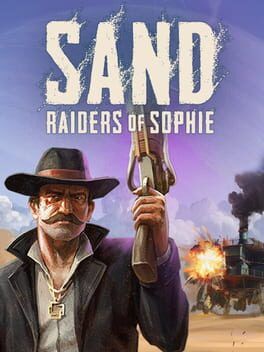
On PC, the premise is immediately readable. Hologryph and TowerHaus, with tinyBuild as publisher according to NintendoSmash and NoobFeed, have built a first-person PvPvE extraction shooter around a giant walking base called a Trampler. The hook is strong because the Trampler changes the usual extraction question. You are not only deciding which ruins to loot or which fight to take. You are managing a noisy, visible, upgradeable machine that can carry weapons, components, and consequences across a hostile desert.
Planet Sophie has personality, though its story rarely pushes back
The setting is the game’s first real charm point. NintendoSmash describes Planet Sophie as a former Austro-Hungarian colony in an alternate 1910, abandoned after an environmental disaster left the world covered in desert dunes, sandstorms, ruins, and hostile creatures called Upiors. NoobFeed expands that premise into a gold-rush frontier where a once-valuable colony has become a scavenger’s destination for lost technology, weapons, artifacts, and materials. Game8 similarly frames Sophie as a sand-swept planet full of treasure, storms, undead hordes, hostile players, and custom machines called Tramplers.
As a lore setup, that is far fresher than another gray military exclusion zone. The Austro-Hungarian space-colony angle gives the guns, machines, and ruined frontier a specific flavor. The 1910s-inspired firearms mentioned by NintendoSmash also help the world feel handmade rather than assembled from standard extraction-shooter parts.
The weakness is that the setting mostly sits behind the systems instead of becoming a quest structure. NintendoSmash says there is no in-depth narrative and no deep lore delivered directly through play. Game8 says the game has no story mode. NoobFeed says the story is very much in the background, with the world mainly serving as atmosphere and context. For an RPG-minded player, that creates a strange gap. Sophie is an evocative place to imagine, but the game does little, based on the provided reviews, to turn that premise into characters, factions, quest chains, or choice-driven consequences.
The Trampler is the best system and the biggest demand on the player
The Trampler is SAND’s central mechanical argument. NintendoSmash describes it as a fortress and base that every player controls and manages throughout a raid. GamingBolt calls it a custom-built war machine used to gather weapons, ammo, raw materials, and cannons that can be attached to the machine. NoobFeed describes the game’s identity as being built around this walking fortress rather than simply around weapons and inventory.
That shift gives SAND a meaningful layer of buildcraft. NintendoSmash notes that players can customize their Trampler through an editor with numerous options, while better components are unlocked through a Tech Tree using Crowns and resources found during raids. GamingBolt says the Trampler build menu is detailed and gives players many options for placing components. This is where the game has enough mechanical depth to earn attention: your vehicle is a loadout, a base, a target, a liability, and a progression board at once.
The design also creates good tension. GamingBolt reports that leaving the Trampler’s main engine on emits black smoke visible from the horizon to anyone watching with binoculars, which means stealth-minded players must cut engines and think carefully about exposure. That is a smart extraction mechanic because it turns comfort into risk. Moving fast and staying powered can make you visible. Going quiet can make you safer but less responsive.
The cost is friction. A Trampler built around multiple stations, weapons, repairs, navigation, and reloading is naturally hard to operate alone. GamingBolt says the game is clearly built around group responsibility, with players dividing driving, navigation, weapons, maintenance, and reload duties. PC Gamer’s headline comparison calls it like Sea of Thieves on land and tougher for solo players, while NoobFeed also compares the experience to Sea of Thieves in a desert. Those comparisons are apt because the fantasy is crew-based machinery, not lone-wolf looting. Solo players can participate, according to GamingBolt, but building a more solo-friendly Trampler requires resources they do not begin with, forcing early runs in machines better suited to groups.
Two modes give shape to raids, but the loop still feels underbuilt
NintendoSmash identifies two current modes: Voyage Mode and Storm Dive. Voyage Mode is described as the more casual extraction option, with no time limit and freedom to join or extract while gathering upgrade resources. Storm Dive is framed as the more chaotic option, with a closing sandstorm, battle-royale pressure, loot hunting, and a final extraction. NintendoSmash says Storm Dive can last around an hour and often ends chaotically as survivors try to gun each other down.
That split is sensible. Voyage Mode gives newer crews space to learn repairs, navigation, resource gathering, and the rhythm of Trampler upkeep. Storm Dive supplies the harsher pressure that extraction players often want, where greed, timing, and route planning become as important as aim. Game8 also describes a procedurally generated world with hostile AI and real players competing for resources before the land is engulfed by sandstorm conditions.
The missing pieces are where the game struggles to feel complete. NintendoSmash specifically says there are no in-game merchants or quests to follow for lore or extra resources, and identifies bosses and events as missing crucial features. For a systems-focused player, that is a major limitation. A tech tree can motivate repeated raids for a while, but without merchants, quest givers, boss targets, world events, or factional goals, the loop leans heavily on PvP chaos and resource accumulation.
That is the difference between a strong core idea and a fully persuasive live extraction game. The Trampler gives SAND a distinctive tactical shape. The surrounding progression scaffolding, according to the available reviews, does not yet give enough varied reasons to return beyond upgrading the machine and taking another high-risk trip across Sophie.
Combat has weight, but close-range fighting and maintenance slow the pace
SAND’s combat lives in two overlapping layers: personal gunfights and machine warfare. Game8 describes traditional first-person shooting alongside Trampler vehicle combat, including makeshift cannons used against enemy Tramplers and smoke signals used to communicate. NintendoSmash notes close-range gunfights, but calls them jarring because of slow reload times. It also says the two-weapon carry limit can slow players down during raids.
That slower pace is not automatically a flaw. In a 1910s-flavored desert extraction game, clunky reloads and limited carry capacity can reinforce tension. The issue is whether those constraints create interesting planning or simply make encounters feel sluggish. From the source material, SAND seems strongest when combat is about preparation, positioning, visibility, repairs, and crew communication. It seems weaker when the player is forced into direct close-quarters shooting where reload pacing and weapon limits become more noticeable.
Maintenance is also a real part of the combat economy. NintendoSmash says keeping the Trampler repaired throughout a match is crucial and recommends repairs after player or AI Trampler encounters. That gives battles a useful aftermath. Winning an exchange does not simply mean collecting loot. It means assessing hull damage, component status, ammunition, distance to extraction, and whether the smoke on the horizon belongs to the next crew coming to punish your delay.
This is where the game’s mechanical depth shows through most clearly. The best decisions are not only trigger decisions. They are route, upgrade, repair, and exposure decisions. The weakest moments appear when the supporting encounter variety does not match that systemic promise.
Audio and atmosphere carry the desert better than the progression does
NintendoSmash praises the sound quality, citing eerie silence, cannon fire, and strong sound effects for 1910s-designed firearms. That is important for a game built around long-distance threat reading. A quiet desert, a visible smoke trail, and the report of heavy weapons can do a lot of atmospheric work. The sources also consistently point to Sophie as a distinctive visual and thematic space, with dunes, ruins, sandstorms, and towering machines forming the game’s identity.
The supplied source excerpts do not provide enough hard technical information to judge frame rate, resolution, server stability, Steam Deck behavior, or any Nintendo Switch performance profile. Because the only storefront listing in the source bundle is Steam and the reviewed platform cited by NoobFeed is PC, performance expectations for Switch would be speculation. A Switch port, if announced, would need careful scrutiny for draw distance, multiplayer stability, input readability inside the Trampler, and how well large battlefield information survives on handheld screen size.
As an Early Access PC game, SAND currently reads like a project with a compelling silhouette and uneven density. The desert machines have identity. The soundscape helps sell danger. The alternate-history premise gives the world flavor. But the absence of robust questing, bosses, merchants, and events leaves the experience thinner than its best systems deserve.
Verdict: worth watching with a crew, risky for solo players, unproven for Switch
As a Sand Raiders of Sophie review, the judgment is split between concept and current completeness. The Trampler is a genuinely strong extraction-shooter idea because it turns your base into a moving build, a tactical problem, and a social space. The Tech Tree, component placement, repairs, smoke visibility, and crew roles give SAND enough mechanical depth to stand apart from many smaller multiplayer releases.
It does not yet have enough surrounding structure to feel essential for every extraction fan. The world has a memorable premise, but the sources agree that story delivery is light. The raid loop has two modes with different pressure levels, but NintendoSmash’s note about missing merchants, quests, bosses, and events points to a game still searching for long-term texture. Solo players should be especially cautious, since GamingBolt reports that the core machine-management fantasy favors groups and that solo-friendly setups require resources you must first earn.
For PC players with two or three reliable friends who enjoy crew logistics, tense extraction runs, and vehicle-based buildcraft, SAND: Raiders of Sophie is worth watching and may already provide memorable chaos. For solo players, lore-first RPG fans, or anyone searching specifically for Sand Raiders of Sophie Switch information, the better move is to wait. The charm is real, the machine systems have bite, but the current documented version is a PC Early Access game with an incomplete progression ecosystem and no sourced Nintendo Switch release details.
Final Verdict
A solid gaming experience that delivers on its promises and provides hours of entertainment.