
Review
By Story Mode
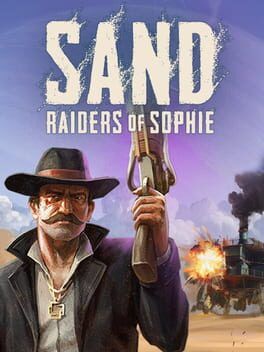
Image: IGDB
Store links: Sand: Raiders Of Sophie on Steam
A striking Early Access hook, but not the compact adventure some players may expect
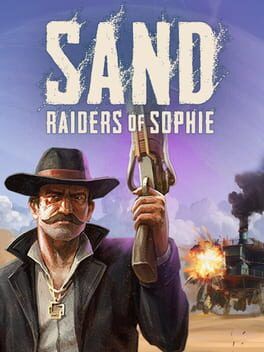
SAND: Raiders of Sophie is currently being covered as a PC Early Access PvPvE extraction shooter, not as a traditional single-player adventure game. That distinction matters immediately for anyone searching for a smaller exploration-led journey or for a Sand Raiders of Sophie Switch version. No source material provided for this review confirms a Nintendo Switch release, while NoobFeed lists the game on PC and labels it Early Access. Game8 also identifies it as an Early Access review, published June 23, 2026 and updated June 25, 2026.
The confirmed setup is unusually evocative. Hologryph and TowerHaus developed the game, with tinyBuild publishing, according to Nintendo Smash and NoobFeed. The premise sends players to Sophie, an alternate-history desert planet tied to a 1910s Austro-Hungarian imperial expansion, where environmental catastrophe has left ruins, hostile creatures, sandstorms, and scavengers fighting over whatever remains. It is a strong stage image: dried oceans, stranded ships, dieselpunk weapons, and giant walking machines crossing dunes like siege engines.
The tension is that this setting suggests lonely discovery and frontier mystery, while the actual game is built around extraction pressure, PvP risk, team logistics, and repeat raids. If your idea of a smaller adventure game means a focused campaign with authored pacing, clear quests, and narrative payoff, the available reviews describe something else. Game8 says SAND has no story mode. Nintendo Smash says there is no in-depth narrative or direct deep lore delivery. NoobFeed is more positive on the world identity, but still frames the story as background atmosphere rather than character-driven storytelling. That is the first buying decision: this is a mood-rich multiplayer sandbox, not a compact adventure with a beginning, middle, and end.
The Trampler gives SAND its best scenes
The reason SAND: Raiders of Sophie stands out at all is the Trampler, the giant walking fortress each player or crew brings into the desert. Across the source material, this machine is consistently treated as the game’s defining idea. Nintendo Smash describes it as a fortress and base that players control and manage during raids. NGOHQ calls it transportation, mobile headquarters, crafting station, storage facility, and a valuable asset to protect. GamingBolt notes that the Trampler is loud and bulky, with an engine that emits visible black smoke when left running, which turns movement itself into a tactical decision.
That creates the game’s strongest rhythm. A raid can begin in silence, with the horizon doing the storytelling. A distant plume of smoke becomes a possible threat. A cannon silhouette becomes a choice. Do you close the gap, power down, hide, or continue toward a ruin? When combat starts, the game leaves the usual twitch-shooter cadence behind and becomes a moving siege. Try Hard Guides reports that good Trampler battles can last over twenty minutes when both crews know what they are doing, with players firing mounted weapons, repairing damage, and trying to keep their machines alive under pressure.
As an action-adventure proposition, the Trampler is the adventure. It gives the desert scale, makes travel tense, and turns extraction into a physical journey rather than a menu objective. The best reported moments come from that long fuse: calm traversal, watchful scouting, a sudden decision, then cannon fire tearing through the quiet. That structure gives SAND an identity most extraction shooters would envy.
Exploration has atmosphere, but the desert can feel underfilled
The biggest weakness for players seeking exploration depth is that Sophie appears more compelling as a visual and tonal concept than as a consistently rewarding place to roam. The source reviews agree that the world has a memorable identity, but several point to a lack of variety once the loop settles in.
Game8 describes a procedurally generated world where players encounter hostile AI and rival players while collecting resources before sandstorms consume the area. Nintendo Smash outlines two current modes: Voyage Mode, a more casual extraction experience with no time limit, and Storm Dive, a more chaotic battle royale-style extraction mode built around a closing sandstorm and end-of-match extraction. Those modes give SAND flexibility on paper, especially for players who want lower pressure resource runs before facing harsher PvP.
The issue is what fills the space between danger spikes. Try Hard Guides says the map can feel very empty when players are not caught in a chase or cannon duel. NGOHQ similarly reports that after ten or fifteen hours expeditions begin to fall into a predictable rhythm: explore a landmark, gather resources, fight AI, watch for rival crews, and extract. Nintendo Smash says the game currently lacks in-game merchants, quests, bosses, and events, all of which would usually help a sandbox create texture beyond loot collection.
For an adventure game review audience, that is the clearest caution. SAND has a world worth looking at and a vehicle worth inhabiting, but the current Early Access build, as described by multiple outlets, does not yet have enough authored activities, surprising landmarks, or layered objectives to make exploration feel rich run after run. The desert is cinematic. It is not always busy enough to reward curiosity.
Combat works best as crew choreography, less so as solo gunplay
SAND’s combat is strongest when it forces players to divide labor under pressure. NGOHQ describes crews naturally assigning roles, with one player driving, another repairing, another sorting resources, and another watching for enemies. GamingBolt makes the same point from another angle, arguing that the Trampler is difficult to handle alone because its systems are clearly designed around multiple players managing navigation, weapons, reloading, and maintenance.
That is where the game’s set-piece design comes alive. Mounted cannons, visible smoke, repair runs, and battlefield navigation create engagements that feel closer to naval combat than arena shooting. NoobFeed compares the feel to Sea of Thieves moved into a desert, replacing ships with mechanical walkers. GamingBolt also draws a Sea of Thieves comparison because of the shared multi-role vehicle fantasy. Those comparisons are useful because they explain the appeal and the limitation. SAND is at its best when your crew is improvising inside a vulnerable machine while another crew tries to crack it open.
On foot, the picture is rougher. Nintendo Smash says close-range gunfights can feel jarring due to slow reload times, and notes a two-weapon limit that can slow players down in a raid. Try Hard Guides describes firearms resembling 1910s technology, which fits the setting, but the available criticism suggests the gunplay is not currently deep enough to carry the experience without the Trampler spectacle.
Solo players should be especially cautious. GamingBolt says SAND is simply not built for solo players, even though matchmaking exists and solo-capable Tramplers may be possible after investment. The problem, according to that review, is that reaching that point requires resources, so early expeditions can leave solo players wrestling with machines intended for crews of three or more. If you want a small adventure you can comfortably play alone, the sources point away from SAND in its current form. If you have a regular group, its combat rhythm has a much better chance of clicking.
Progression gives the machine purpose, then starts asking for patience
Progression in SAND revolves around resources, crafting, Trampler upgrades, and gear improvement. Game8 says extracted resources can be used to upgrade the player’s base, improve Tramplers, and craft better gear. Nintendo Smash says advanced Trampler parts are unlocked through a Tech Tree and require Crowns plus other raid resources. GamingBolt notes that players can find weapons, ammo, raw materials, and even cannons that can be bolted onto the Trampler.
That is a smart progression spine because it ties advancement to the object players care about most. A better Trampler is not an abstract stat bump. It changes how a crew moves, fights, survives, and divides responsibility. Nintendo Smash also notes that the Trampler editor includes numerous customization options, while GamingBolt says the build menu is detailed and offers many placement choices for components.
The concern is pacing. Try Hard Guides says many meaningful Trampler designs are locked behind an unlock tree that takes many runs to progress through, and wishes there were more variety available from the start. NGOHQ reports that progression begins losing momentum after extended play. Nintendo Smash’s complaint about missing merchants, quests, bosses, and events also affects progression because those systems can provide intermediate goals between major unlocks.
For players who enjoy extraction grinds, this structure may be enough for now. For players searching for a smaller adventure with satisfying forward motion, SAND’s current progression sounds more like a long Early Access treadmill than a carefully paced arc. The machine grows, but the journey around it needs more reasons to keep pushing beyond the next haul of materials.
Atmosphere carries weight, but Early Access roughness is part of the package
SAND’s presentation appears to be one of its steadier strengths. Nintendo Smash praises the sound quality, citing eerie silence, cannon fire, and 1910s-style firearm effects that complement the environment. Try Hard Guides highlights the game’s ebb and flow between long quiet stretches and hectic battles, crediting the setting with creating a feeling the reviewer had not found in other extraction shooters. The best version of SAND is almost a soundscape first: engine rumble, sand, silence, then cannon thunder.
Visually, the source material emphasizes identity over technical polish. NoobFeed and NGOHQ both stress the alternate-history desert fantasy, with dried seas, ruins, and giant mechanical walkers giving the game a distinctive profile in a crowded extraction market. That identity is valuable. Many extraction shooters blur together through abandoned compounds and tactical gear. SAND has a shape you can remember.
The technical caveat is also clear. NGOHQ says technical issues remain difficult to ignore, though the provided excerpt does not specify exact bugs or performance metrics. Try Hard Guides mentions bugs as a separate concern and notes that the development team appears to be addressing feedback diligently. Because the sources do not provide frame-rate data, PC specifications, server stability measurements, or platform comparisons, this review cannot make precise performance claims. The practical guidance is simpler: treat SAND as an Early Access multiplayer game with reported rough edges, not as a finished release with predictable polish.
That matters most because the whole design depends on long sessions and emergent encounters. A bug in a linear adventure may cost a checkpoint. A technical issue in an extraction game can cost gear, time, and trust. SAND’s concept can absorb some roughness, but its risk-reward loop will need reliability if it wants players to keep returning.
Verdict: a memorable extraction machine still searching for adventure depth
SAND: Raiders of Sophie has one excellent central image and builds real mechanics around it. The Trampler is a base, a vehicle, a combat platform, a liability, and a shared stage for crew drama. When that machine is crawling across the dunes under cannon fire, with players repairing, steering, scouting, and deciding whether to fight or flee, SAND earns attention in a genre crowded with safer ideas.
The problem is that the current Early Access build, as reflected across Nintendo Smash, Game8, GamingBolt, NoobFeed, NGOHQ, and Try Hard Guides, does not yet sound deep enough in exploration, solo combat, or long-term progression to satisfy players looking for a tighter smaller adventure game. There is no confirmed story mode in the supplied material, no confirmed Switch version, and no reported quest, boss, or event structure to give the desert a stronger authored backbone. The progression systems have promise, but several sources suggest they either take too long to open up or begin to flatten after extended play.
Buy now if you want an unusual PC Early Access extraction shooter built for crews, you enjoy vehicle management, and you are willing to tolerate sparse stretches and technical roughness while the game develops. Wait if you mostly play solo, want a campaign, need dense exploration rewards, or searched for Sand Raiders of Sophie Switch expecting a portable adventure. SAND has the silhouette of something special, but right now its best moments are bigger than the game around them.
Final Verdict
A solid gaming experience that delivers on its promises and provides hours of entertainment.